Get Full Government Meeting Transcripts, Videos, & Alerts Forever!
Get email alerts on the Procurement Policy topic
No spam. Unsubscribe anytime.
Lucas County updates purchasing policy and surplus rules; raises auction threshold to $5,000
Summary
The Board approved amendments to the county purchasing policy manual and to the surplus policy to align purchasing tiers, add ORC 2921.42 unlawful‑interest language, and raise the auction threshold from $2,500 to $5,000 to match recent state law changes.
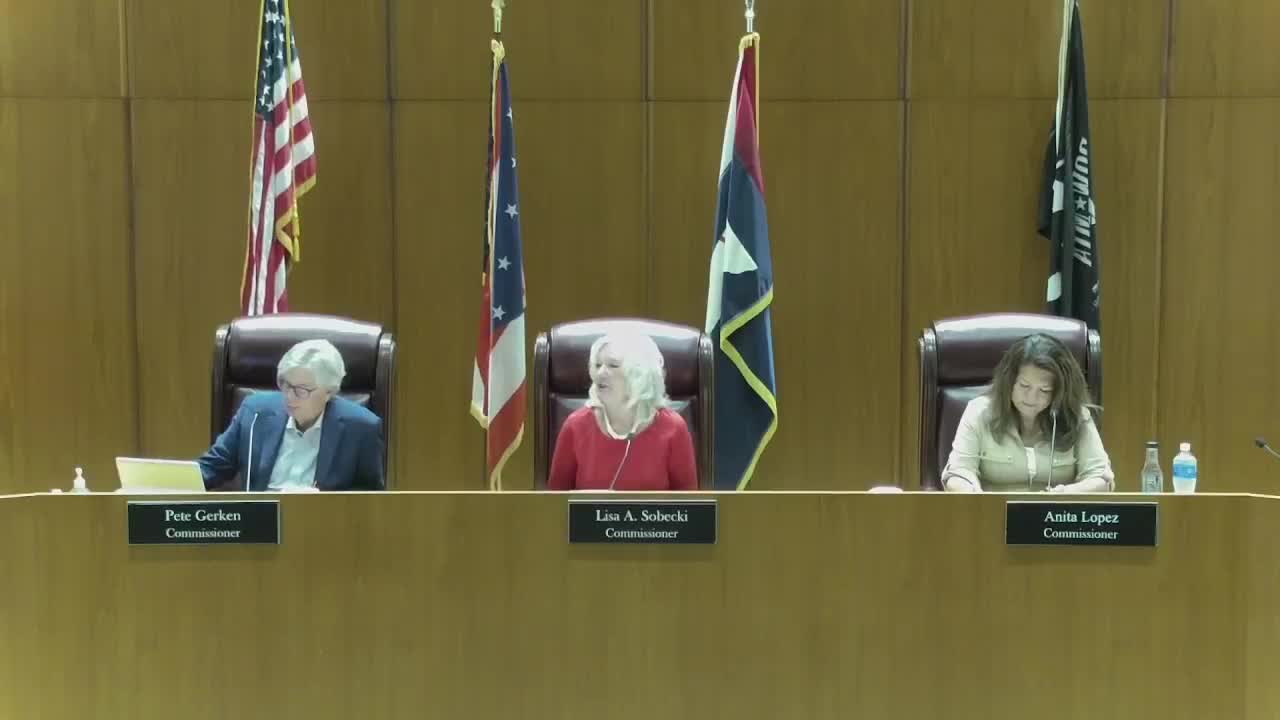
The Lucas County Board of Commissioners on July 1 approved three support‑services resolutions: routine purchase order "then and now" certifications for June 2025, amendments to the county purchasing policy manual (policy No. 11), and revisions to the county surplus policy (policy No. 42).
Mary Konkle of Support Services presented the package. The purchasing‑policy amendments expand the manual’s scope, add language addressing unlawful interest in public contracts consistent with ORC 2921.42, update the definitions and handling of purchasing tiers 3 and 4, clarify use of state contracts, and refine the formal competitive‑bidding process and contract authorization procedures. The surplus policy amendment raises the auction threshold from $2,500 to $5,000 to align with changes in state law (House Bill 497) and adds language to prohibit private sale of county property under $5,000 to employees, update legal‑notice requirements, and revise donation protocols for nonprofit organizations. The policy also authorizes the county engineer to dispose of construction material valued at up to $25,000.
Commissioners asked no substantive questions during the presentation and approved the three resolutions by roll call with Commissioners Cabecki, Gerken and Lopez voting yes. Konkle noted that the amendments are intended to align county practice with current state rules and to clarify procurement procedures.