Get Full Government Meeting Transcripts, Videos, & Alerts Forever!
Get email alerts on the Legislation Public Safety topic
No spam. Unsubscribe anytime.
City staff outlines 2024–25 criminal‑justice and public‑safety law changes that could affect Everett enforcement and services
Summary
Staff reviewed a range of state law changes and bills—hate‑crime definition changes, a new permit‑to‑purchase firearms structure, forged‑digital‑likeness expansions, criminal‑insanity task force creation and funding streams for co‑responder programs—and identified items that may require future municipal code updates or council action.
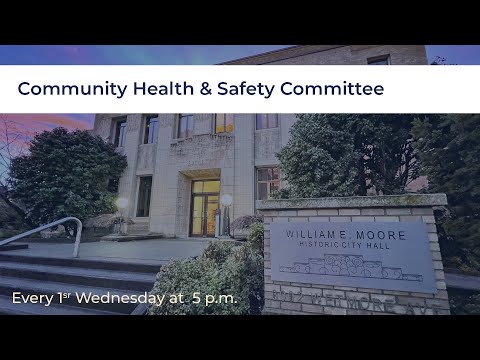
Lacey, a city staff member, briefed the Community Health and Safety Council Committee on 2024–25 state legislation and guidance with potential effects for Everett policing, courts and victim services. She identified measures already in effect, those with multi‑year implementation schedules and several changes city staff may ask council to adopt into the Everett Municipal Code.
Nut graf: The briefing cataloged specific statutory changes that could require Everett to amend municipal code, update enforcement tools or seek grant funding; staff identified hate‑crime reporting changes, a state permit‑to‑purchase framework for firearms, expanded criminal impersonation rules for forged digital likenesses and new training and co‑responder programs as items to monitor.
Lacey said the Washington Supreme Court issued guidance on public defender caseloads and that the court’s timeline for implementation begins next year and scales over time; staff are tracking budget and staffing implications, largely through the Association of Washington Cities (AWC). She also noted Representative Peterson introduced related funding proposals that did not pass this session and that the city is exploring ways to ensure county allocations pass state funds to cities when appropriate.
On specific laws, staff described a recently effective amendment that broadens the hate‑crime definition by making it a hate crime when a person commits an offense “in whole or in part because of their perception of a person's protected class.” Lacey cautioned that an uptick in recorded hate‑crime tags may reflect the statutory change rather than a sudden rise in underlying incidents.
Staff outlined a major firearms bill that creates a permit‑to‑purchase system with safety training and live‑fire requirements and places ongoing permit‑eligibility checks under the State Patrol; Lacey noted that the law is preempted from local regulation and largely will be implemented by the State Patrol with a phased effective date in 2027 to allow state systems build‑out.
Lacey described a new expansion of the criminal‑impersonation statute that covers knowingly distributing a forged digital likeness with intent to defraud or harass; those changes are effective in late July. She said a practical prosecutorial concern is authenticating altered images and proving intent and that the city’s prosecutor’s office will need resources to handle technical evidence.
Other topics covered included:
- A task force to review laws related to criminal insanity and competency to stand trial; Lacey said City Attorney Flora Diaz was recommended to the task force by the city attorney’s office and the Washington Association of Prosecuting Attorneys.
- An expanded hope‑card program (created in 2023) that now must include firearms‑surrender information and be provided free to petitioners; it also covers petitioners seeking an extremist protection order.
- A domestic‑violence co‑responder grant program funded by an added $100 marriage‑license fee; staff said the program is intended to support advocates who respond with law enforcement and that the state will administer the grants.
- A requirement for criminal‑justice training, effective next year, that will mandate patrol officers receive victim‑centered, trauma‑informed training on sexual‑assault and domestic‑violence response and to repeat it every three years.
Lacey flagged other statutes from 2024 that the city might adopt into the Everett Municipal Code to enable local processing, including a new gross‑misdemeanor trafficking offense for catalytic‑converter theft, expanded prohibitions on firearms in sensitive places (libraries, zoos, aquariums and transit facilities), and election‑interference crimes. She said some of those changes currently would be charged in superior or district court but could be added to municipal code so city officers and municipal court could process them locally.
Committee members asked about enforcement details, interactions between new state permit structures and concealed‑carry permissions, and how elected officials might be protected under the forged‑digital‑likeness law. Lacey and other staff said some questions require legal review and interagency coordination and that they will follow up with more detailed analyses or draft code amendments if council requests them.
Ending: No formal council action occurred; staff said they will continue monitoring implementation timetables and return with follow‑up reports or proposed municipal code language as needed.