Get Full Government Meeting Transcripts, Videos, & Alerts Forever!
Get email alerts on the Police Training topic
No spam. Unsubscribe anytime.
Instructor outlines SWAT "reactive shooting" drill focused on hostage rescue and avoiding bystander hits
Summary
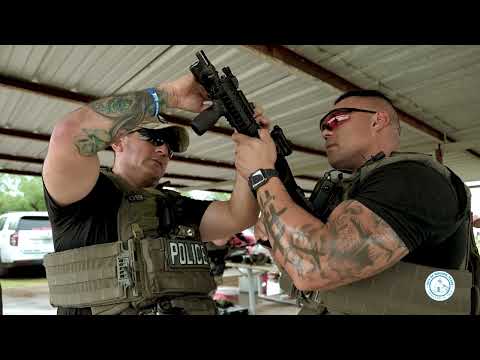
A training instructor described a SWAT "reactive shooting" drill designed to simulate hostage-rescue scenarios and teach operators to take a single protective shot while avoiding simulated bystanders, with scenarios said to occur in schools, stores and homes.
A staff member, a training instructor, described a SWAT "reactive shooting" drill that trains operators to respond to active-threat scenes and take a critical protective shot while avoiding simulated victims.
"Today we're talking about reactive shooting, simulating what a SWAT operator would have to do when he responds to a scene and would have to take a critical shot," the staff member said. The instructor said, when directed, the operator will "down their gear fully completely, run up to the, some barrels, and from there take a critical shot without actually hitting 2 balloons that we have posted, simulating other victims. The purpose of the team is hostage rescue."
The instructor emphasized the need for operators to maintain a rescue mindset during chaotic responses. "You always gotta be in the right mindset. Always understand that at the moment something could happen and that operators have to respond and they have to be in the right mindset in order for them to do their job effectively," the staff member said.
The instructor also listed locations where the training scenarios are intended to reflect real responses: "It happens in schools, stores, convenience stores, at a home, it just depends where we respond. When we have active threats within the city, we want to take those critical shots, that's why we train on them so much because when you have a lot of moving parts, children walking around, chaos going off we want to make sure that shot that the officer takes, that the operator takes it's a protective shot, these amount of shots that he has to take the better it is for everybody," the staff member said.
The meeting transcript supplied these remarks as descriptive training material; no formal policy change, motion, or vote was recorded in the transcript about the drill.