Get Full Government Meeting Transcripts, Videos, & Alerts Forever!
Get email alerts on the Homelessness topic
No spam. Unsubscribe anytime.
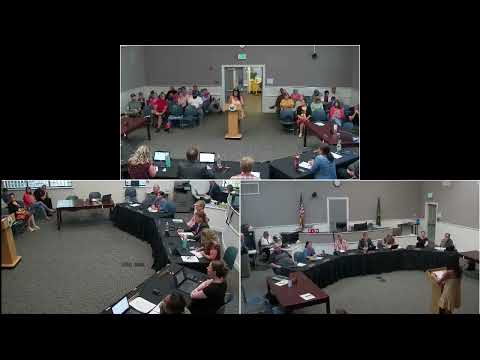
Residents urge more treatment, stricter enforcement in Shelton public comments on homelessness
Summary
At the July 1 Shelton City Council meeting, residents urged the council to prioritize addiction and mental‑health treatment over long‑term housing placements and to enforce local ordinances; speakers cited surveys and national research to argue current approaches lead to chronic homelessness and higher taxpayer costs.
Residents pressed the Shelton City Council on July 1, 2025, to shift more local resources toward addiction and mental‑health treatment and to enforce existing ordinances to address visible homelessness in town.
A resident presenting a three‑part series called “The cost of homelessness” said current “housing first” practices leave some people chronically homeless because treatment needs go unmet. “Instead, public resources are spent on expensive long term public housing projects, where the individual continues to suffer from their addiction and mental health issues due to the lack of the treatment options they need,” the resident said.
The resident cited research they attributed to “Dr. Robert Marmon” and to a University of California survey, saying those studies found high rates of addiction and mental‑health conditions among people experiencing homelessness. Quoting figures presented to the council, the resident said about 50.2% of surveyed people had first experienced homelessness outside Spokane, 63% did not currently have family in Spokane, and 80% were born outside Spokane; the resident also cited a figure that about 75% self‑reported addiction issues and about 78% self‑reported mental‑health issues. The commenter framed those findings as evidence that many people come to the state and that treatment, rather than housing alone, should be prioritized.
Another speaker who identified herself as Shana and as a district captain for legislation told the council she had worked on related state bills and testified before legislators to secure funds she said were intended to help with recovery and housing. “We got a $150,000,000 per vehicle for the state of Washington to help with recovering housing,” she said, describing advocacy work to direct funds to local programs.
Speakers also urged enforcement of local ordinances where encampments appear. One resident asked for public records related to a parked vehicle they described as a program vehicle and said the vehicle created an Americans with Disabilities Act concern; the speaker asked that the vehicle be moved and for the city to respond to prior emails.
The public commenters recommended prioritizing treatment programs, reconnecting people with long‑term ties to their home communities, supporting training that leads to employment, and enforcing public‑safety laws against those who refuse help. The council did not record formal action on these public comments during the meeting.
Why it matters: Council discussion and direction on homelessness policy can change how city funds are allocated, how public safety and code enforcement are applied, and how the city cooperates with state and regional programs. Speakers at the meeting framed the issue as both a local enforcement problem and part of broader state‑level migration and service challenges.
What the record shows: The statements summarized above reflect public comments delivered during the meeting and the statistics and program descriptions as presented by commenters. The council session did not include adoption of a new homelessness policy or a recorded vote on enforcement changes during this meeting.