Get Full Government Meeting Transcripts, Videos, & Alerts Forever!
Get email alerts on the Cdbg Home Allocations topic
No spam. Unsubscribe anytime.
Bethlehem holds public hearing on proposed 2025 CDBG and HOME allocations
Summary
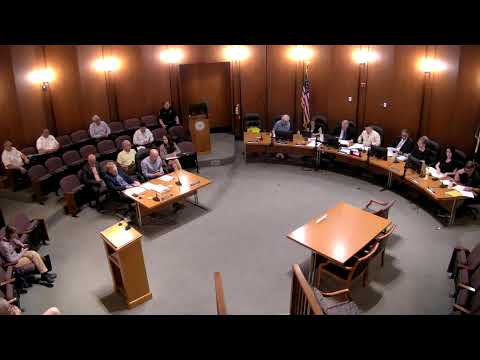
City of Bethlehem officials held a public hearing July 1, 2025, on the administration’s proposed Program Year 2025 Community Development Block Grant (CDBG) and HOME Investment Partnerships (HOME) allocations, which total $1,418,306 in CDBG funding and $417,183.96 in HOME funding.
City of Bethlehem officials held a public hearing July 1, 2025, on the administration’s proposed Program Year 2025 Community Development Block Grant (CDBG) and HOME Investment Partnerships (HOME) allocations, which total $1,418,306 in CDBG funding and $417,183.96 in HOME funding. The administration told council it will seek formal approval to submit the allocations and planning documents to the U.S. Department of Housing and Urban Development (HUD) at the July 15 council meeting.
Why it matters: The CDBG and HOME grants are federal formula funds directed to low- and moderate-income households and to projects that prevent blight, improve public facilities, support housing production and provide public services. Local decisions determine how limited annual allocations are divided among housing, public facilities, public services and program administration.
Robert Vidoni, housing and community development administrator for the city of Bethlehem, led the presentation and described the two programs and the administration’s recommendations. “CDBG activities have to either benefit low and moderate income populations, prevent or eliminate slums or blight, or address urgent community needs,” Vidoni said, explaining HUD eligibility rules and how the formula awards are set. He told council the city’s 2025 CDBG award rose by roughly $3,000 from 2024 and HOME funding increased about 15 percent from last year.
Vidoni summarized recommended allocations and constraints: the administration proposes using 20 percent of CDBG for program administration, directing roughly 49 percent to housing activities, about 14 percent to public facilities and 2 percent for the Northside Alive neighborhood revitalization strategy area (NRSA). HOME recommendations include a 10 percent cap for program administration and a mandatory minimum 15 percent set-aside for Community Housing Development Organizations (CHDOs). Vidoni stressed that both programs are heavily regulated and are typically used to leverage other public and private funds.
Council members pressed staff on several operational matters. Councilwoman Laird asked whether projects operate on a reimbursement basis; Vidoni confirmed that most grantees incur costs and are later reimbursed under executed grant agreements. Councilman Callahan and others questioned the portion of grant funds allocated for administration and asked how much staff time is devoted to CDBG/HOME work; Vidoni said the core team is four staff members, with others contributing part-time, and estimated roughly 50 percent of his own time is spent on these programs.
Several council members and staff discussed administrative costs as a form of technical assistance: attorney and city staff resources support application underwritings, HUD-required environmental reviews, compliance monitoring and audit defense. City staff and council members repeatedly described the work as compliance-heavy and said administrative capacity is intended to protect the city from HUD repayment risk.
Council members also asked about the public service spending cap. Vidoni reiterated the statutory limit that no more than 15 percent of the annual CDBG grant may fund public services (the administration calculated the cap at roughly $212,000 under the current allocation). The cap constrained awards to public-service applicants; for example, North Penn Legal Services requested $25,000 but was recommended for $15,000 in the administration’s list because public-service funds were limited and because of prior funding history.
Councilwoman Kwiatk asked whether capital projects categorized outside the public-service bucket (for example, Gap Street corridor improvements listed at $199,990) could be reallocated to direct services such as legal aid; staff explained that public-service funds are legally capped and that some capital activities are not transferable into the public-service category under the CDBG rules. Staff added that capital projects in the NRSA have additional HUD-imposed requirements.
Vidoni read portions of the administration’s recommended project list during the hearing. Examples from the list included: a $67,746 recommendation for Bethlehem Emergency Shelter, $50,000 for New Bethany’s representative payee program, $358,000 for city housing rehab grants and loans (with $241,500 for program delivery), $75,000 for Holy Family Senior Center fire system improvements, and corridor improvements funds including $199,990 for Gap Street. For HOME, recommended amounts included $41,718 for program administration, a CHDO minimum of $62,578 and $312,888 for affordable housing projects. Vidoni reminded council that HOME applications are accepted on a rolling basis and are more administratively complex than CDBG applications.
Public comment during the hearing touched on geographic targeting and the consolidated plan’s neighborhood priorities. A resident asked whether the CDBG/HOME funds benefit several census tracts identified as disadvantaged; staff said the consolidated plan and the NRSA work identify priority needs and outcome indicators and that the administration will continue community outreach. Vidoni advised potential applicants to check the city website or to contact his office for application details.
Next steps: Vidoni said the administration plans to present a resolution at the July 15 council meeting requesting approval to submit the recommended allocations and the annual action plan to HUD. The public hearing was informational only and no votes were taken during the hearing.
For more information: Vidoni told the council that details and application materials will be posted on the City of Bethlehem website and that applicants may contact his office directly for technical assistance.
Ending: The hearing closed after roughly an hour of presentation and council questions; the council will consider the administration’s resolution on July 15, 2025, before any allocations are submitted to HUD.