Get Full Government Meeting Transcripts, Videos, & Alerts Forever!
Get email alerts on the Special Assessments topic
No spam. Unsubscribe anytime.
Council reviews Chapter 10 special-assessment rules as city prepares 2025 street improvement assessments
Summary
City staff reviewed Chapter 10 special-assessment provisions and preliminary cost allocations for the 2025 street-improvement program; council members requested further study before any ordinance changes and indicated staff should proceed under the current ordinance for 2025 projects.
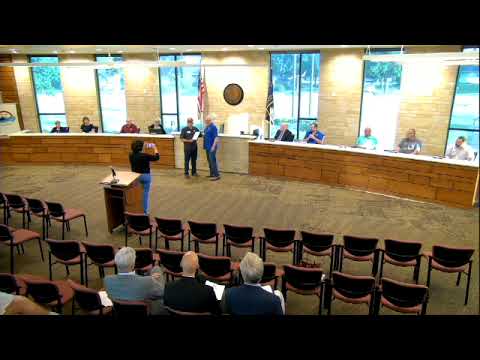
City staff presented the City of Saint FrancisChapter 10 special-assessment provisions and a preliminary breakdown of how those rules would apply to the 2025 street-improvement program during the July 1 council meeting. The staff presentation included estimated assessment shares for curb, gutter, driveway aprons, pavement and restoration on several streets and explained how milled projects are treated under the current ordinance.
Bill, a city staff member who led the presentation, summarized the project list for 2025 (Pennsylvania, Bombay, Elizabeth, Tripoli, Brook, Alabama, Hately and Waterford) and explained the ordinance requires property owners to bear 100% of curb, gutter and driveway aprons costs while pavement costs are typically split 50/50 between residents and the city. Bill said Pennsylvania Avenue was a milled project and, under the ordinanceprovision for milled surfaces, pavement and removal would not be special assessed for residents. "So again, making you aware of that," Bill said, noting the construction contract with Stark Paving was $787,717 and that preliminary assessment calculations based on bid quantities put assessments at about $552,507 (before adjustments); after excluding properties such as DOT and railroad parcels, net assessments were reflected at roughly $515,000 and, with an illustrative 10% administrative fee, a total assessment figure near $566,000. Bill said the citywould borrow to cover initial costs and collect assessments over a period historically set at 10 years.
Council members stressed that the item was a briefing rather than a decision on assessments. Alderman Fliss said the question of changing the ordinance "would need, like, a meeting in itself, like a committee of the whole meeting and to go through this," and urged more study and comparisons with other cities. Another council member said the referendum held several years earlier was close and recommended public outreach before making any substantive changes to assessment methodology. Multiple members said changes to the ordinance would apply to future projects (2026 and beyond) rather than the 2025 program because work on this year's projects had already begun.
Council discussion ended with agreement that staff should proceed with the current ordinance for 2025, prepare the required calculations, and—if no changes are directed—set up the public hearing and notice process so affected property owners will be informed of their preliminary assessments. Bill said staff would complete the preliminary calculations and begin the notification process so that assessments could be placed on the October tax roll if the public hearing and subsequent steps proceed.
No formal ordinance changes or assessment resolutions were adopted at the meeting; the record shows a direction to proceed under the existing Chapter 10 provisions unless council later directs modifications.