Commission backs code changes to classify extended‑stay hotels and close conversion loophole
Summary
Pataskala’s Planning and Zoning Commission voted July 2 to recommend a zoning amendment to City Council that refines definitions for hotels and extended‑stay hotels, adds extended‑stay hotels as a conditional use in multifamily districts and clarifies parking rules, aiming to curb use of hotel construction as de‑facto apartments.
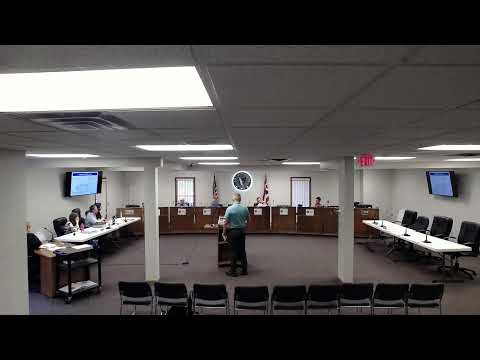
The Pataskala Planning and Zoning Commission on July 2 recommended approval of a zoning code amendment (ZON‑25‑004) that clarifies the city’s definitions of "hotel" and "extended stay hotel," adds extended‑stay hotels as a conditional use in multifamily residential districts and updates parking requirements.
Staff said the change responds to concerns that some properties built to hotel code and licensed as hotels have operated as long‑term rental units or de‑facto apartments. The proposed code language defines a hotel (transient hotel) as stays of 30 days or less and defines an "extended stay hotel" where stays exceed 30 days; staff said that classification lets the city treat extended‑stay hotels like apartments where appropriate. The amendment also adds hotels as a permitted use in the General Business district and specifically lists extended‑stay hotels as a conditional use in the multifamily district.
Scott (city staff) cited an example the city investigated where a large extended‑stay building was functioning with longer leases and said council asked staff to close the loophole. In discussion, commissioners asked about enforcement and edge cases — such as repeated check‑in/check‑out to stay longer than 30 days — and staff said enforcement would rely on advertisement, lease terms and potential state law consequences. "If you're gonna do a Drayton Hall, you need to go to the multifamily district," Scott summarized in describing the ordinance’s intent.
Parking standards in the draft were left aligned with hotel rules (two spaces per guest room plus an additional space per five units rather than apartment parking ratios) to ensure parking is not under‑provided in hotel configurations that later operate like apartment units.
Action and outcome: the commission moved and seconded a recommendation to City Council to adopt ZON‑25‑004 (no modifications recorded) and the motion passed on a roll call vote. Staff indicated no existing local uses required immediate reclassification; the amendment is designed to apply prospectively to new projects and to provide enforcement mechanisms if a permitted hotel advertises or offers long‑term leases inconsistent with the transient‑hotel definition and state law.
AI generated
The text on this page is AI generated. Summaries, highlights, analysis, and video transcripts are all produced from the original source material.
AI can make mistakes, so if you spot one, and we will fix it for everyone.
Note: the source content is unaltered by us. Any content source we link to, be it a video, an audio recording, or a document, is presented exactly as its publisher released it. That publisher is usually a government body, sometimes an individual official or another organisation.