Get Full Government Meeting Transcripts, Videos, & Alerts Forever!
Get email alerts on the Capital Budget Closeouts topic
No spam. Unsubscribe anytime.
Cheshire staff to close out old capital projects, freeing roughly $1.6 million in bond authority
Summary
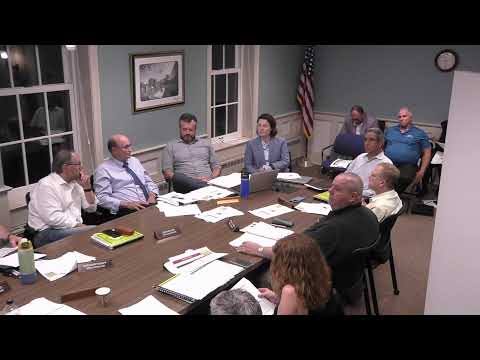
Town finance staff presented a list of completed or inactive capital projects they plan to deauthorize or reapply excess bond proceeds from, saying the moves could reduce future borrowing needs and lower projected debt service.
Town of Cheshire finance staff told the council they have identified roughly $1.6 million in completed or inactive capital-authority balances that can be removed from the books or applied to other projects, reducing near-term borrowing needs.
The move matters because the town’s five-year debt projections assume all authorized capital projects will ultimately be bonded. ‘‘If a project comes in under budget and we have excess bond proceeds, I can apply that to another authorized project and that reduces the amount you have to borrow,’’ a staff member explained during the workshop.
Staff walked the council through a list of more than 45 projects that appear fully spent or inactive. Of the roughly $1.6 million the staff identified, $683,307 in excess bond proceeds would be applied to the town’s 2025 road improvement program and about $595,000 would be applied to school projects, primarily toward the two new elementary schools. Staff also identified several projects that can simply be deauthorized because no bonds were issued for them, including a $242,000 LED lighting upgrade that was financed through on‑bill financing rather than bonded debt.
Finance staff said applying excess bond proceeds to active projects ‘‘has the same effect as a bond deauthorization’’ for reducing the town’s projected future borrowing. They cautioned, however, that deauthorizing projects that were never bonded does not create ‘‘found money’’—it only removes the authorization that had been reserved. A staff member added that some closures are automatic for excess proceeds, while others will require resolutions drafted by bond counsel.
Council members asked whether the clean-up had been vetted with department heads and the Board of Education. Staff said they had checked departments for open purchase orders and grant ties and would continue follow‑up with the Board of Education and other departments before finalizing deauthorizations. One councilor noted several projects on the list are years old and asked staff to be sure the items remain low priority before removing authorizations.
There was no formal council vote during the workshop to deauthorize projects. Staff said some excess-proceeds transfers occur automatically, while other changes will come back to the council in follow-up resolutions for formal authorization.
What’s next: staff will continue to vet the candidate closures with department heads and the Board of Education, ask bond counsel to prepare needed resolutions, and return to the council with the specific deauthorizations and any required formal actions.