Get Full Government Meeting Transcripts, Videos, & Alerts Forever!
Get email alerts on the Student Device Policy topic
No spam. Unsubscribe anytime.
South Colonie board reviews draft mobile-device ban for 2025–26, seeks public input and further study
Summary
Superintendent Dr. Carey presented a draft policy to ban personal, internet-enabled devices during the school day consistent with recent state law; the board discussed exemptions, enforcement, survey results and technology options such as StudentSquare and locking solutions.
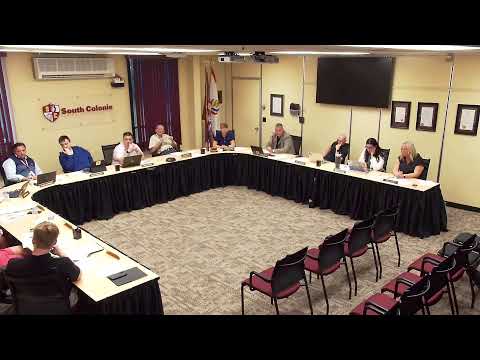
Superintendent Dr. Carey presented a draft mobile-device policy at the July 1 meeting of the South Colonie Central School District Board of Education, saying the district’s proposal is intended to comply with a new state law that restricts use of internet-enabled personal devices during the school day.
The draft covers smartphones, smartwatches and other personal internet-connected devices and would require those devices to be turned off and kept out of sight, typically in a locker or backpack. ‘‘This policy is designed to be compliant with the new law that requires a ban on internet-enabled devices,’’ Dr. Carey said, summarizing the draft’s intent and exemptions.
Dr. Carey and board members discussed carve-outs for medical needs and for students who require devices for communication or translation services; medical exemptions would be processed through the nurse’s office. He said the district will not seek suspensions for cell-phone infractions, because ‘‘the law does not allow for suspensions related to cell phone,’’ and that the district aims to de-escalate incidents and support teachers rather than place the enforcement burden solely on classroom staff.
The superintendent said a district survey produced roughly 800 responses in about three days. The main parent concerns were access to children during the day in emergencies and coordinating after-school pickup and activities. The draft policy leaves some operational decisions — for example, whether students will use lockers or bags to store phones — to further review; the superintendent reported that buying specialized storage bags had a quoted cost of about $61,000 and recommended postponing any large purchase while the district monitors early implementation and available technology options.
Technology solutions discussed included an app-level option similar to airplane mode and a student-focused product called StudentSquare that could allow parent–student communication without unrestricted personal-device use. Dr. Carey said the district will use Aspen, its student-information system, to track discipline reports and measure whether violations are becoming a pattern.
Board members raised questions about classroom practice, freshman orientation, staff expectations and language access. The policy’s next steps as discussed on the record: a first reading scheduled for Aug. 12 and a target to approve the policy on Aug. 26 so it can take effect at the start of the school year, with continued monitoring and communications to families over July and August.