Get Full Government Meeting Transcripts, Videos, & Alerts Forever!
Get email alerts on the Broadband topic
No spam. Unsubscribe anytime.
Colo Telephone, Stratford report progress on Story County NOFA broadband projects
Summary
Representatives from Colo Telephone and Stratford Regional reported updates on NOFA-funded broadband builds: Colo Telephone said one NOFA project is complete and a larger NOFA 8 phase is nearing customer activation; Stratford said its NOFA investment has passed thousands of locations with many service drops installed.
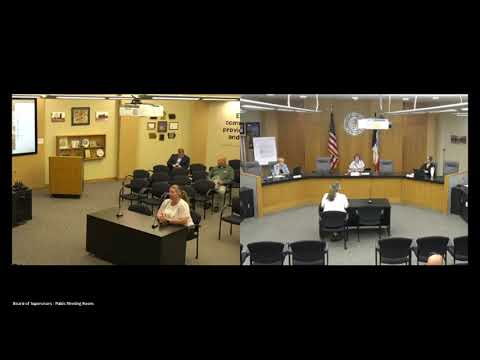
Shane Bellen, presenting for Colo Telephone Company, told the Story County Board of Supervisors on July 1 that the company's NOFA 6 project — about 11 service drops and roughly 2 miles of mainline fiber — was completed last year and now has nine active customers. Bellen said Colo Telephone's larger NOFA 8 work is split into phases: Phase 1 had about seven miles of mainline fiber and 24 drops (15 active customers), and Phase 2 involves roughly 51 miles of mainline fiber and 87 drops, with "roughly about 90% of the mainline fibers in".
Bellen said the company had started placing drops and splicing, and that they had begun turning up customers; he said, "we're shooting for the July" window but added, "it's probably gonna be middle August before it's a 100% complete." He also told supervisors that only 44 of the roughly 87 Phase 2 drops were grant-funded; the remainder required the company to fund or finance drops to reach additional customers.
Later in the agenda a representative for Stratford Regional Telephone described the county-level impact of their NOFA and ARPA investment. The Stratford presenter said the company passed about 2,200 locations in Story County and currently provides service to roughly 1,250 of those locations. He said approximately 60–70 percent of passed locations already have service lines (fiber drops) to the house, and that the Stratford-funded portion of the project covered about 50 route miles and represented an investment of roughly $3.5 million to $4 million for the grant-covered area.
Both presenters answered supervisors' questions about service footprints and next steps; Stratford suggested coordination across providers for coverage near county borders and noted federal BEAD program changes could affect priorities such as "Fiber First" preferences and program requirements.
Why this matters: the updates show progress connecting rural addresses in Story County but also highlight remaining gaps, partial grant coverage of drops, and coordination needs across multiple providers and programs.
County supervisors thanked the presenters and requested follow-up coordination to address remaining unserved areas.