Get Full Government Meeting Transcripts, Videos, & Alerts Forever!
Get email alerts on the Wildlife Corridor topic
No spam. Unsubscribe anytime.
Prescott Valley enlists consultant for two‑phase wildlife‑corridor planning effort
Summary
Town of Prescott Valley principal planner John Jacobson said the town has hired consultant Logan Simpson to produce a two‑phase wildlife‑corridor plan aimed at guiding development, protecting pronghorn and other species, and updating codes and policies to coordinate with regional partners.
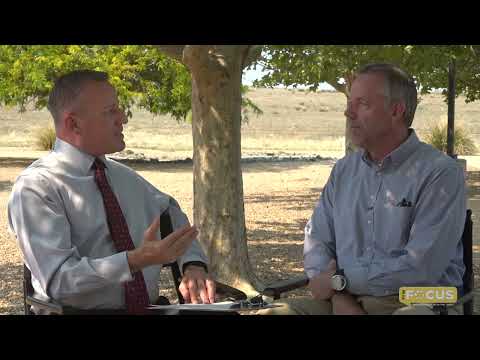
Town of Prescott Valley Principal Planner John Jacobson said the town has enlisted consultant Logan Simpson to produce a two‑phase wildlife‑corridor plan that will guide development and protect habitat for pronghorn and other species, during an interview on the PV in Focus podcast.
The effort responds to a town survey last year that ranked preservation of open space and habitat among top community concerns, Jacobson said, and is intended to balance growth with the landscape features that draw residents to Prescott Valley.
Jacobson said the planning work is structured in two phases. "The first phase is termed the foundation guide," he said. "That's data collection, analysis, and we're going to wrap that up. And then the second phase will be actually producing the corridor plan proper." He said the foundation phase includes focus groups and analysis of available wildlife data.
Logan Simpson, the consultant firm named in the interview, will prepare the foundation guide and the subsequent corridor plan, Jacobson said. The town has convened local focus groups and is coordinating regionally with a planning organization referred to in the interview as Simpo and with Game and Fish; Jacobson identified Jeff Gagnon of Game and Fish as a contributor who shares GPS tracking data and other species information. "We have access to all that data," Jacobson said, referring to collaring and movement studies for pronghorn.
Jacobson described specific policy tools the town intends to pursue after the analysis phase, saying staff are considering "strict guidelines," code updates and ordinances to steer development so it dovetails with wildlife habitat. He cited cluster development as one example: concentrating lots in one area to preserve larger contiguous open space elsewhere. He also referenced past land swaps as a mechanism to shape outcomes where land ownership is mixed.
On site design measures, Jacobson said the town is learning from Game and Fish about accommodations such as "friendly fencing" set about "18 to 24 inches above ground so that in this case, pronghorn can get under." He characterized the overall objective as sustaining quality of life for people and wildlife: "What drew us here ... is the climate, the air quality, the Highlands kind of environment, the wildlife," Jacobson said.
Jacobson emphasized that the corridor effort is "regionally coordinated and locally implemented," noting that much habitat lies outside municipal boundaries in unincorporated Yavapai County and that county cooperation will be necessary for corridors extending toward Paulden and beyond. He said the town is engaged with nearby jurisdictions including Prescott and Chino Valley.
Jacobson also addressed expected benefits and tradeoffs. He said case studies show that proximity to open space can increase property values, which can be attractive to developers, and that the town will seek to educate developers and residents about how tools such as cluster development work. He said the planning effort is not meant to stop development outright but to "help guide smart growth" through formal, implementable policies rather than guidance that sits on a shelf.
The podcast host noted that survey results and additional background are available on the town website and that the PV in Focus series releases episodes on the first and third Wednesdays of each month. Jacobson said the town will use the foundation guide and stakeholder input to draft specific policies and code updates in the next phase.
No formal vote or ordinance adoption was described in the interview; Jacobson described planned steps and policy tools the town will seek to develop after completing data collection and analysis.