Get Full Government Meeting Transcripts, Videos, & Alerts Forever!
Get email alerts on the Vape Regulation topic
No spam. Unsubscribe anytime.
Planning Commission opens public‑hearing process for vape‑ and tobacco‑retail zoning changes, schedules Aug. 6 hearing
Summary
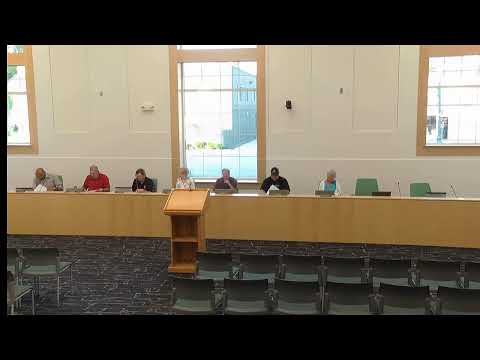
Planning staff presented draft zoning changes to restrict dedicated vape and tobacco retailers and the commission scheduled a public hearing for Aug. 6 to consider the amendments.
Planning staff presented draft zoning amendments to restrict where tobacco and vape retail establishments may operate in Bowling Green and the commission agreed to hold a public hearing on the draft at its Aug. 6 meeting.
Heather, planning staff, said the draft adds “tobacco or vape store” as a conditional use in the central business district (citing Section 150.42), prohibits walk‑up and drive‑through windows, and would require regulatory signage at public entry doors (Section 150.69). Staff provided two GIS exhibits: Exhibit A drew 1‑mile buffers around existing vape shops; Exhibit B modeled a 1,000‑foot buffer around community‑oriented facilities (day cares, schools, libraries, churches) and identified about 56 locations that would be excluded under that buffer.
The proposed regulations aim to limit new, dedicated vape/tobacco retailers while allowing ancillary retail (for example convenience stores that sell tobacco as part of a broader offering) to continue. Heather said the code language specifies the rule applies to establishments “dedicated to the display, sale, distribution, delivery, offering, furnishing, or marketing of tobacco, tobacco products, and vapor products” and that existing shops would generally remain legal nonconforming uses unless voluntarily discontinued.
Commissioners debated multiple elements: whether to use a 1‑mile separation between dedicated shops or to allow more by using a shorter distance; whether to use a 1,000‑foot buffer from civic uses or a 500‑foot buffer; and how to treat existing businesses and ownership changes. Several commissioners asked staff for the 500‑foot GIS overlay; staff said that map is available. Commissioners also discussed how Ohio law treats legal nonconforming uses and noted that voluntary discontinuance rules limit the city’s ability to force a use to terminate; staff said a six‑month discontinuance window was proposed.
Commissioner Waddle and other members said the 1‑mile buffer around existing shops would leave only limited commercially zoned areas available for new shops; others favored the more restrictive 1,000‑foot buffer from schools and youth‑oriented facilities. Commissioner Abhishek urged caution, saying market forces will produce workarounds and that the city should balance regulation with incentives for other business types.
No final ordinance vote was taken; commissioners agreed to carry the draft to a public hearing on Aug. 6 and to use the commission’s next meeting to consider suggested changes item‑by‑item so the public and council see a refined draft. Staff noted other municipalities varied in their approach (some use 500 feet, others 1,000 feet) and that the commission could refine distances and definitions before forwarding a recommendation to City Council.
Key clarifying points from staff and commissioners: • Exhibit A: 1‑mile buffers measured from existing, dedicated vape shops; exhibit shows limited available commercially zoned parcels for new dedicated shops. • Exhibit B: 1,000‑foot buffer around community facilities identified about 56 locations that would be excluded; a 500‑foot analysis is available on request. • Definition: the draft applies to stores dedicated primarily to tobacco/vapor products; existing convenience stores or gas stations that sell the product as an ancillary item would not be newly regulated out of business. • Legal nonconforming: existing dedicated shops would remain legal nonconforming and could change ownership; staff proposed six months of inactivity to trigger discontinuance under voluntary discontinuance rules consistent with Ohio law.
Next steps: the commission set a public hearing for Aug. 6 and asked staff to prepare both 500‑ and 1,000‑foot buffer maps and a clearer packet for the hearing. The commission suggested moving through the draft ordinance item‑by‑item at a subsequent meeting so a majority position could be identified in advance of Council review.