Get Full Government Meeting Transcripts, Videos, & Alerts Forever!
Get email alerts on the Annexation topic
No spam. Unsubscribe anytime.
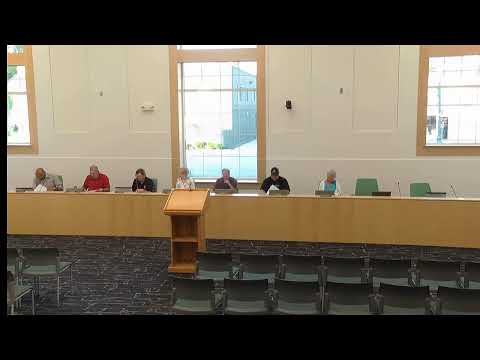
Planning Commission recommends annexation of 67.692 acres along Bishop Road
Summary
The Bowling Green Planning Commission voted to recommend that City Council annex four contiguous parcels totaling 67.692 acres along Bishop Road; commissioners also recommended interim R‑2 zoning 6–1. The recommendation proceeds to City Council, which has final authority.
The Bowling Green Planning Commission voted 7–0 to recommend that City Council annex four parcels totaling 67.692 acres along Bishop Road and later voted 6–1 to recommend interim R‑2 (medium‑density residential) zoning for the property.
The annexation petition covers four parcels north and south of Bishop Road near its intersection with Bridal Road. Planning staff told the commission the request was filed on behalf of petitioners Doug and Flow LLC, Robert W. Mower and Mower Family Farms LLC, and that Wood County Commissioners approved the petition on May 15; the city received copies May 27. Heather, planning staff, said annexation is required under city ordinances when city utilities are provided and that the petitioners have requested R‑2 zoning and indicated an interest in residential development, though no specific development plan was submitted.
The recommendation matters because annexation would make the parcels eligible for city water, sewer and electric service and would place future land‑use and zoning decisions under City Council authority rather than the county or township. The commission’s recommendation is advisory; City Council will make the final decision.
Planning staff described the site as farmland and noted the parcels are contiguous to city limits; the staff memo cited the city’s future land‑use guidance when recommending interim zoning. Commissioner Abhishek raised long‑term fiscal concerns, saying research indicates municipal costs to extend utilities and services can exceed near‑term tax revenue from low‑density development and urged the commission to consider whether annexations are financially advantageous to the city. Heather responded that annexation processes are governed by the Ohio Revised Code, that the city circulates petitions to administrative departments for comment, and that many costs and benefits are difficult to quantify because development patterns and timing can change.
During discussion the commission considered zoning options. Planning staff summarized differences between R‑2 and R‑3: R‑3 permits higher density uses such as multiunit dwellings and nursing homes that are not allowed in R‑2, while some uses (for example accessory dwelling units and bed‑and‑breakfasts) are allowed in R‑2 but not R‑3. After debate, a motion to recommend interim R‑2 zoning was made, seconded and approved 6–1.
Actions recorded at the meeting: • Motion: “Recommend to City Council that we annex these four pieces of property.” Moved by a Planning Commission member, seconded; vote: Miss Broadwell — yes; Miss Ennis — yes; Mr. McComber — yes; Mr. Phillips — yes; Mr. Stalder — yes; Mr. Waddle — yes; Mr. Boddy — yes. Outcome: approved (7–0). • Motion: “Recommend to City Council that the interim zoning be R‑2.” Moved and seconded; vote: Miss Broadwell — yes; Miss Ennis — yes; Mr. McComber — yes; Mr. Phillips — yes; Mr. Stalder — yes; Mr. Waddle — yes; Mr. Boddy — no. Outcome: approved (6–1).
The commission and staff noted next steps: the annexation recommendation and interim zoning recommendation will be forwarded to City Council for public hearings and final action. The commission reminded members the recommendation is advisory and that staff will continue to route petitions to city departments for utility and service impact review.
The discussion also placed the request in local context: staff said this is the third annexation petition the commission has considered so far this year and reiterated that annexation agreements and utility connections are governed by state law and city ordinance. City departments will continue to evaluate potential fiscal and service impacts when Council considers the petition.