Get Full Government Meeting Transcripts, Videos, & Alerts Forever!
Get email alerts on the Youth Mental Health topic
No spam. Unsubscribe anytime.
Students present mental‑health check‑in proposal; board members offer support, office‑hours idea
Summary
Members of the Hopewell Valley youth advisory board presented survey findings showing high stress and a perception of being unheard, and proposed a monthly Google Form check‑in and QR-code reporting to connect students with counselors. Board members praised the work and discussed school‑board office hours and partnership with the Hope Squad.
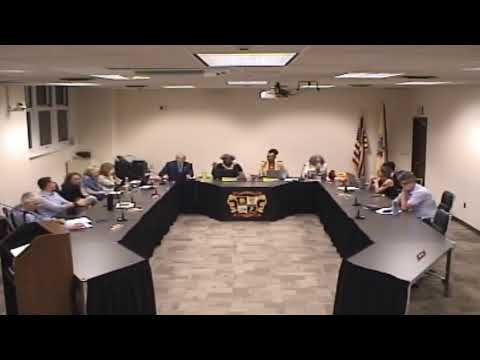
Student leaders from the district’s youth advisory board urged the Hopewell Valley Regional Board of Education on a pilot program to track students’ mental health and raise awareness of available supports.
Manus Sinha, vice chair of the youth advisory board and a junior at the high school, told the board that a Google Form survey the students ran showed 66.3 percent of respondents reported excessive stress and 58.1 percent felt their voices were not being heard. “Once we identified these issues with the survey, we decided we wanted to create a solution that would not only engage students, but also engage staff,” Sinha said.
The students proposed a monthly Google Form distributed by school counselors to collect self‑reported check‑ins, plus QR-code links on bathroom posters for immediate access. Counselors would review responses and intervene or route students to services as needed, the students said; they said they developed draft posters and a distribution plan and are working with building principals and counselors on implementation details.
Principal Riley introduced the youth group to the board and confirmed the administration’s willingness to collaborate. Board members suggested practical supports: Mr. Capadia recommended board office hours where students could meet with trustees to share concerns, and school leaders recommended linking the project with the newly started Hope Squad and counselor work. Dr. Resnick emphasized the value of empirical data in board decision making and encouraged the students to continue refining survey instruments and to work with AP Statistics students if they seek more formal analysis.
What the board will do: The superintendent said she will place the youth advisory board’s PTO recognition request on the education program committee agenda and invited the student presenters to share the plan with that committee. Board members said they will support student outreach, permit poster placement and consider the office‑hours idea next year.
Ending: Students said they plan to continue the project and asked for district help to ensure the pilot is implemented consistently and reaches all students; board members offered follow‑up in committee and encouraged continued student involvement in planning and evaluation.