Get Full Government Meeting Transcripts, Videos, & Alerts Forever!
Get email alerts on the School Referendum topic
No spam. Unsubscribe anytime.
Moorestown board delays capital referendum; residents raise health and noise concerns over proposed bus depot at UES
Summary
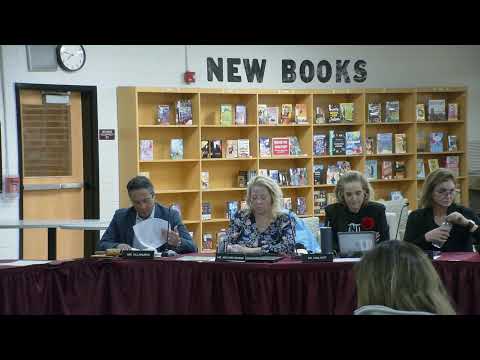
The Moorestown Township Board of Education announced it will postpone a planned capital referendum from March to Sept. 16 after letters from the New Jersey Department of Education arrived too late for the county filing deadline, Board President Mark Villanueva said at the board’s reorganization meeting.
The Moorestown Township Board of Education announced it will postpone a planned capital referendum from March to Sept. 16 after letters from the New Jersey Department of Education arrived too late for the county filing deadline, Board President Mark Villanueva said at the board’s reorganization meeting.
The delay means the district will take more time to review state funding determinations for 18 separate project applications the board submitted last year and to refine which projects to present to voters, Villanueva said. "The referendum will not take place in March," he told the meeting after the board met with bond counsel, legal counsel and architects to consider next steps.
The timing matters because the board had hoped to present final referendum questions to the county by a Jan. 9 deadline to enable a March 11 special election. Villanueva said the district received the Department of Education response only on the afternoon before the meeting and did not feel comfortable filing ballot questions without more time to digest the state’s funding allocations.
That delay coincided with an extended public-comment period focused on the district’s plan to move bus parking and maintenance off the high school campus and onto a site near the Upper Elementary School (UES). Dozens of residents, including multiple physicians, told the board they were concerned about air pollution, childhood asthma, long-term cancer risk and noise if a bus depot were located adjacent to homes and a school.
"You should come up with a different site," physician Chad Gonzale told the board, criticizing the proposed location and urging the district to select a site "far removed from a school where children attend and also far removed from residential areas and neighborhoods." Pediatrician Persephone Jones said the plan "tarnishes our neighborhood and our school," and pulmonologist Rohit Malik said he expects increased childhood asthma if the depot is placed near homes and students.
Resident Greg Horwitz cited New Jersey’s noise-control regulation and said his calculations indicated several Bramley Road properties would exceed the New Jersey Administrative Code 7:29 nighttime limits by as much as 20 decibels if buses were parked and idling near property lines. Horwitz noted the code’s enforcement fines and urged the board to consider the potential for recurring violations and community impacts.
Board members acknowledged the concerns and said moving the buses and the maintenance bay is a central part of their plan to free space on the high school campus and to build classroom capacity elsewhere. Villanueva and other board members said the referendum includes funds to add 11 classrooms on the WAMS campus plus two labs and small-group instruction space to accommodate grade realignment and growth.
"Moving the bus depot is a critical component of the plan," Villanueva said, adding that reclaiming the maintenance bay at the high school would free space for expanded curricular offerings, including vocational programs. The board also cited traffic benefits: shifting buses off the high-school campus would be part of a larger effort to reduce congestion on neighborhood streets during drop-off and pick-up.
Multiple residents asked the board to share alternative locations under consideration and to form a community task force of local experts and neighbors to review options. Amber Majeed asked whether the district had compiled alternate sites and urged a participatory process. Several speakers said clearer communication to the wider community about the referendum questions and the possible breakdown of projects would help preserve voter support for the broader capital program.
Villanueva and other board members said they would continue to study alternate sites and hear community input, and that the additional time before September gives the board more opportunity to do that work. The board said it met in executive session with counsel and architects to review the state information and develop next steps, and that it will keep the public informed about the schedule for when draft referendum questions will be released for public review.
Votes at a glance
- Election of board president: Mark Villanueva was elected president in a roll-call vote. Recorded votes in the transcript: Missus Arquero Burns — No; Missus Aurora — Yes; Missus Barnes — Yes; Missus Fowles Macaluso — Yes; Dr. Myatt — Yes; Mrs. Miller — Yes; Mrs. Moreno — Yes; Mr. Weeks — Yes; Mr. Villanueva — Yes. (Outcome: elected.)
- Election of vice president: Danielle Miller was nominated and elected vice president (outcome: elected; roll-call sequence recorded in the transcript; final affirmative votes announced).
- Reorganization routine motions (appointments, standing committees as amended, code of ethics, petty cash funds, professional services): motions to approve were made and carried during the meeting; verbal voice votes were recorded as "Aye" and no recorded nos or abstentions were announced for those motions in the transcript (outcome: approved).
What happens next
The board said it will not file referendum questions by the county deadline for a March vote and will instead aim for the Sept. 16 referendum date. The district will continue to review the Department of Education’s funding letters, refine the set of projects to be presented to voters and consider alternate bus-depot sites and mitigation measures. Board members encouraged continued public engagement and said they will provide additional information to residents as it becomes available.