Moorestown board approves $108.3M referendum questions for September ballot
Loading...
Summary
The Moorestown Township Board of Education approved two referendum questions totaling $108.3 million to renovate schools, add classroom space and build an operations center; the special election is scheduled for Sept. 16 if the board’s placement holds.
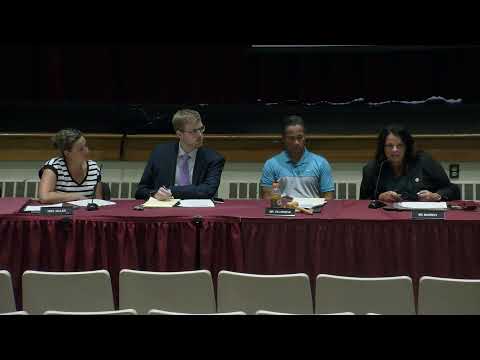
The Moorestown Township Board of Education voted unanimously to place two referendum questions on a special election ballot, approving a package of projects the district says will fund classroom additions, building repairs and campus improvements. The board approved the resolution in a roll-call vote after a presentation by district administrators and set Sept. 16 as the target date for the special election.
The referendum package totals $108,300,000. Ballot question 1 carries an estimated cost of $80,300,000 and focuses on interior renovations and additions (including HVAC, roofs, security and communications upgrades, gym and stadium updates, and elementary classroom renovations to support full-day kindergarten). Ballot question 2 totals $28,000,000 and would fund a new operations center on the main campus, campus traffic improvements and three new turf fields; question 2 is contingent on passage of question 1.
Why it matters: district administrators said the projects are intended to address enrollment growth, aging building systems and instructional space shortages. “We know that we have enrollment growth coming,” Dr. McNeely said during the presentation. Administrators also said the package is designed to maximize eligibility for state aid under the state Department of Education funding formula; the district estimates $18,700,000 in state aid and an estimated combined monthly tax impact of about $54 on the average assessed home if both questions pass.
Details of ballot question 1: administrators said the first question prioritizes renovations and additions that are typically eligible for state support. The package would build two additions at the middle school (including a 24,500-square-foot addition to house sixth grade), create roughly 12 classrooms at the elementary level by shifting grade bands (moving sixth grade to the middle school and third grade to an upper elementary configured as a 3–4–5 school), and renovate existing gym spaces (including the 60-year-old Eisenberg gym), the stadium turf and tennis courts. The district also listed replacement of end-of-life HVAC equipment (some units use R-22 refrigerant) and roofing projects across three buildings. The district estimates the state funds 40% of eligible costs and historically covers roughly 84–85% of that 40% share for Moorestown’s typical projects.
Details of ballot question 2: the second question would fund an operations center (described as a pole-barn style structure) to relocate maintenance and grounds operations away from instructional wings of the high school, freeing up space for instructional renovations. Moving the bus depot and operations functions is also presented as a way to improve vehicle circulation and stacking on campus by adding an ingress/egress driveway off Bridgeboro Road. To offset the lost playing field caused by the operations center, the plan includes three new turf fields with engineered drainage; district staff said two existing fields have clay subgrades and poor drainage and that the proposed turf system is designed to manage water in an area delineated on flood-hazard maps. The district estimates state aid for question 2 at $2,700,000 and an average monthly tax impact of about $17 for the average assessed home.
On state funding and project packaging: James Heizer, the district’s business administrator, said the district bundled projects with an eye toward what the state will fund. “The state's funding formula is very much geared towards renovation over addition,” Heizer said, and he used the turf example to explain eligible versus ineligible costs: the state will often fund drainage and subsurface work for a turf field but not the turf surface itself.
Vote and next steps: the board approved a resolution to place the two special-election questions on the ballot by roll call, with the following members recorded as voting yes: Cara Burns, Aurora, Barnes, Fowles Macaluso, Dr. Myatt, Moreno, Weeks, Miller and Villanueva. No mover or seconder was recorded on the public transcript for the motion; the resolution passed and the board directed staff to continue community outreach and to work on the final ballot language and explanatory statements. Administrators said they will publish detailed project materials and videos on the district’s referendum webpage (mtps.com/refendum) and provide information on voting options, including vote-by-mail instructions.
What remains: the referendum must be approved by voters on the scheduled special election date. If the board’s placement holds and voters approve both questions, the district estimates it will receive the projected state aid and proceed with the prioritized projects. If either question fails, the district did not specify fallback plans during the meeting.