Get Full Government Meeting Transcripts, Videos, & Alerts Forever!
Get email alerts on the Historic Preservation topic
No spam. Unsubscribe anytime.
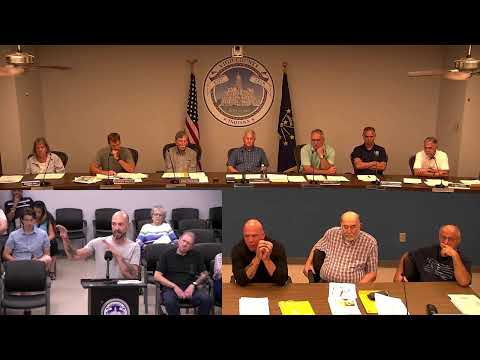
Planning commission recommends historic-preservation ordinance to City Council amid debate over scope and timing
Summary
The Vigo Area Planning Commission voted to recommend General Ordinance No. 2 (2025), which would create a seven-member Terre Haute Historic Preservation Commission empowered to survey resources and issue certificates of appropriateness, staff said.
The Vigo Area Planning Commission voted to recommend General Ordinance No. 2 (2025), an amendment to the Terre Haute City Code that would establish a seven-member Historic Preservation Commission appointed by the mayor to survey historic resources and issue certificates of appropriateness for demolition, moving, and certain new construction or exterior changes, planning staff said.
"What you have before you is a mirror of state code. It is deliberately mirroring state code so that it can be legally defensible," Todd Nation, president of the Terre Haute City Council and one of five council members sponsoring the ordinance, told the commission. He said the ordinance would create an enabling framework and that the commission would adopt local rules after formation.
Supporters from historic-neighborhood groups urged adoption, arguing Terre Haute has lost many historic buildings and that local tools are needed. Carrie Youssef, president of Farrington's Grove Historical District, Inc., said the city has "let 40 years of inattention and destruction destroy much of our cultural history" and urged support for the ordinance. Christopher Wolf, a downtown resident, said historic preservation supports tourism and neighborhood identity.
Several planning commission members and others raised objections and concerns in public comment. Concerns included the ordinance's broad language (including possible regulation of exterior color), the lack of funding to help homeowners comply, and the advisability of conducting an updated historic survey before adopting broad local controls. Planning staff told the commission that the ordinance committee had been "unfavorable as it is written" while acknowledging the idea itself was not wholly opposed.
Staff and some commissioners suggested a practical path: form the commission and make its first action commissioning an updated survey of historic resources so local rules and impacts can be assessed. The commission voted to recommend the ordinance to the City Council; the meeting record shows the motion passed, though the transcript does not include a roll-call tally. If approved by the council, the ordinance would enable the mayor-appointed commission to begin surveying resources and proposing local rules, but individual projects or requirements would depend on the local commission's subsequent rules and any public-comment process.