Get email alerts on the Land Use Development Agreements topic
No spam. Unsubscribe anytime.
Assembly Hears Public Concerns Over Cape Cod Commission Rule Requiring Certified Local Plans
Summary
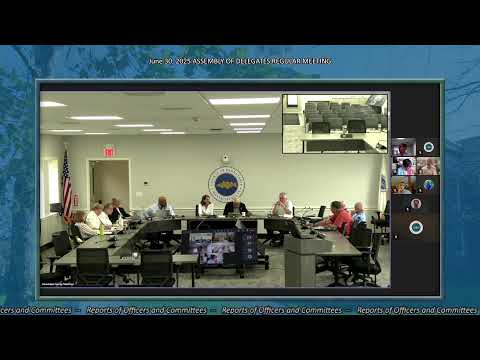
The Barnstable County Assembly of Delegates held a public hearing July 2 on proposed amendments to the Cape Cod Commission’s development-agreement regulations that clarify the long‑standing requirement that a municipality have a certified local comprehensive plan (LCP) to enter a development agreement.
The Barnstable County Assembly of Delegates held a public hearing July 2 on proposed amendments to the Cape Cod Commission’s development-agreement regulations that clarify the long-standing requirement that a municipality have a certified local comprehensive plan (LCP) to enter a development agreement.
The amendments, staff said, are intended to provide clarity and streamline certification by referencing the regional policy plan construct established in 2018. Cape Cod Commission Executive Director Christy Senatori told delegates, "It is not new that there's a need to have a local comprehensive plan to enter into a development agreement," and Commission counsel Jessica Walgus said the requirement "has been in place since 02/2014" and that the proposed language mainly provides additional clarity.
Why this matters: development agreements offer a local alternative to the Commission’s Development of Regional Impact (DRI) review for large, multi-use projects that can span many years. If a town lacks a current certified LCP, the town generally must use the DRI process rather than the streamlined development-agreement pathway, a restriction delegates said can have material timing and cost consequences for towns pursuing projects.
Delegates and town representatives pressed several practical concerns. Brewster Delegate Bridal said many towns face gaps between adopted plans and certification—LCPs run on 10-year cycles, and it is "extremely common" for an LCP to expire before a new one is certified, often creating a one-to-two year lag, the commission staff said. Senatori and Walgus pointed to a recently adopted streamlined local comprehensive plan regulation and technical assistance the commission offers; they noted four towns—Bourne, Sandwich, Provincetown and Truro—had used those streamlined rules to obtain LCP certification.
Multiple delegates requested additional time to review the ordinance and consult town staff. Counsel reminded the assembly that the Cape Cod Commission Act gives the assembly a statutory window to act after formal receipt; delegates asked staff to determine when that 60-day period begins so members would know their voting deadline.
No vote was taken July 2. Senatori and Walgus said the proposed regulation had been through commission-level public process and committee review; they encouraged delegates to consult their town representatives, and several delegates said they would do so before the ordinance returns for a decision.
Ending: The hearing concluded with the assembly noting the next formal vote would occur after the clerk and counsel confirm the statutory receipt date and the assembly’s required timeline. Delegates were urged to consult municipal officials about local certification status before the ordinance returns to the agenda.
AI generated
The text on this page is AI generated. Summaries, highlights, analysis, and video transcripts are all produced from the original source material.
AI can make mistakes, so if you spot one, and we will fix it for everyone.
Note: the source content is unaltered by us. Any content source we link to, be it a video, an audio recording, or a document, is presented exactly as its publisher released it. That publisher is usually a government body, sometimes an individual official or another organisation.