Get Full Government Meeting Transcripts, Videos, & Alerts Forever!
Get email alerts on the Traffic Calming Bighorn Drive topic
No spam. Unsubscribe anytime.
NDOT to replace proposed Bighorn traffic circle with additional speed cushion after neighborhood input
Summary
At a neighborhood meeting, NDOT staff presented a traffic-calming concept for Bighorn Drive and said they will remove a proposed traffic circle and instead add a fourth speed cushion; the project will move to a property-owner ballot before construction, likely about a year away.
Jeff Hammond, a consultant working on behalf of the Nashville Department of Transportation (NDOT), told residents at a neighborhood meeting that NDOT plans to install traffic-calming measures on Bighorn Drive from Cascade Drive to Bighorn Court and will revise an early plan to replace a proposed traffic circle with an additional speed cushion.
The change matters because the street registers an 80th-percentile speed of about 35 mph, carries roughly 1,700 vehicles per day and is widely used for walking and bicycling despite lacking sidewalks, NDOT staff said. Residents and the councilman raised concerns about motorcycles and high-speed cut-through traffic from nearby lake-area subdivisions.
NDOT said the initial concept showed three speed cushions along the roughly 1,200-foot project length and a traffic circle at the Cascade–Bighorn intersection. After feedback at the meeting, staff said they will remove the traffic circle from the concept and substitute a fourth speed cushion on the south side of Cascade; the revised drawing will be finished using additional field measurements before the project is balloted.
"We do focus on physical solutions to bring about slower speeds," Hammond said while describing the traffic-calming toolbox. He explained NDOT prioritizes speed-related data in its scoring and that about 70% of a project's prioritization score is based on traffic behavior such as speed and volume. He said the agency maintains a backlog of roughly 600 street applications and typically implements about 50 projects a year, so construction is likely to be almost a year away even if the ballot passes.
Residents described daily high speeds and motorcycles that can bypass standard cushions. "If you don't put full length cushions, motorcycles can still fly up and down," a resident said. Cody, a resident who lives in the neighborhood, said the project is welcome because of safety concerns for walkers, children and pets: "The safety, I think, is the number one priority."
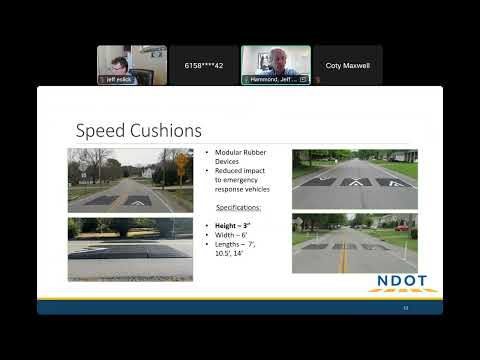
NDOT described the most-used tools for residential streets: 6-foot-wide rubber speed cushions (standard length 10.5 feet, adjustable between about 7 and 14 feet), speed tables, radar feedback signs and targeted pavement markings. Staff said cushions typically reduce speeds on average by roughly 9–12 mph in before/after comparisons, though results vary by street.
NDOT outlined the next steps: finish the revised design, post final plans online, run a six-week ballot for property owners who abut the right-of-way on the project segment, and—if two-thirds of ballots cast approve—place the work in the construction queue. NDOT staff emphasized ballots go to property owners, not renters, and that owners with multiple parcels vote only once.
Project staff advised that emergency-vehicle access and large vehicles such as school buses influence design choices, which is why some tools (for example, speed tables or traffic circles) are used selectively. Councilman Sterez and NDOT staff said they will coordinate further measurements and post the revised plan on NDOT's project page and on Engage.Nashville for written comments.
NDOT staff provided a contact (jeff.easlick@nashville.gov) and encouraged residents to use the project's Engage Nashville page for pinned comments and written feedback. The neighborhood indicated general support for cushions; NDOT said it will proceed to finalize the design and begin the ballot process.