Get Full Government Meeting Transcripts, Videos, & Alerts Forever!
Get email alerts on the Traffic Calming Bikeway topic
No spam. Unsubscribe anytime.
NDOT unveils traffic‑calming and bikeway plan for Apple Valley Road after selection from 600+ applicants
Summary
Nashville Department of Transportation presented a preliminary design for traffic calming and a bikeway on Apple Valley Road on June 16, 2025, proposing speed cushions, intersection depaving/bulb‑outs and a protected cycle lane; the project was selected from more than 600 applications and may be built sooner because repaving is scheduled for the路
Nashville Department of Transportation officials presented a preliminary traffic‑calming and bikeway design for Apple Valley Road during a virtual neighborhood meeting on June 16, 2025, saying the street was selected from a pool of more than 600 applicant streets.
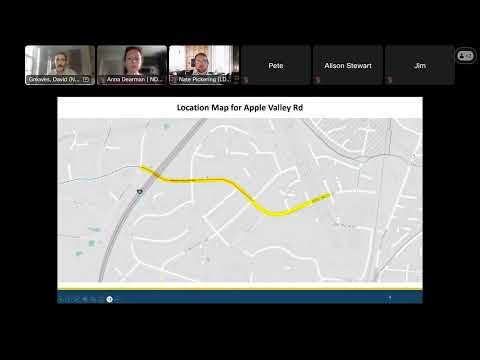
David Grieves, an engineer who works with NDOT on the traffic calming program, said the project limits run from Greenacres Drive to Conair Drive and that field measurements showed the 85th‑percentile speed on Apple Valley was 39 miles per hour and the road carries about 1,500 vehicles per day. "We found that the 80 fifth percent speed was 39 miles an hour," Grieves said. He said Apple Valley’s width varies from about 26 feet to about 40 feet, which affects design choices.
The project team said the package aims primarily at reducing vehicle speeds and improving conditions for people walking and biking as part of NDOT’s Vision Zero safety work. "This is a program that primarily focuses on speed reduction with the hope of improving conditions for pedestrians, people biking, you know, neighbors on the street," Grieves said. The design combines vertical measures, lane narrowing and bikeway upgrades to address speeding, frequent driveway interactions and large corner radii that residents said encourage fast turns.
Nate Pickering, an engineer with LDA Engineering who prepared the plans, described the principal elements in the concept design: speed cushions spaced generally about 300 feet apart where geometry allows; corner depaving and bulb‑outs to tighten turning radii; targeted pavement narrowing; and a protected cycle lane using a new 4‑inch, roughly 2½‑foot long plastic “cycle lane” element plus flexible delineators. "With the speed cushion layouts, we try to keep them at about 300 foot separation," Pickering said. He also said the project retains a centerline through a constrained intersection area before transitioning into the speed cushion layout.
Residents raised several safety concerns during the meeting. Multiple attendees reported drivers running stop signs at the four‑way intersection near where the traffic calming project limit ends and described high‑speed turning from Apple Valley onto cross streets, which one resident said has led to rutted yards and makes walking a child to nearby preschool difficult. Arturo Maresco and another resident said they have observed drivers frequently running the stop signs at that intersection. Aaron Coleman described a large radius where Apple Valley turns into Cuneth/West Campbell and said vehicles take that turn at "a pretty high rate of speed." Grieves and Pickering said they would examine those intersections for added cushions, depaving to tighten radii, and bulb‑outs to reduce turning speed and improve sight lines.
The team reviewed tradeoffs and constraints. Grieves noted that speed cushions and speed tables are effective in many locations but are not feasible on steep hills or tight curves; in such spots the team may install radar feedback signs (solar speed display signs) or narrower travel lanes to psychologically slow drivers. Pickering said depaving at intersections can reduce impervious surface and improve stormwater outcomes, but cautioned that where curbs and storm pipes are absent the team must check drainage and avoid redirecting runoff onto neighbors’ property.
Questions about maintenance and durability surfaced. A resident who previously lived near Riverside Drive asked about damage and replacement of plastic devices (sometimes called “armadillos” or delineators). Anna Dearman, walking and biking manager at NDOT, said the department inventories and periodically replaces delineation but cannot immediately refresh every damaged device across the city; she said Riverside has received additional delineation and that NDOT is systematically upgrading bikeway separations. "They're intended to be struck, actually hundreds of times," Dearman said of some delineation products, adding that the newly proposed cycle‑lane products have had a good maintenance record and will be used in combination with delineators.
Project data and expected outcomes were discussed: NDOT staff presented a small 2023 before‑and‑after study from six projects showing average speeds dropping from 31 to 22 mph and 85th‑percentile speeds falling from 37 to 25 mph after vertical measures. Grieves told attendees the traffic calming program selected Apple Valley in March 2025 as one of 25 streets chosen from more than 600 applications via a data‑driven prioritization that weighs speeds, volumes, crash history, presence of sidewalks/bike lanes and proximity to destinations.
Next steps and implementation timeline: staff said the design will be revised using public feedback gathered via a survey available at engage.nashville.gov/trafficcalming (survey open for at least a month), and the project may have a second neighborhood meeting before final design. Because the bikeway upgrade is being installed as part of the scheduled paving project, NDOT staff said they will not hold the usual neighborhood ballot for traffic‑calming selection in this case. Grieves said a typical traffic‑calming construction timeframe is eight to 10 months but that Apple Valley is slated for repaving, which could accelerate construction to as early as later this summer.
No formal motions or votes were taken at the meeting. Staff solicited public feedback, described design choices and constraints, and said they will refine plans and pursue construction coordination with the repaving schedule.
For contact or to comment, presenters listed David Grieves, Nate Pickering and Anna Dearman and directed residents to the online survey and Metro/Nashville NDOT social media channels. The presentation recording will be posted to the Metro Nashville YouTube page.