Lifetime Citizen Portal Access — AI Briefings, Alerts & Unlimited Follows
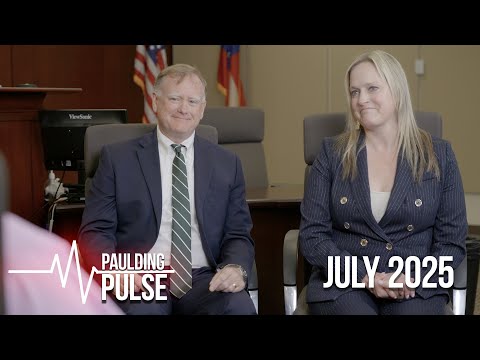
Paulding County judges explain state court role and newly operating DUI accountability court
Loading...
Summary
Two Paulding County state court judges described the court's jurisdiction, its purpose alongside superior court and the county's DUI accountability court — a post-conviction, 18-month program now serving 11 participants — during a county public program interview.
Two Paulding County state court judges described how the county's state court differs from superior court and outlined a newly operating DUI accountability court that offers treatment and monitoring for convicted DUI defendants.
State court provides a faster route for many everyday criminal and civil matters, Judge Anne O'Connor said. “State court, its jurisdiction is a little bit different than superior court. State court's jurisdiction, generally speaking, are misdemeanor criminal cases. And then any civil lawsuit where a party is asking for money from another party,” O'Connor said, listing examples such as traffic cases, car-accident claims and landlord-tenant disputes. She added that state court does not handle divorce or custody cases.
The distinction matters because state court can move cases to resolution more quickly than superior court, judges said. “So civil cases, you can file in superior or state court. But like he said, it's much more expeditious to get it through state court,” Judge Rountree said.
Why this matters: county officials and residents encounter many of the case types state court handles, and judges argued a separate state court helps reduce delays in the superior court docket and gives citizens faster access to hearings and rulings.
DUI accountability court described
The judges said Paulding County has launched a DUI accountability court this year to provide supervised rehabilitation for people convicted of driving under the influence. “We started a DUI court. We were active. We, were up and running, I think it was July of this year or August or so. So we have currently 11 participants, and they're doing phenomenal,” O'Connor said. She described the DUI court as a post-conviction program that participants enter after pleading guilty.
Judges described the DUI court's structure: it is an 18-month program that requires participants to submit to drug testing, attend treatment and appear in court every two weeks. The court also connects participants to services intended to help them secure employment and other supports that the judges said defendants might not otherwise access.
“This process, they're able to secure employment if they don't have it. The court's able to do a lot of things for them that otherwise would not be,” O'Connor said, describing the court as aimed at accountability and rehabilitation rather than only punishment.
Court operations and ethics
Both judges outlined how their daily work breaks down: traffic, arraignments and calendar calls for criminal matters; civil dockets and extensive written orders and legal research for civil motions. Judge Rountree said much of his time is spent reviewing motions and drafting orders, and that ex parte communications are not permitted. “We take that very seriously. I don't have ex parte communication with anybody,” Rountree said, adding that the court enforces rules that parties not contact judges outside formal proceedings.
Background and history
Paulding County's state court is new: the judges said it began operations three years earlier as the county's population grew and created demand for a court focused on misdemeanors and civil claims seeking monetary relief. Judge O'Connor was the county's first state court judge; Judge Rountree said he was sworn in to the second judgeship on Feb. 11 after a gubernatorial appointment.
Judicial expectations and civility
Both judges emphasized impartiality and professional conduct. O'Connor said she wants to be remembered as “a fair, impartial, expeditious judge.” Rountree said he hoped the court would promote civility among lawyers and litigants: “There's a lack of civility that seems to be too prevalent right now. ... You're gonna be treated with respect, and lawyers are gonna talk to each other with respect and to the court with respect,” he said.
What the interview did not cover
No formal policy changes, budget votes or court rule amendments were proposed or decided during the interview. The judges described existing programs and court operations; they did not request or announce specific new county actions during the conversation.
Looking ahead
The judges said they plan to continue operating the DUI court and managing the growing state court dockets. They also said training and procedural work — including regular publication of orders and case management — remain priorities as the court matures.