Get Full Government Meeting Transcripts, Videos, & Alerts Forever!
Get email alerts on the Parking Policy topic
No spam. Unsubscribe anytime.
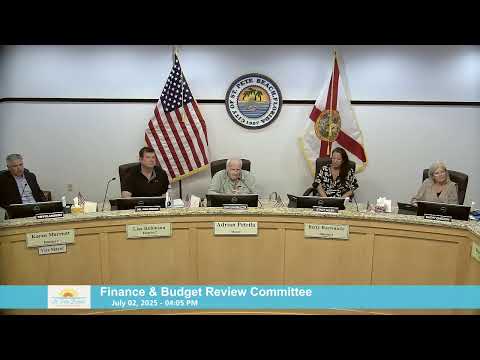
Committee creates separate parking fund, launches fee study and flags demand pricing, residency charges and bad‑debt as issues
Summary
The committee agreed to isolate parking as a separate enterprise fund, asked for a comprehensive parking study covering residential permits, beachfront pricing and demand pricing and requested staff analysis of outstanding receivables and enforcement challenges.
St. Pete Beach staff told the Finance and Budget Committee they have created a separate parking enterprise fund so parking revenue and expenses can be monitored outside the general fund.
Why it matters: parking revenues are being used to support streets, beaches, parks and a portion of public safety costs that patrol the beachfront. Separating parking into its own enterprise fund makes those flows more transparent and will be a focus of the fee study staff is completing.
What staff said and committee questions
Staff reported the parking fund is rebounding from storm impacts, but not yet at the levels budgeted in 2025. The committee heard that the fund currently includes revenue from parking facilities, parking tickets and a 50% cash share with the county for certain park income. Staff identified a $3.2 million transfer that was temporarily parked in the general fund packet and said that will be shown properly once account mapping issues are resolved.
Committee members asked staff to research the parking fund’s accounts receivable and bad‑debt exposure (including so‑called “ghost plates” where plate ownership limits collections), whether ParkMobile or demand pricing can display variable rates, and whether residential parking permits should be reinstated or restructured to shift costs to non‑residents. Staff said a comprehensive parking study is already under way and will look at residential parking, beachfront pricing and demand pricing (peak vs. off‑peak rates).
Enforcement and revenue recovery
Code enforcement and law enforcement roles for beach rules (for example, dogs on the beach) were discussed; staff said enforcement responsibility and revenue attribution depends on which agency issues the citation (city code enforcement versus Pinellas County Sheriff’s Office). Committee members asked whether revenue from privately permitted events (weddings, races) nets out after staffing costs; staff said event organizers often reimburse personnel costs, resulting in near net‑zero effect for the city in many cases.
Next steps
Committee members requested: (1) the parking fee‑study results; (2) a review of outstanding receivables and proposed bad‑debt treatment; (3) a clear mapping of transfers between parking and general funds in the tentative budget; and (4) consideration of demand (surge) pricing via ParkMobile or similar apps. No formal fee changes were adopted at the workshop.
Ending
Staff said the parking study will return to the committee after completion and that any policy changes would be recommended to the commission for action.