Get Full Government Meeting Transcripts, Videos, & Alerts Forever!
Get email alerts on the Hookah Lounges topic
No spam. Unsubscribe anytime.
Council approves citywide change to hookah-lounge BYOB hours after police cite after-hours activity
Summary
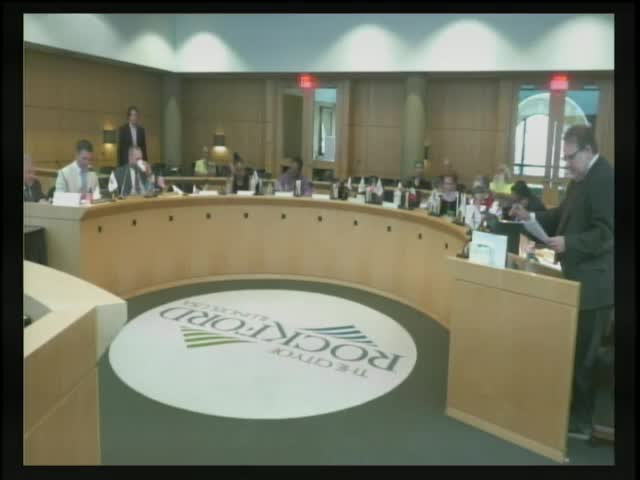
The Rockford City Council on Monday approved an amendment to the City of Rockford Code of Ordinances section 3-119 to modify hours for BYOB at hookah lounges citywide.
The Rockford City Council on Monday approved an amendment to the City of Rockford Code of Ordinances section 3-119 to modify hours for BYOB at hookah lounges citywide.
The ordinance change was presented by Alderman Bonney and approved on a recorded vote (9 ayes, 1 no). The legal director was directed to prepare the appropriate ordinance language reflecting the amendment.
Alderman Bonney said he had asked the item be laid over previously to gather more information and reported that the city’s police review and dashboard/body‑cam footage showed incidents in a parking lot outside the city’s only operating hookah lounge and evidence the business appeared to be operating after its licensed hours. “They continue to dispute. They believe that the police department is misinterpreting what they’re seeing in the video,” Bonney said, noting the owner had told him the business closed at least a week earlier and could not afford to reopen.
Alderman Meeks asked for clarification that the ordinance change would apply to hours for hookah lounges generally, not to any single business. The mayor confirmed the change is citywide; any existing operator seeking extended hours would have to apply to the council for an extension of their license. Chief Fred, identified in the meeting as the police chief, told the council there were “no reports of shots fired,” but said officers found fights and one person wanted on a warrant; officers had to ask the manager to bring a person out of the business during an investigation. The chief added video review indicated the business appeared to be operating outside its approved hours.
Bonney said that while he would support adopting the citywide ordinance so future applicants know the rules, he would not support extending hours for the currently operating business unless it could demonstrate a period (he referenced six months) of operating without incident under its existing hours. Other council members said the ordinance would allow future applicants to apply for later hours and BYOB as appropriate and that any existing operator would need council approval to extend their license.
The council’s approval updates the code of ordinances; practical changes for any particular business (including hours longer than its current license permits) will require a separate application and council action. The record shows concerns about after‑hours activity were limited to incidents in the parking lot rather than fights occurring inside the business itself.
The ordinance passed by roll call (9 ayes, 1 no).