
Local pantries and state officials urge year‑round donations, volunteers to close seasonal gap in Templeton area
Get AI-powered insights, summaries, and transcripts
Subscribe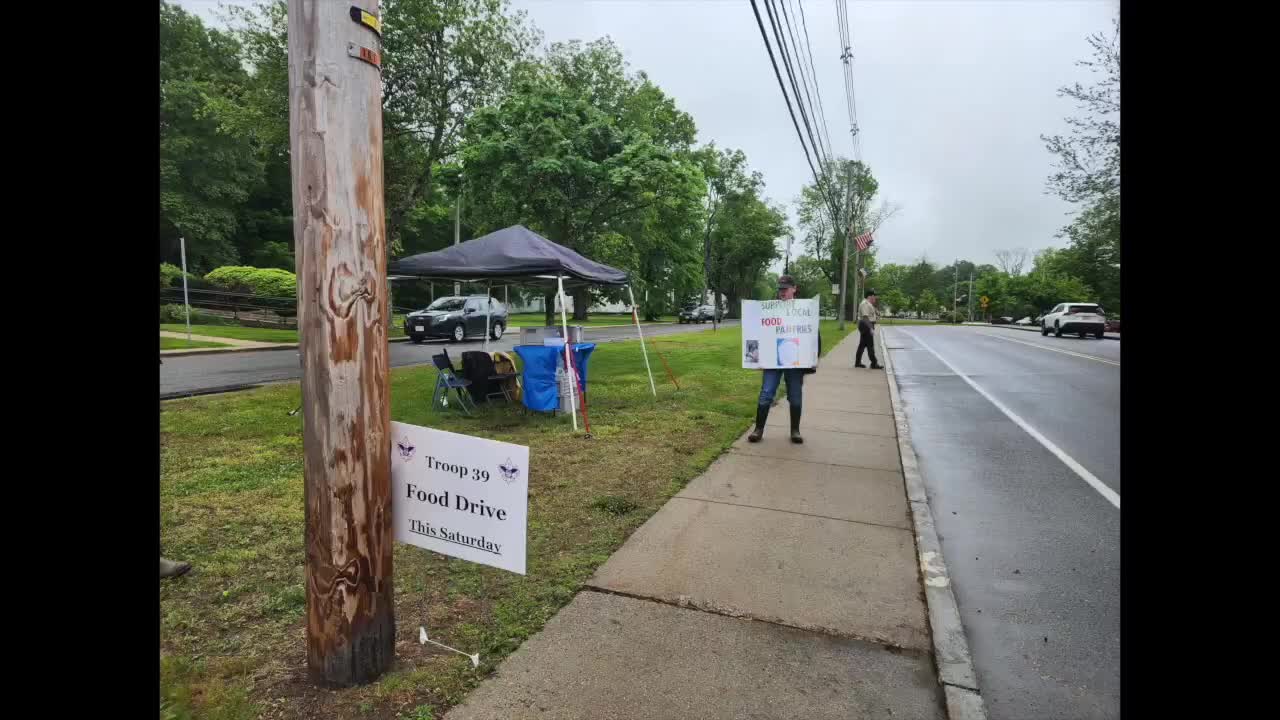
Summary
In a video produced by James Bennett of Troop 39 Phillipston, representatives from the Gardner CAC, Montachusett Veterans' Outreach Center, Templeton Food Pantry and state lawmakers described year‑round needs at local food pantries, noted large winter donation spikes and urged ongoing volunteer and monetary support.
James Bennett of Troop 39 Phillipston produced a video at the Templeton Food Pantry on behalf of an Eagle project, hosting representatives from local food pantries, veterans’ services and state lawmakers to discuss food insecurity and how to sustain support beyond the winter holidays.
Speakers said donations and volunteer help peak in November and December but drop sharply through spring and summer, leaving pantries struggling to stretch year‑end funds across the year. Julie Meehan, executive director of the Gardner CAC, said, “We serve about 900 people every month through our food pantry.” Stephanie Marchetti, executive director of the Montachusett Veterans’ Outreach Center, said, “We serve about 800 veterans a year.”
The message from pantry directors and nonprofit staff was practical: pantries need ongoing monetary donations, regular volunteer shifts, and items that are not always donated, such as personal‑hygiene and household products. The Templeton Food Pantry director, Mrs. Shocote of New Hope Bible Chapel, described the pantry’s client choice model and explained its inventory and distribution process: “When our guests come in, they are allowed to choose what they would like.” She said the pantry offers fresh and shelf‑stable items, a gluten‑free and vegan section, pet food, refrigerators and freezers for dairy and meat, and a weekly choice system that aims to reduce waste.
Speakers gave specific examples of items pantries often lack: spices, personal‑care items, laundry detergent, paper towels, can openers and easy‑to‑prepare protein or boxed meals. Meehan suggested spice drives and noted that household items are frequently excluded from government benefits and therefore rely on donations.
State support and programs were discussed as complements to local efforts. Susanna Whipps, state representative for the Second Franklin District, and John Zlotnick, state representative for the Second Worcester District, described state funding streams and programs that assist pantries. Whipps highlighted the Healthy Incentives Program (HIP), which allows SNAP recipients to purchase fresh local produce, and said the Massachusetts Department of Agricultural Resources provides grants and capital support for equipment such as freezers. Meehan and Whipps credited an earmark that funded pop‑up pantries run by the Gardner CAC.
Nonprofit partners and regional infrastructure also support distribution. Speakers noted partnerships with the Worcester County Food Bank, Growing Places, Mount Wachusett Community College and local schools; Julie Meehan described pop‑up pantries that bring fresh fruits, vegetables and other items into neighborhoods to reduce barriers like transportation.
Several organizations described programs that teach cooking and reduce barriers to preparing healthier food. The Gardner CAC’s “Dinners on Us” provides a slow cooker, a fully prepped meal and instructions; Meehan said the goal is to reduce intimidation and time barriers to preparing healthy meals.
Speakers repeatedly emphasized volunteers as critical infrastructure. Mrs. Shocote said volunteers are her biggest operational challenge: the pantry tries to keep at least two people on duty, and needs three or four on its busiest days. Both pantry directors asked for ongoing volunteer commitments and for community members to advertise resources to neighbors.
Bennett said he will compile contact information into a brochure for food drives and donation events. The video concluded with a call for volunteers and regular donations to sustain pantries outside the holiday season.