Get Full Government Meeting Transcripts, Videos, & Alerts Forever!
Get email alerts on the Public Infrastructure Districts topic
No spam. Unsubscribe anytime.
Tooele County adopts policy to collect PID taxes amid statutory conflict; officials warn of limits to enforcement
Summary
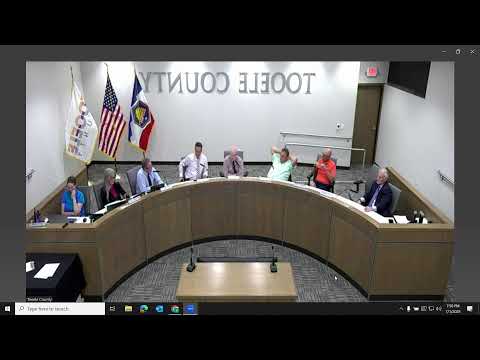
The Tooele County Council on July 1 adopted Resolution 2025-16 to amend county policy so the county will collect public infrastructure district ad valorem taxes when rates are provided, while clarifying the county will not be the PID’s primary enforcement agent.
The Tooele County Council on July 1 adopted Resolution 2025-16 to amend the county’s policy for public infrastructure districts so the county will collect PID taxes and related ad valorem taxes when rates are provided to the county.
County Attorney Scott Broadhead told the council the existing PID policy said the county would not collect taxes, fees or assessments imposed by a PID, which conflicted with other state statutes that require the county to collect. Broadhead said his office reconciled the conflict by explaining the county may collect when a PID sets a tax rate but is not required to enforce collection of PID assessments or to pursue enforcement actions on behalf of the PID.
Tooele County Treasurer Mike Jansen told the council county treasurers must process and distribute PID taxes much the same as other taxing entities and that counties routinely handle the accounting and distribution. Jansen said counties also provide guidance and training to other jurisdictions on PID handling.
Council members and members of the public asked how collection, distribution and tax-sale procedures would work in practice. Broadhead and treasurer staff explained the county would collect ad valorem taxes when the PID provides a rate; if a PID does not set a rate, the county will not collect for that entity. Officials said assessments (for example, connection or maintenance assessments) differ from property taxes and are typically the PID’s responsibility to enforce. The treasurer said the county could contract to collect assessments if a PID requested that service.
The council debated the policy at length, noting political concerns that residents often blame the county for tax increases imposed by other taxing entities. Council members said the change is intended to align county practice with state law and to avoid lawsuits or “ugly power struggles” over collection authority.
Councilman Eric Stromberg moved to adopt Resolution 2025-16; Councilman Kendall Thomas seconded. The council recorded roll-call votes (Councilman Thomas: yes; Councilman Hoffman: yes; Vice Chair Scott Wardle: aye; Councilman Stromberg: aye) and adopted the resolution.
The resolution updates the PID application and review policy so the county will collect PID ad valorem taxes when presented with a tax rate, while clarifying that enforcement, foreclosure and assessment collection remain responsibilities of the PID unless the county contracts to provide those services.