Get Full Government Meeting Transcripts, Videos, & Alerts Forever!
Get email alerts on the On Site Wastewater Maintenance Fee topic
No spam. Unsubscribe anytime.
Marathon County committee backs annual special charge to fund septic maintenance program
Summary
The Marathon County Environmental Resources Committee voted to recommend funding the county on-site wastewater maintenance program with a special annual charge rather than full levy funding, after hearing staff cost estimates and public comment.
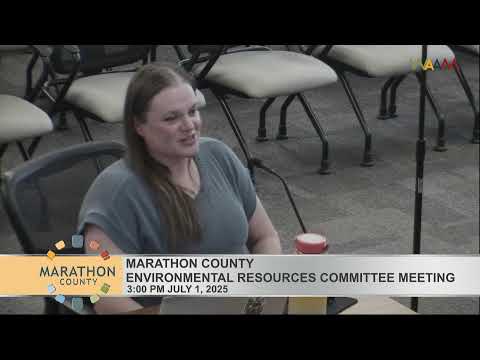
The Marathon County Environmental Resources Committee voted July 1 to recommend that the county fund its on-site wastewater (septic) maintenance program through a special annual charge on tax bills instead of continuing to fully fund the program from the general levy.
The committee's recommendation — moved by Supervisor Kroll and seconded by Supervisor Debreu — followed a presentation from CPZ staff showing the county's maintenance program cost and options for shifting some or all costs to a special charge on property tax bills. The committee approved a motion to pursue full cost recovery via a special charge (staff estimated about $6 per year per parcel with a septic system) and forward the ordinance amendment process to the County Board.
County CPZ presenter Chad told the committee the current operational cost for the maintenance program is “about $125,240,” and staff have counted roughly 21,219 septic systems in the county's maintenance program. Chad said the county tracks new installations at about 157 systems per year, and that 31 of Wisconsin's 72 counties already assess a fee to support maintenance programs. He presented fee scenarios: full cost recovery at roughly $6 per year; a 75% special charge / 25% levy option around $4.50; and a 50/50 option near $3.
Administrator Leonard framed the choice in budget terms: “The budget is the most important policy document that the board adopts every year,” and noted that counties must decide what services to provide, at what level, and at what cost — emphasizing that the septic maintenance program is mandated but funding is not provided by the state.
Public comment included a town resident, Marilyn Bend, who opposed the special charge, saying, “I just don't think that this is fair” and raising concerns about collection and future increases. Supporters on the committee, including Supervisor Robinson, said targeted fees align cost with users and help protect limited levy capacity. Several supervisors pressed staff on implementation details (timing, billing mechanics, and public notice) and enforcement processes for noncompliance.
Staff described enforcement and program operations: maintenance is required every three years; the county typically sends three notices, conducts site visits for persistent noncompliance and works to avoid court citations (this year roughly 20 citations resulted after follow-up efforts). CPZ estimated that mailing separate annual bills instead of using the tax-roll mechanism would raise administrative costs and could push a $6 charge closer to $10.
The committee instructed staff to proceed with draft ordinance steps: distribute draft language to towns, obtain the Department of Safety and Professional Services (DSPS) review, hold a public hearing, and then forward a recommendation to the County Board, which would adopt any chapter 15 amendment and set the fee. Staff said the goal would be to have the charge reflected on property tax bills if timing and statutory steps permit.
Committee members emphasized outreach and invited additional town-level input and a public hearing during the ordinance process. The motion carried with no recorded opposition.
The County Board will receive the committee's recommendation; if approved there, the county would proceed with drafting and posting the ordinance language, DSPS review and required public hearings before placing the charge on tax bills.