Prime Group outlines 1,200-unit plan to open Shetland Park waterfront; council and residents press for deeper affordability, infrastructure details
Loading...
Summary
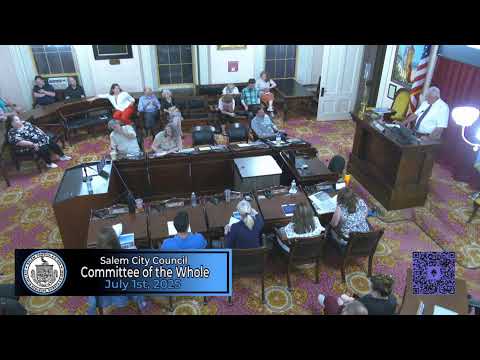
Prime Group on Tuesday presented a master plan to the Salem City Council Committee of the Whole to redevelop Shetland Park into a mixed‑use district with about 1,200 residences, a consolidated Salem Academy campus and expanded public waterfront access.
Prime Group on Tuesday presented a master plan to the Salem City Council Committee of the Whole to redevelop Shetland Park, a roughly 29‑acre waterfront property, into a mixed‑use district with about 1,200 residential units, new commercial space, a single consolidated Salem Academy campus and expanded public waterfront access.
The developer said the plan would keep roughly the same amount of commercial square footage on the site (about 1 million square feet today), add parking mostly below grade, plant more than 400 trees, rebuild the seawall to account for sea‑level rise projections through 2070 and add recreational open space including a proposed nine‑acre park at the southern end of the property. "Shetland Park is just an asset that's not meeting its potential," said Katie Davis, executive vice president of Prime Group Shetland Park.
Why it matters: The property has been largely fenced off from the Point neighborhood for about a century. Prime Group said opening walkways to the water, adding community rooms, and creating small‑scale retail and incubator space would reconnect the neighborhood and create jobs. The proposal also raises major land‑use questions for the council: zoning changes (including a planned 40R overlay), state environmental reviews (MEPA), Chapter 91 waterfront licensing and the details of a development agreement that could lock in affordability, public access and other community commitments.
What Prime Group described: Presenters said the proposal would concentrate modern commercial space near Congress Street, build a consolidated Salem Academy facility at the site’s southern end, add approximately 1,200 residential units with a headline commitment of 20% affordable housing, provide below‑grade parking and on‑site mobility options such as a developer‑run shuttle to the MBTA and ferry connections, and pursue sustainability measures including all‑electric residential units, photovoltaic roofs, vegetated roofs and possible geothermal systems. Sean Selby, the team’s master‑plan presenter, said, "We're gonna rebuild that seawall tall enough to withstand any storm surge" and that the design would raise the ground plane to meet future sea‑level projections while creating space for stormwater storage.
Affordability and neighborhood protections: The team described a target affordability split that the presenters later clarified as 10% at 60% AMI and 10% at 80% AMI, and said they were exploring a land gift to the North Shore CDC to support additional deeply affordable units. "We are building into the economics, realizing that we can't raise the rent on these nonprofits," Patrick (Prime Group representative) said when asked about nonprofit tenants. Council members repeatedly pressed the team for deeper affordability and local preference mechanisms: "The affordability percentage is definitely my top concern," Councilor Davis said, adding that higher shares at lower AMI levels are what she and several colleagues want to see.
Infrastructure, traffic and resiliency questions: Presenters said technical studies of utilities, stormwater and traffic have been completed; a consultant said traffic counts were collected in the summer but did not include a separate seasonal analysis. The team proposed phased permitting and design work: MEPA and Chapter 91 reviews of roughly 9–12 months each, and an overall construction/absorption phasing they estimated at about five to eight years. Residents and councilors asked for more specific engineering and environmental analyses, particularly on the seawall’s effects on nearby flood zones, stormwater management details and the project’s demands on sewer, power and other utilities.
Community engagement and tenant continuity: Prime Group said it has held more than 250 meetings with neighborhood and regional organizations, including the Point Neighborhood Association, North Shore CDC and Salem Chamber of Commerce. The developer said phasing would be tailored to allow nonprofits and existing commercial tenants to remain on site or relocate into interim or new permanent space to avoid interruption; "Our intent through phasing is for them to never have to leave and never have to stop operating," a presenter said. The Point Neighborhood Association president, Lucy Colchada, said the group has been meeting with the team and is pursuing a community benefits agreement to offset neighborhood impacts.
Public comment and council direction: Dozens of residents spoke during public comment, raising recurring concerns about project scale (1,200 units), shadowing and view loss, potential pressure on local rents, impacts on services, and the adequacy of public‑engagement and displacement studies. Veronica Miranda, a housing authority board member and Shetland Office Building employee, said the developer had not released an anti‑displacement study and asked why zoning would be considered before a full environmental review.
Formal council action: At the meeting’s close, Councilor Marcello moved to "return this to the full council and receive and file the presentation." Councilor Cohen seconded and the motion carried. Councilor Marcello then moved to adjourn and the council adjourned.
Next steps: Developers said zoning, state permitting (MEPA and Chapter 91), and a phased construction schedule remain to be completed; councilors asked the developer to produce more detailed commitments on deeper affordability (including specific AMI targets), nonprofit lease protections or right‑of‑return, engineering details for stormwater and seawall design, and more explicit transit and parking plans before the council acts on zoning changes.