Get Full Government Meeting Transcripts, Videos, & Alerts Forever!
Get email alerts on the Land Use Plan topic
No spam. Unsubscribe anytime.
Planning commission reviews draft future land‑use plan as residents press for protections, clarity on 5‑acre proposal
Summary
Consultants presented a draft future land‑use plan and scenario results; commissioners and dozens of residents debated a proposed agricultural preservation density of one dwelling per five acres, infrastructure limits and coordination with the city of Centerville. No formal vote on the plan was taken.
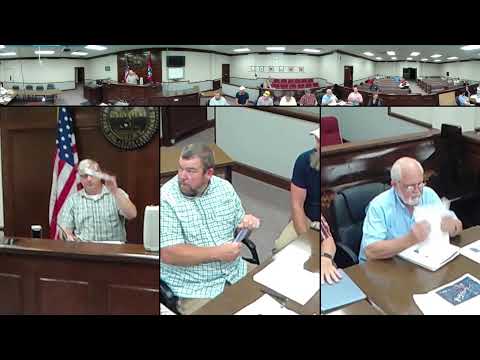
The Hickman County Planning Commission heard a presentation on a draft future land‑use plan and held an extended public comment period that focused on whether agricultural preservation areas should require one dwelling per five acres.
Consultant Drew Gaskins of the project team summarized how public outreach shaped the draft, saying the project began with public workshops and an online engagement tool. “We had about 435 responses on the tool,” Gaskins said, and the team reported that a majority of respondents favored a more compact, conservation‑focused scenario when presented three alternatives.
The consultant described the plan’s place‑type approach: a large agricultural preservation area with a recommended density of roughly one unit per five acres, lower‑density rural places at about one unit per acre, and modestly higher densities (one acre or a half acre lots) along existing utility corridors and in village or crossroads nodes. Gaskins told commissioners the map is a “vision” document rather than binding zoning: “If the planning commission and county commission decide to adopt this document, that would replace that growth plan,” he said, but the zoning book remains the law.
Public comments that followed were largely split but centered on three topics: the proposed 5‑acre agricultural minimum, infrastructure limits (roads, water and sewer), and coordination with Centerville. Many residents urged stronger preservation and more 5‑acre area; others said 5‑acre minimums would price out young families and prevent property owners from passing smaller parcels to children or caretakers.
Resident Patrick Miller said the map “looks like urban sprawl” and urged more extensive agricultural preservation. Ronnie George called a strict 5‑acre requirement “not gonna work” for families that depend on being able to split smaller parcels for children. By contrast, several speakers, including Brian Montgomery and Austin Page, said growth tied to sewer and roads is needed to increase the tax base and support infrastructure, and argued the plan’s more flexible, place‑based approach could accommodate both preservation and targeted growth.
Commissioners asked planning staff and the consultants for clarifications on defined terms and mapping details. Commissioner Keith Nash asked how the planned growth area polygon would be shown on the map; Gaskins said staff would add a polygon and explanatory text in the next draft. Commissioners and staff also discussed the plan’s relationship to the county zoning resolution: the plan is intended to inform future zoning changes and a zoning “crosswalk” and model language are included in the draft as nonbinding recommendations.
Centerville planning staff attended and requested closer coordination on the county plan’s urban growth boundary. Centerville’s representative said the city’s urban growth boundary and the county’s planned growth area should use compatible district descriptions so future annexations and sewer extensions align and do not leave underused parcels with incompatible lot sizes.
No formal action was taken on the future land‑use plan at the meeting. The consultants said they will work with the commission on edits and another draft; staff said the latest draft will be posted on the county website and the item will remain on the agenda for the next meeting.
The meeting also included a reminder from staff that the zoning resolution is the county’s regulatory document: “This book that I have … is the law,” a staff member said during the presentation, noting that the future land‑use plan guides vision and policy but does not itself change the zoning code.
Ending: Commissioners urged continued public participation and said additional edits will be drafted for review. Staff committed to posting the revised draft online and to scheduling further review at subsequent planning commission meetings.