Get Full Government Meeting Transcripts, Videos, & Alerts Forever!
Get email alerts on the Downtown Revitalization topic
No spam. Unsubscribe anytime.
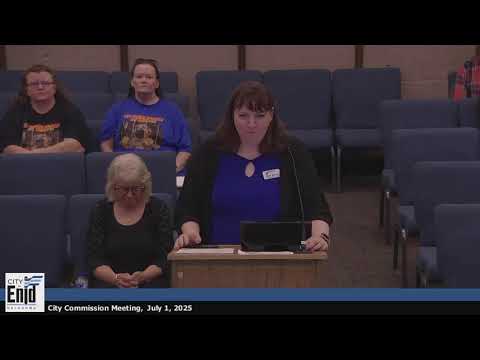
Main Street presenters outline downtown streetscape options: mid‑block parking, four‑way stops, pedestrian street and pilot tests
Summary
Presenters from Main Street Enid and partners showed a downtown revitalization vision that includes lane reductions, mid‑block parking, four‑way stops, pedestrian-only streets, roundabouts and pilot testing; presenters recommended studies and business outreach before permanent changes.
Main Street Enid and partners presented a multi-part vision to the Mayor and Board to improve downtown walkability, safety and economic vitality through streetscape changes such as lane narrowing, mid‑block parking, four‑way stops, pedestrian-only blocks and roundabouts.
"Downtown is the heart of our community," said Natalie Rap, who introduced the group and described downtown assets including a ballpark, event center, hotel, children's museum and a planned amphitheater. Rap presented case studies — including Lancaster Boulevard in California — and proposed converting some 4‑ and 5‑lane stretches to narrowed two-lane configurations with mid‑block parking and center promenades. She suggested pilot projects using temporary paint, signage and removable bollards for 30–60 day tests.
Kelly Tompkins, a former Main Street director, advocated replacing some traffic signals with four‑way stops in key walkable areas, saying stops lead to slower speeds and increased pedestrian safety. Rap and other presenters proposed a pedestrian-only street for a block near existing businesses and discussed roundabouts at key intersections as a traffic-calming option. Presenters said pilot tests, traffic counts and design studies are needed; they reported community support from First Fridays and other events and suggested targeted outreach to downtown businesses and property owners.
Why it matters: the proposal aims to increase pedestrian comfort and foot traffic — changes presenters said can reduce collisions, increase visits and boost downtown revenue — but presenters and commissioners emphasized testing, engineering studies and business outreach before undertaking permanent reconfigurations.
What the commission directed or requested: commissioners asked staff to study lane widths, truck turning movements and right-of-way needs, to consult the courthouse and other stakeholders, and to consider temporary pilot tests tied to the amphitheater and upcoming downtown events. No final design or funding commitment was made in the study session.