Get Full Government Meeting Transcripts, Videos, & Alerts Forever!
Get email alerts on the Cooperative Purchasing topic
No spam. Unsubscribe anytime.
Committee approves cooperative purchasing agreement; members press for local-vendor safeguards and audit rights
Summary
The Budget & Finance Committee approved a cooperative purchasing master agreement that piggybacks a Sourcewell contract, and members sought clarification on Sourcewell's status, audit rights and how local vendors can participate.
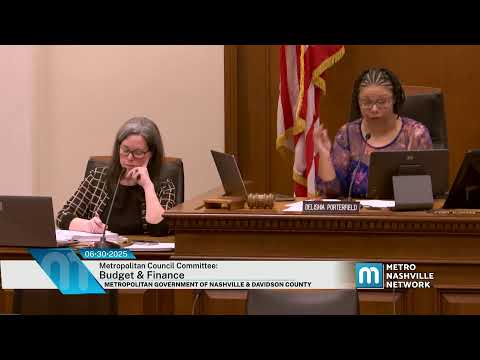
The Budget & Finance Committee on June 30 approved RS 2025-1338, a cooperative purchasing master agreement for facilities maintenance and sweeping services that piggybacks an existing Sourcewell contract; the motion passed 10-0.
Council member Spain asked why the city uses so many contracts that piggyback on Sourcewell. Mary Jo Wiggins of Metro Finance explained there are two prevalent national cooperatives — Omnia and Sourcewell — that many municipalities use. Wiggins initially described Sourcewell as a vendor but later corrected that "Sourcewell is a government agency created by the Minnesota legislation."
Members pressed for clarity about local-vendor access and oversight. Council member Soror said the procurement special committee is examining cooperative purchasing to ensure local firms are not excluded and noted state law forbids looking at a vendor’s location as part of awarding a contract, but many cooperatives allow local vendors to participate as subcontractors. Committee members asked whether Metro can conduct audits and enforce performance measures for contracts entered under cooperatives. Kristen Cumrow, who identified herself as representing procurement for PennDOT, said, "Yes, we can still do audits of contracts that are entered into under cooperatives," and explained the usual performance-improvement processes if a vendor is not meeting goals.
Administration confirmed Metro retains the ability to negotiate contract terms under a cooperative and to require quality control. Committee members also asked administration to provide more detail on how the cooperatives have been used recently and whether local-supplier participation and performance enforcement can be tracked; Metro Finance said it will follow up with answers.
Why this matters: committee members flagged that cooperative purchasing can save time and money but also raises questions about transparency, local economic participation and performance oversight. The committee asked administration to provide a report on which cooperative contracts have been used this year and how Metro ensures local vendor opportunities and contractor performance.