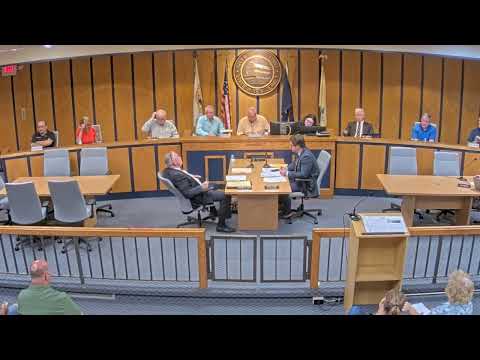
Somers Point council approves 7-night minimum for short-term rentals after extended public hearing
Loading...
Summary
Somers Point City Council voted 4-3 to adopt an amendment to Ordinance 13 of 2025, raising the minimum stay for short‑term rentals from three nights to seven, after an extended public hearing that drew dozens of residents, hosts and business owners.
Somers Point City Council voted 4-3 to adopt Ordinance 13 of 2025, which revises the municipal code’s minimum duration for short‑term rentals from a three‑night minimum to seven nights. The ordinance was amended on the floor to delay its effective date; the exact effective date language as stated on the record was ambiguous and discussed during the meeting.
The vote followed an extended public comment period during which roughly three dozen residents, short‑term rental hosts and business owners spoke for and against the change. Supporters of the 7‑night minimum framed the measure as protecting neighborhood character and limiting frequent guest turnover, while hosts and tourism supporters warned of sharp losses in occupancy tax revenue and economic activity.
“This ordinance goes beyond reasonable regulation. It effectively shuts the door on a large portion of visitors and homeowners,” said Joe Brezzetti of the Somers Point Hosts and Residents Coalition during public comment, urging council to table the ordinance or work with the local hosts’ group. Multiple hosts said data they reviewed show that roughly 80% of bookings are for fewer than seven nights; coalition members said the change would eliminate the majority of current stays and slash local occupancy tax receipts they estimated at about $600,000 annually.
Multiple owners described short‑term rentals as small businesses that support cleaners, landscapers and local restaurants. “We contributed greatly to the economy of Somers Point by bringing in people that spent tons of money,” Dan Myers told council, adding that his experience operating an Airbnb for five years resulted in no complaints from neighbors.
Opponents of short‑term rentals — and some council members supporting the measure — said changing the minimum stay protects long‑term neighborhood stability. One council member said the change would “reduce that rolling change of new faces in the neighborhood” and cited concerns from neighbors about parking, trash and noise.
Council discussion also addressed process and timing. At the meeting a motion to amend the ordinance delayed its implementation; council members described that amendment alternatively as a six‑month delay or an end‑of‑year effective date. Council member William Dill said he voted to extend implementation “for 6 months till the end of the year” to give time for further discussion and possible committee work involving host representatives.
Council roll call on the adopted ordinance was: McGuigan — yes; Dale — yes; Owen — yes; Johnston — no; DePantilis — no; Garrity — no; President Haberkorn — yes. The tally was 4 yes, 3 no, and the ordinance, as amended on the floor, was adopted.
The meeting highlighted competing priorities: protecting neighborhood character and ensuring public safety, versus protecting seasonal tourism, the livelihoods of short‑term rental operators and associated local businesses. Several speakers urged a middle path — stronger enforcement of existing rules, limits on back‑to‑back bookings, caps by neighborhood, grandfathering existing licensed hosts, or creating a study committee to produce data and recommended controls.
Council also handled other routine business during the meeting. Ordinance 12, authorizing a lease of city property to the Somers Point Police Athletic Activities League (a 501(c)(3)), was adopted earlier in the session; several administrative resolutions (contracts for fuel, vehicle purchases and personnel actions) were approved or placed on the consent agenda. One marketing‑services appointment was tabled for additional detail and metrics.
The council session made clear that short‑term rentals remain a divisive local issue: residents and hosts proposed different remedies, and several council members called for more outreach and a formal committee to craft data‑driven solutions before any further changes are implemented.
Votes at a glance
- Ordinance 13 of 2025 (short‑term rentals; minimum duration revised from 3 to 7 nights; amended to delay effect): Adopted, roll call 4‑3 (McGuigan, Dale, Owen, Haberkorn — yes; Johnston, DePantilis, Garrity — no). Amendment delayed effective date as stated on the record; transcript language on the exact date was ambiguous. - Ordinance 12 of 2025 (lease of city property to Somers Point Police Athletic Activities League, 501(c)(3)): Adopted (unanimous, no objections recorded). - Resolution 145 (appointment of marketing services vendor): Tabled for additional detail and metrics. - Other resolutions (contract awards for fuel, department vehicle purchases, personnel advancement): Approved as listed in the consent agenda.
What’s next
Council members who supported delaying the effective date said the extra months should allow formation of a working group with host representatives and residents to develop enforcement metrics, neighborhood‑specific limits or alternative regulatory approaches. Council members opposing the change said existing rules (inspection, licensing and fines) are adequate and warned of economic impacts and possible legal challenges referenced during the meeting.
The transcript contains multiple references to potential legal risk; speakers mentioned a federal appeals‑court matter involving Jersey City as a precedent. Council did not cite a new legal opinion tied specifically to Somers Point’s ordinance at the meeting.
— End —