Get Full Government Meeting Transcripts, Videos, & Alerts Forever!
Get email alerts on the Homelessness Encampments topic
No spam. Unsubscribe anytime.
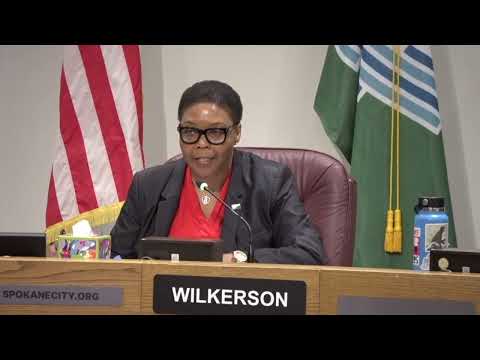
Spokane council debates new camping and sidewalk obstruction ordinance amid split public testimony
Summary
Council members debated an ordinance consolidating rules on unauthorized camping, sidewalk obstruction and encampment removal. Business groups sought stronger enforcement; advocates and service providers warned that sweeping without shelter capacity would harm vulnerable people and not solve homelessness.
The Spokane City Council considered Ordinance C36‑679, a rewrite of city rules covering unauthorized camping, obstruction of public right‑of‑way, and encampment removal. The ordinance, as amended, changes notice and enforcement language and expands the city’s ability to act on encampments in certain circumstances; it produced extensive testimony from downtown businesses, hospitality groups, social‑service providers and unhoused individuals.
Downtown employers and business coalitions urged immediate, consistent enforcement and creation of a downtown “hospitality zone” with clearer prohibitions on sitting, lying or obstructing sidewalks, and with rapid removal where camps create sanitation or safety hazards. Emily Cameron, president and CEO of the Downtown Spokane Partnership, told the council “Downtown sidewalks are not designed as places to sit or lie” and urged that “any portion” language added in a recent amendment be retained so right‑of‑way remains clear for pedestrians and commerce.
Business owners and property managers described staff and customer safety concerns, blocked storefronts, and lost revenue. Doyle Wheeler, owner of several downtown businesses, described an employee who quit after a “frightening encounter” with a person in crisis outside an office entrance and called for a hospitality zone to restore safe access to sidewalks and doorways.
Service providers, advocates and speakers with lived experience urged caution about criminalizing homelessness when shelter and treatment capacity are limited. Representatives of Experience Matters, the Housing Justice Project and other groups said the city must pair enforcement with actual shelter, navigation and treatment capacity; one attorney said a punitive approach risks higher costs and worse outcomes. Caitlin Monquest, a parent and housing‑justice attorney, said repeated encounters with unsheltered people outside downtown offices had left her children frightened and urged urgent action to restore safe public spaces.
Council members debated the ordinance’s vagueness and administrative implementation. Council member Katkar said the text left too much to internal administrative policy and expressed concern that the city’s rules could change without a transparent public process. Council member McCluskey argued the city needed a clear implementation plan and enforcement thresholds and said the ordinance as drafted lacked the legal clarity police would need. Council member Klitzke supported the ordinance as a step toward safe, accessible downtown space but said it had to be paired with housing and outreach efforts.
The ordinance’s amendment removed a fixed multi‑day minimum notice and broadened the criteria under which expedited removal could occur; it added language allowing enforcement on “any portion” of public property. The transcript shows council members asked for a 90‑day evaluation and more detail on outreach, follow‑up services and outcomes, but it does not show a final roll‑call result for the ordinance in the provided record.
Speakers who testified included downtown employers, owners of hotels and restaurants, homeless‑service providers, individuals with lived experience of homelessness, and residents from multiple districts. Testimony ranged from calls for immediate enforcement to urgent requests for shelter capacity and care pathways instead of criminalization.
Council members described this ordinance as one part of a broader strategy that also must address housing, addiction treatment and shelter capacity. Several members urged rapid work on an implementation policy and a downtown hospitality zone to provide clearer rules for special events and downtown activity.