Get Full Government Meeting Transcripts, Videos, & Alerts Forever!
Get email alerts on the Immigration Enforcement topic
No spam. Unsubscribe anytime.
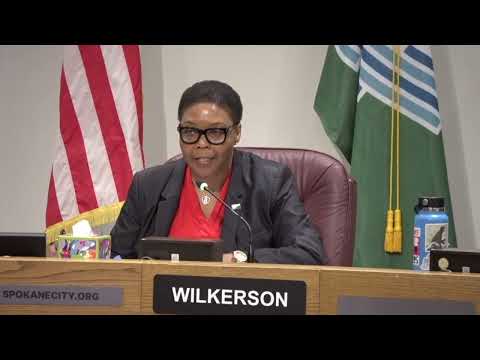
Spokane council weighs "Safe and Welcome" ordinance after large, heated public testimony
Summary
At a Spokane City Council meeting, council members took up an emergency ordinance titled “Safe and Welcome in Spokane” that would expand local protections against warrantless searches by federal immigration authorities and limit enforcement in designated "non‑public" areas and public rights of way.
At a Spokane City Council meeting, council members took up an emergency ordinance titled “Safe and Welcome in Spokane” that would expand local protections against warrantless searches by federal immigration authorities and limit enforcement in designated "non‑public" areas and public rights of way. The ordinance drew extended public testimony and lengthy council debate.
Supporters told the council the measure is needed now to stop what they described as aggressive, opaque immigration enforcement locally and regionally. Jennifer Mesa, executive director of Latinos in Spokane, said the community has seen “surveillance coming in from different agents, from US marshal to ICE to border patrol” and accused enforcement of racial profiling that leaves families fearful. “We deserve safety,” Mesa said.
The ordinance's supporters framed it as a defense of constitutional due process and community safety. Will Neville of the Communist Party of Eastern Washington said the law would protect residents from “terrorize[ing] communities” by immigration agents and argued the city must foster an inclusive environment where “all people feel like they can belong.” Ari Dean, speaking with the Party for Socialism and Liberation, said the measure would reduce opportunities for forced separations at family events and local gatherings.
Opponents warned the measure could create legal and operational risks for the city and unclear enforcement lines. Derek Gazzaro said the ordinance “opens the door” for organizations to request parts of parks or public spaces be designated non‑public — which, in his view, could prevent law enforcement access and create long‑term cordoned areas. He urged the council to obtain outside legal review and to avoid emergency enactment that short‑circuited further study.
Other critics raised federal conflict concerns and potential litigation. Tyler Timush referenced litigation in other cities and warned of subpoenas, legal costs and the possibility federal agents might alter tactics in response. Several speakers urged the council to make sure the ordinance would not undermine public safety at large public events.
Council members acknowledged competing aims: protecting due process and community safety while minimizing legal exposure and unintended effects. Council member Dylan said parks were removed from the earlier draft and stressed that the effort is aimed at protecting the constitutional rights that apply in “non‑public areas” and public rights of way; he concluded his remarks with the statement, “No human being is illegal.” Council member Klitzke, among others, said she would support the ordinance and urged parallel work on housing and public‑safety measures.
Council member McCluskey and others pressed for clearer legal analysis and implementation rules before enforcement, describing the current draft as vague on process and enforcement thresholds. Several members called for an implementation plan that would specify how officers and city staff would apply the new definitions without creating enforcement gaps or incentives that could shift federal attention to Spokane.
The meeting record shows extensive public testimony and council debate and that the council prepared to vote; the transcript provided does not record the final roll call or the outcome of that vote. The ordinance was introduced as an emergency measure and was discussed at length with multiple amendments and clarifications.
Speakers who testified included immigrant‑rights advocates, residents, and local organizers; council members framed the ordinance as part of a broader conversation about public safety, due process and community trust.