Get Full Government Meeting Transcripts, Videos, & Alerts Forever!
Get email alerts on the Probation Revocation topic
No spam. Unsubscribe anytime.
Court revokes short periods of probation, orders treatment and supervision for several defendants
Summary
On July 1 the court handled multiple probation revocation and petition hearings. The judge revoked short custodial terms for some defendants, ordered community support or treatment requirements and set return dates for probation reporting.
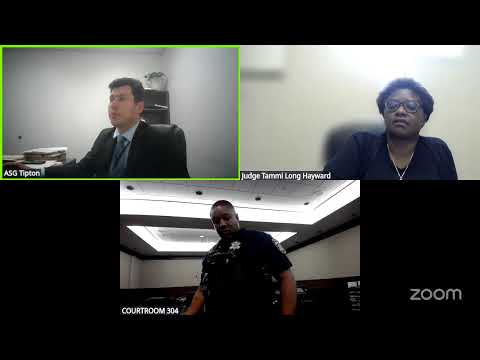
At the July 1 Clayton County State Court calendar, the court addressed multiple probation revocation motions and petitions and ordered a mix of short custodial sanctions, program requirements and continued supervision.
Tiffany Monique Chambers appeared on a petition to revoke conditional discharge and probation. Probation recommended a 60‑day revocation with the balance suspended; the court accepted a 60‑day revoke and the revocation of the conditional discharge. The judge ordered credit for custody dating to the arrest when appropriate and advised Chambers to contact jail chaplains for transition resources. Probation will schedule a follow‑up report for July 10, 2025.
Carlos R. Jamieson faced a second revocation hearing after testing positive for alcohol metabolites. The court imposed six days with credit for time served (the record indicated credit already served), ordered two community support group meetings per week (the judge specified “community support groups” rather than a particular program), and required testing at each probation report. The court set Jamieson to report to probation on July 10, 2025.
Shaliko (D'Artania) Brooks and others who faced petition hearings received sanctions consistent with probation recommendations where the record supported community‑based supervision, substance‑abuse evaluation, testing and community service; outcomes were recorded in open court or scheduled for follow‑up with probation intake.
The judge repeatedly told defendants that the fastest route back to jail is failure to report to probation and emphasized that probation officers’ role is to help supervise successful completion, not to re‑incarcerate when conditions are met. Probation staff were instructed to communicate conditions, testing schedules and next reporting dates to each defendant before release.