Hoffman Estates drops yard‑waste stickers and expands composting under new Groot contract
Loading...
Summary
Under a new contract with waste hauler Groot, Hoffman Estates residents no longer need yard‑waste stickers; the village’s composting program will be handled by Groot and residents may set out food scraps in curbside buckets or with yard waste. The village’s Sustainability Commission discussed the changes at a Bon Appetit 25 event.
Hoffman Estates residents no longer need yard‑waste stickers under a new contract with waste hauler Groot, and the village’s composting program will move to Groot, a member of the Village of Hoffman Estates Sustainability Commission said at a Bon Appetit 25 event.
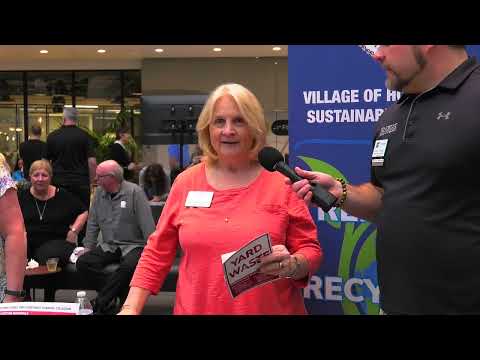
Hannah, a member of the Village of Hoffman Estates Sustainability Commission, said, "Part of Hoffman Estates new, contract with Groot is you no longer need to have yard waste stickers." She said yard waste may instead be placed in a 30‑gallon tub or in paper containers, and that food scraps can be collected in a bucket for curbside pickup or mixed with yard waste for transport to the composting program. "They fall apart in the rain," Hannah added when discussing paper containers.
The commission distributed stickers and flyers explaining acceptable yard‑waste containers and the village’s take‑home container program. Hannah said the village has stickers for yard waste and for the take‑home container program and encouraged residents to consult the village website or Citizens e‑news for details. She also noted that composting services previously provided by a private company will now be managed by Groot.
Hannah referenced a recent Illinois law when describing the take‑home container program: "the state of Illinois passed this past year that you can bring your own container to a restaurant." She said residents may bring reusable containers to restaurants to avoid single‑use foam and black plastic containers, and that compostable bags are available for residents who want to line buckets before placing them out for pickup.
Event hosts demonstrated flyers and a QR code linking to guidance on what materials belong in recycling, compost, or yard‑waste streams. The presentation stressed practical details — maximum container size (up to 30 gallons), options for paper containers, and how compostable bags can be sealed and placed with yard waste or in buckets for collection.
For more information on what to place in recycling, compost, or yard‑waste containers and on the take‑home container program, residents were directed to the village website and Citizens e‑news, and to the QR code shown at the event.