Get Full Government Meeting Transcripts, Videos, & Alerts Forever!
Get email alerts on the School Fees Pay To Play topic
No spam. Unsubscribe anytime.
Montgomery Hills work session moves to put $7 family cap on pay-to-participate fees on regular meeting agenda
Summary
District staff recommended lowering the family cap on pay-to-participate fees and asked the board to modify the regular-meeting agenda to propose a $7 per-family cap; board members discussed alternatives, likely impacts on participation and team budgets, and no formal vote occurred at the work session.
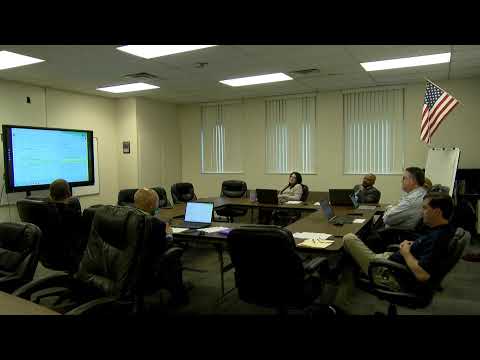
Montgomery Hills City School District staff presented options for changing the district’s pay-to-participate (pay-to-play) fees during a June 30 work session and asked the board to place a $7.00 family cap on the regular meeting agenda for formal consideration.
The discussion centered on a staff analysis, presented by staff member Casey Brown, of recent collections and alternative fee caps. Brown said staff originally placed an $8.40 family cap on the agenda but recommended the board consider a $7.00 cap after discussion. Board attorney and secretary asked the chair to modify the regular-meeting agenda to show a $7.00 family cap for board consideration.
Why it matters: The family cap affects how much multi-child households pay for athletics, music and extracurricular activities and could reduce fees for families with multiple student participants while lowering district fee revenue used to support teams and programs.
Staff laid out alternatives discussed at the meeting: maintaining the $8.40 cap on the agenda; lowering the cap to $7.00 (the option the attorney asked to place on the regular meeting agenda); or a deeper reduction to $5.60. Staff also explained per-activity fee levels used in their calculations (transcript references: roughly $2.80 per high-school activity and $1.40 per middle-school activity) and noted some families could save on the order of about $100 under certain scenarios.
Board members who spoke raised three recurring concerns: how a lower cap would affect team budgets and roster sizes, whether lowering the cap would encourage multi-sport signups and thereby strain participation-based budgets, and the proper timing given uncertainty in state funding. One board member said it is generally easier to lower fees now than to raise them later if state or local revenue falls; another urged caution about reducing revenues before final legislative action on state millage changes is resolved.
The work session discussion also noted that the change would apply on a per-family basis (the cap was described in the meeting as a family cap), and that the district would monitor collections and program impacts and reassess after one year. No formal vote was taken during the work session; instead, the board attorney requested an agenda modification so the $7.00 cap would be proposed for action during the regular meeting later that evening.
The session included mention of related programming (band, arts and academic extracurriculars) and booster-club costs for travel and events; staff said band and some arts programs have additional outside costs (boosters, trips) beyond the district’s pay-to-participate fee. Staff also noted historical year-to-year variation in collections during and after the COVID period.
Next steps: The board attorney asked that the regular meeting agenda be modified to present a $7.00 family cap for a formal vote. District staff said they would track revenues and program impacts and bring back data for the board to review after the first year if the change is adopted.