
Cranford planning board adopts 2025 fourth‑round housing element and fair‑share plan
Get AI-powered insights, summaries, and transcripts
Subscribe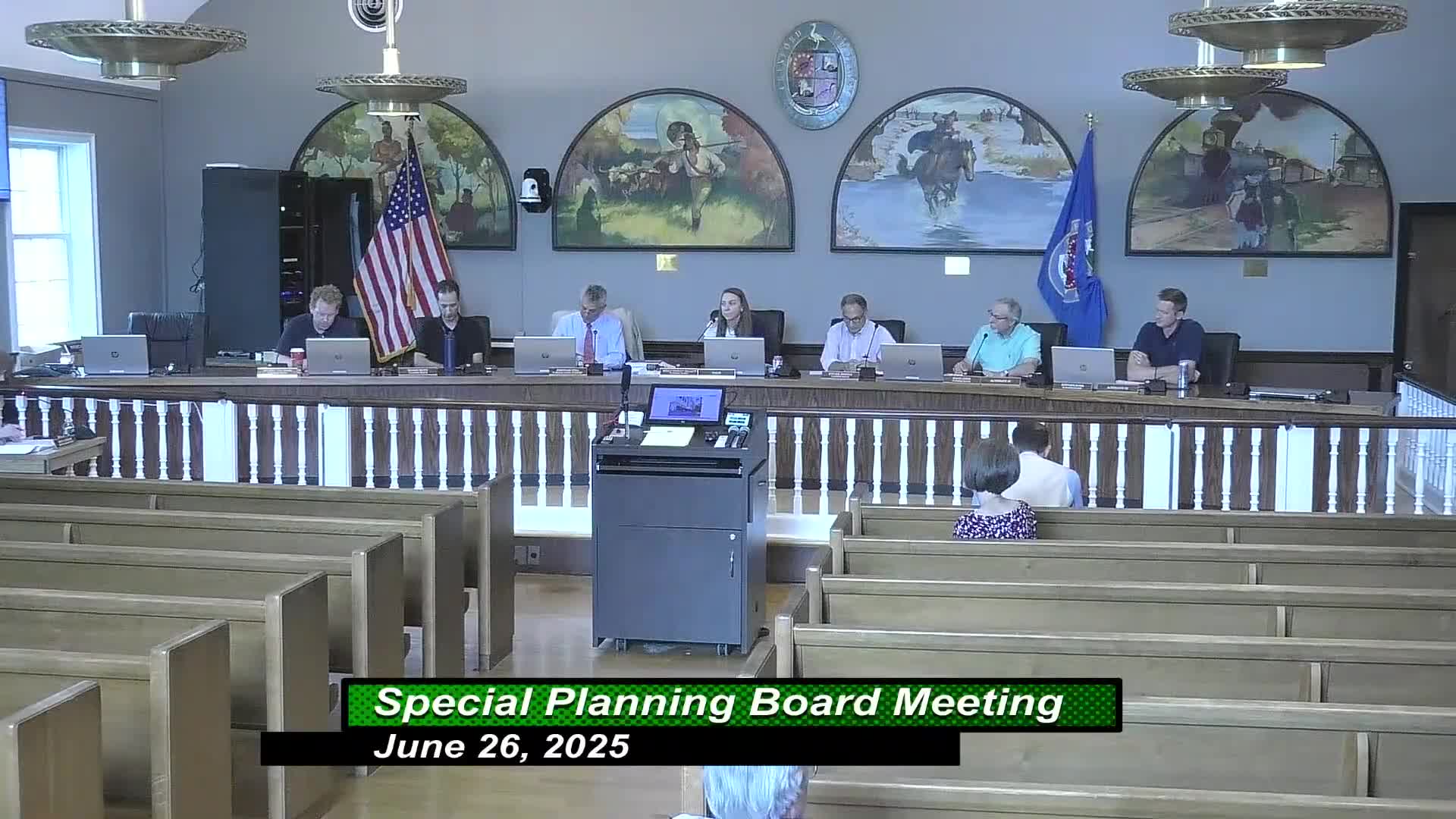
Summary
The Cranford Planning Board on June 26 adopted a 2025 housing element and fair‑share plan to meet the township’s fourth‑round Mount Laurel obligations, approving zoning overlays, rehabilitation funding and mechanisms to apply surplus credits from prior rounds. The vote was unanimous.
The Cranford Planning Board unanimously adopted its 2025 fourth‑round housing element and fair‑share plan at a special public hearing on June 26, 2025, committing the township to mechanisms and zoning changes intended to satisfy its state‑mandated affordable housing obligations.
The plan sets Cranford’s fourth‑round prospective need at 268 units and establishes a realistic development potential (RDP) of 24 units for the 2025–2035 round, with the township proposing to meet that RDP by applying surplus credits carried from prior rounds and by adopting targeted overlay zoning and other mechanisms. "Immunity is like your insurance policy," affordable‑housing planner Darlene Green said during her testimony, describing the legal importance of adopting the plan before the June 30 statutory deadline.
The plan matters because if the township fails to adopt a compliant housing element and fair‑share plan by June 30 it would lose the statutory protections that limit builder‑remedy lawsuits. Green told the board the plan combines existing credits on the ground, pending projects and proposed zoning tools so Cranford can satisfy the 24‑unit RDP and a new requirement that 25 percent of an adjusted RDP be supported by parcels likely to redevelop during the round (6 units in Cranford’s case).
Key details and what the plan would do
- Obligations and adjustments: Green recapped the town’s four‑part obligation framework used by the state and the plan’s figures: a rehabilitation obligation of 204 units, a prior‑round obligation of 148 units that is already satisfied with existing credits, a third‑round RDP that the town adjusted to 132 units, and a fourth‑round prospective obligation of 268 units from the Department of Community Affairs. Because Cranford is land‑constrained, Colliers’ analysis reduced the fourth‑round RDP to 24 units; the remaining unmet need is addressed through credits and proposed mechanisms.
- Surplus credits and application: The plan reports a surplus of third‑round RDP credits (44 credits), which the township proposes to use to satisfy the 24‑unit fourth‑round RDP, to meet the 6‑unit realistic‑redevelopment requirement (25% of the 24‑unit RDP), and to leave 14 surplus credits available for fourth‑round unmet need.
- Proposed mechanisms: The plan continues Cranford’s township‑sponsored rehabilitation program (trust‑fund money reserved for major repairs) and proposes two overlay expansions and supportive/market‑to‑affordable programs. Green said the township will reserve roughly $15,000 per household for up to 15 households under the rehabilitation program. Proposed overlay additions include townhome zoning for seven parcels along South Avenue (between Hollywood and Lincoln) and an expansion of the downtown transition overlay along Raritan Road near the Linden border. Other existing inclusionary zones described in the plan include North Avenue redevelopment, the Downtown Core Overlay and Downtown Business Overlay districts, and the Park Street overlay district.
- Credits tied to specific projects: Green described existing on‑the‑ground credits that satisfy the prior‑round obligation and provide credits toward the third‑round RDP, including newly constructed group homes and projects that have generated certificates of occupancy. The Lincoln Apartments were cited as yielding 28 credits that can be applied to the fourth round unmet need.
Public comment and board discussion
Two residents spoke at the hearing. Rita Labrutta of Arlington Road criticized the timing and public outreach for the special June meeting and asked about the availability of credits and how bonus credits are capped. Bruce Patterson of Garwood raised concerns about regional traffic and asked about utility capacity and how overlay zones relate to unmet need. Both speakers also asked how the town’s surplus and bonus credits affect future rounds.
Town counsel and the township’s affordable‑housing counsel, Mike Edwards, described the presentation as conservative and said the township’s legal position is that the credits and zoning choices create realistic opportunities for construction in the operative compliance period. "We think you're gonna be able to be entitled to all the credits that were in your round 3 proposed plan other than the one redevelopment site of North Ave," Edwards said during deliberations.
Next steps and timeline
After the planning board vote the township will file the adopted housing element and fair‑share plan with the state program. The plan, once filed, is subject to an objection window that ends August 31, 2025; objections that pass initial screening go to mediation and potentially to the court system. Counsel and the planner told the board that, absent prolonged litigation, municipalities typically learn the outcome of objections in the first half of the following year.
Vote and formal action
The board adopted a resolution to endorse and adopt the fourth‑round housing element and fair‑share plan. The motion carried on a roll call vote in which all members present voted yes.
What the plan does not change
Green emphasized the plan preserves normal land‑use review: inclusion of a site in the housing plan or overlay does not exempt property owners from submitting site plans or obtaining planning‑board or zoning‑board approvals. She also noted environmental constraints reduce developable acreage in town and that utility issues regulated by state agencies (for example, certain DEP encumbrances) limit buildable land independent of local zoning.
Close of hearing
After brief deliberation the planning board asked counsel to read the draft resolution into the record and then voted to adopt it. The board closed the hearing and adjourned.