Get Full Government Meeting Transcripts, Videos, & Alerts Forever!
Get email alerts on the Public Safety Treatment Sales Tax topic
No spam. Unsubscribe anytime.
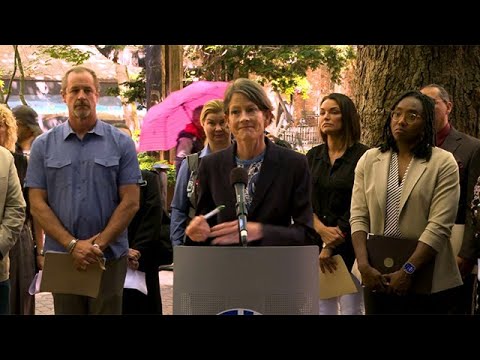
Seattle council president proposes dedicating part of new public-safety sales tax to addiction treatment and recovery services
Summary
Council President Nelson announced a resolution to direct up to 25% of a newly authorized 0.1% public-safety sales tax toward treatment, recovery housing and related services. Service providers urged stable funding as programs face cuts and capacity limits.
Council President Nelson announced a resolution advancing local investments in substance use disorder treatment and recovery services, saying the city should use a newly authorized 0.1% public-safety sales tax to expand “pathways to recovery.” Nelson said the state-authorized tax could raise roughly $35,000,000 and her resolution calls for allocating up to 25% of that revenue to treatment programs.
"The fentanyl crisis and addiction in general is inextricably linked to our chronic homelessness and our public safety problems," Council President Nelson said, arguing that expanding access to evidence-based treatment would blunt both public-safety and public-health harms.
The resolution, which Nelson said has been cleared by law, will appear on the introduction and referral calendar next week for the council’s consideration and further drafting of funding priorities. Nelson told questioners the mayor has signaled support for the idea in principle but that exact allocations will depend on the budget process and departmental proposals.
Why it matters: City and nonprofit service providers told Nelson that existing programs are at capacity, that some successful initiatives have lost state and local funding, and that local revenue could stabilize and expand low-barrier treatment, recovery housing and supports intended to keep people from returning to high-risk environments.
Dr. Mercy Wainaina, founder and CEO of Hope and Chance Integrated Health, described a wraparound model that includes housing, transportation, psychiatric services, peer support, case management and job placement. "At Hope and Chance Integrated Health, we are not just providing treatment. We are restoring hope, rebuilding lives, and creating lasting change in our communities 1 person at a time," Wainaina said.
Daniel Malone, executive director of the Downtown Emergency Services Center, said DESC has improved retention on medications for opioid use disorder by bringing care to people where they are and adjusting buprenorphine protocols. "Hundreds of people are benefiting from this approach and they're staying off of fentanyl use as a result," Malone said, while also warning that programs remain full and that more capacity is needed for people using stimulants such as methamphetamine.
Brandy McNeil of Purpose Dignity Action pointed to diversion and case-management programs already in use and cited program outcomes for CoLEAD: "Over 95 percent of participants accept services, more than 70% transition to permanent housing, 100 percent are enrolled in Medicaid, and we've had 0 CoLEAD participant overdose deaths in CoLEAD lodging," she said, urging that successful programs not be allowed to collapse because of funding cuts.
Steve Woolworth, chief executive of Evergreen Treatment Services, said nonprofit treatment providers are operating under workforce and funding pressures and supported dedicating local public-safety revenue to recovery-oriented services, jail diversion, low-barrier shelter and permanent supportive housing. "We at Evergreen Treatment Services have been providing substance use disorder treatment in Seattle for 52 years," Woolworth said, and he warned that recent Medicaid reductions would worsen capacity problems.
Speakers stressed a mix of approaches. Nelson and providers discussed low-barrier pathways into private-pay inpatient programs used in a local pilot, expanded recovery housing and rent subsidies to prevent people from returning to environments with active use. Nelson also called for more designated crisis responders (DCRs) through King County to reduce a bottleneck for involuntary or emergent referrals to withdrawal-management and stabilization facilities.
Questions from the audience touched on how "low barrier" would be defined in legislation and on how the proposed allocations would interact with other council and mayoral priorities. Nelson said specific allocations and program rules would be determined through the budget and legislative process, not in the announcement. Nelson emphasized that the resolution is intended to begin a conversation and to center treatment in the city's public-safety agenda.
The resolution would not be an immediate funding appropriation; it directs the council and executive branch to consider dedicating a portion of the newly authorized 0.1% sales tax for public safety to treatment and recovery services if the tax is implemented by the mayor. Nelson said the proposal was intended to shore up existing programs, expand capacity for on-demand residential and intensive outpatient treatment, fund recovery housing and capital improvements for treatment facilities, and support long-term case management.
Public and provider participants also raised operational details that would need to be addressed if funding is approved: how to ensure programs remain low-barrier, how to coordinate with King County-controlled services such as DCR designation and placement, and how to sustain case-management models that have shown strong outcomes.
Nelson framed the initiative as a policy shift: treating substance use disorder investment as central to public safety rather than marginal, and using local revenue to fill gaps left by state and federal funding changes. The resolution was described as cleared by law and scheduled for introduction and referral next week; further budget-level decisions will follow the mayor’s budget proposals and the council’s deliberations.