
Tag delays decision on proposed ductwork rule tightening after technical debate
Get AI-powered insights, summaries, and transcripts
Subscribe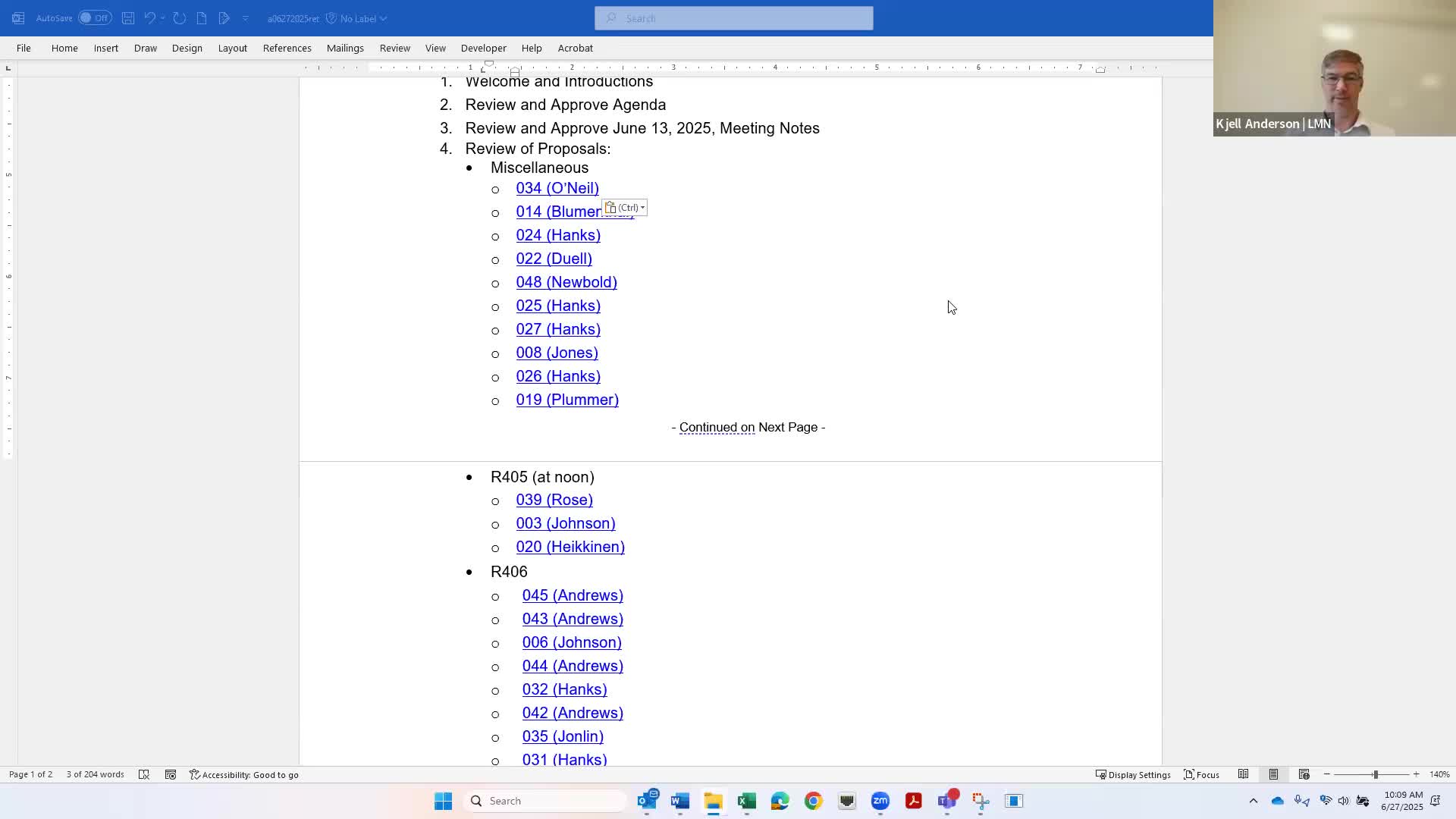
Summary
The SBCC Residential Energy Code Tag postponed action on proposal O34, which would tighten requirements for ducts outside conditioned space and require deeply buried attic ducts, after members and stakeholders disputed wording, implementation detail and likely energy gains.
The Building Code Council—s residential energy code tag postponed action June 27 on proposal O34, a set of edits that would change where and how builders must locate and insulate ductwork outside the conditioned space of houses.
The measure—s proponent, Nicholas (Nick) Manning, presented a revised draft and described the changes as largely "language cleanups" with a single energy-saving component that would require ducts running in attic insulation to be "deeply buried" (roughly R-19 over ducts). Manning said the revision preserves existing exception language while pointing builders to the correct sections.
Members pressed Manning and staff for specifics on what would change for common construction: whether ducts in crawl spaces would be affected, whether the rule would force expensive rework, and how much energy savings the new wording would deliver. Greg Davenport, citing Building America research, said "if you go with ducts inside condition space, you get about 15% savings on energy," and warned that deeply buried ducts only recover a fraction of that gain compared with bringing ducts inside conditioned space.
Other members and stakeholders agreed the draft—s structure and wording were confusing. Kevin Duall and Shane Mills urged the proponent to rewrite the section to mirror Oregon—s clearer approach and to remove "spaghetti" cross-references that make compliance hard to follow. Several members suggested aligning terms and reference numbers, splitting long exception sentences into bulletized exceptions, and clarifying how the measure would interact with existing crawl-space insulation or sealed/unvented crawl-space approaches.
After discussion the tag voted to postpone the item to allow the proponent to redraft the language (motion to postpone passed). The proponent said he would return with a clearer, more direct rewrite, and PNNL modeling or comparisons to Oregon language were suggested as follow-up steps.
The postponement means the tag will revisit the item at a subsequent meeting after the proponent files a revised draft and supporting materials.
Ending: The tag directed staff and the proponent to post revised language as a public comment before the next meeting so members can review it in advance.