
Senate adopts $58.8 billion FY2026 budget after floor debate on surplus, pensions and health care
Get AI-powered insights, summaries, and transcripts
Subscribe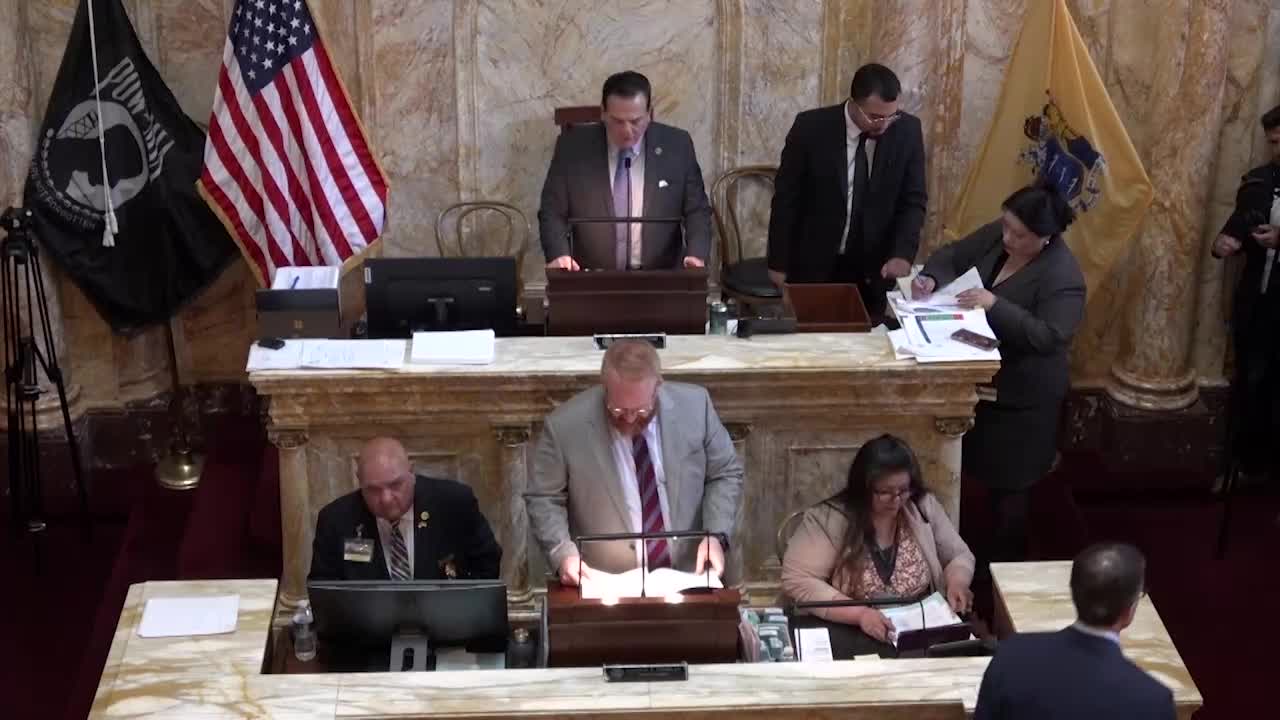
Summary
After more than an hour of floor debate, the New Jersey Senate passed its FY2026 budget (S-2026) by a 26-13 roll-call vote. Republican senators pressed for spending restraint and changes to health and pension policy; Democrats and the budget chair defended the package and said it leaves a multi‑billion dollar surplus for the next governor.
The New Jersey Senate passed Senate Bill 20-26, its fiscal year 2026 appropriations measure, on a 26-13 roll-call vote after extended floor debate over the size of the surplus, pension and health-care costs, and last‑minute line‑item additions.
The bill, which senators described on the floor as roughly $58.8 billion in state appropriations, passed after a motion to table a Republican request to return the measure to second reading. The machine tally for the final passage recorded 26 votes in the affirmative and 13 in the negative.
Republican budget officer Senator O'Scalen delivered the most extended floor criticism, calling the budget “a house of cards built on a fault line” and arguing the apparent $6 billion surplus is temporary and partly sustained by one‑time federal COVID and other nonrecurring funds. “A $6,000,000,000 surplus doesn't last very long when you have a structural deficit of almost $4,000,000,000,” he said on the floor, warning that the next administration will face “brutal cuts…or brutal tax increases.”
Senator O'Scalen also offered an amendment to send the bill back to second reading and proposed canceling roughly $300 million of unused appropriations and about $220 million in what he called special interest line items, directing those savings to a “fairness and compassion over pork reserve fund” to be used for property tax relief and to respond to potential federal Medicaid changes. Majority Leader Ruiz moved to table that amendment; the motion to table passed on a machine vote, 25-14, after which the Senate proceeded to final passage.
Other Republicans echoed O'Scalen. Senator Buco criticized the process and last‑minute additions, calling the rollout “the complete opposite of what good government looks like” and citing what he said were hundreds of millions of dollars in late increases. Senator Testa also criticized transparency and urged colleagues to vote no on the budget because of process and substance concerns.
Defenders of the package stressed fiscal metrics and the work of the budget committee. Senate Budget Chair Sarlow and other Democratic senators said the committee met publicly for many hours and that the bill leaves a sizable surplus for the next governor. “This $58,832,000,000 budget…contains $6,700,000,000 surplus, leaving the next governor a very, very safe surplus,” Sarlow said on the floor, and he noted the measure reduces the structural deficit to about $1.47 billion after the bill's proposals.
Senator Singer, while acknowledging the difficulty of budget decisions, raised particular concern about the state health benefits plan and the long‑term sustainability of public employee health costs. He said costs are “unsustainable” and argued for structural reform to reduce premiums and co‑payments for public employees rather than repeatedly raising cost‑sharing.
Senator Wicker urged attention to clean‑energy funding and warned of pending federal decisions with potential budgetary consequences for New Jersey. Several senators on both sides of the aisle thanked committee staff and the Office of Legislative Services for lengthy work on the measure.
Procedurally, the floor considered the budget under the Senate’s third‑reading process. Senator Sarlo moved the final passage. After the motion to table the Republican amendment prevailed, the Senate took the final tally and passed S-2026 26-13. The clerk recorded the passage and the bill will proceed to the enrollment and transmittal steps required in the legislative process.
The debate highlighted the recurring tension in Trenton between spending increases supported by the Democratic majority and Republican calls for process reforms, spending restraint and structural fixes to health and pension systems.
Votes at a glance: S-2026 final passage — yes: 26; no: 13. Motion to table Republican amendment to return bill to second reading — yes to table (majority leader Ruiz): 25; no: 14.