Get Full Government Meeting Transcripts, Videos, & Alerts Forever!
Get email alerts on the Equal Access Community Care topic
No spam. Unsubscribe anytime.
Advocates press lawmakers to fix MassHealth spend‑down so frail elders can remain in the community
Summary
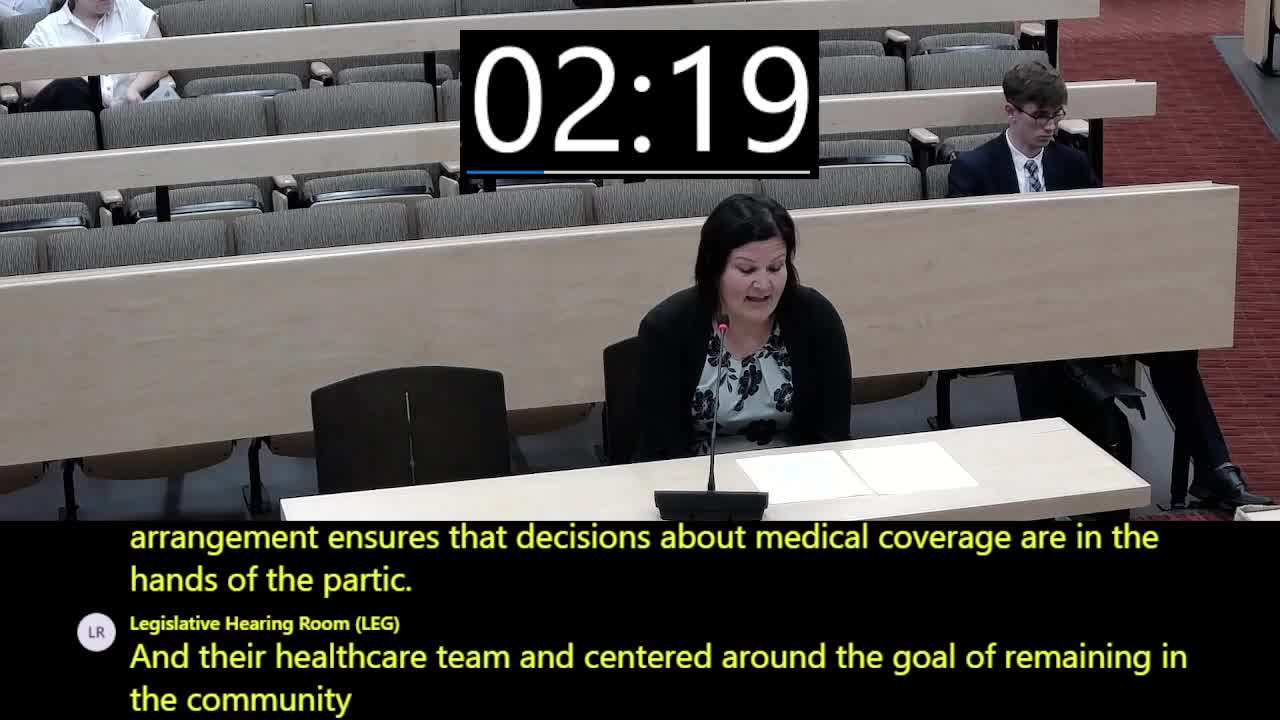
Advocates and elder‑law experts urged the Joint Committee on Healthcare Financing to approve legislation allowing certain applicants to pay a premium rather than meet a large six‑month spend‑down so they can access community programs such as PACE and waiver services (House Bill 1371 / Senate Bill 841).
At the July 4 hearing, elder-care advocates and elder‑law attorneys urged the Joint Committee on Healthcare Financing to advance bills that would adjust MassHealth’s income eligibility rules so that older adults who exceed the current income trigger by a modest amount can remain eligible for community-based programs such as PACE (House Bill 1371 / Senate Bill 841).
Why the change: witnesses said the current deductible/spend-down formula can force people with slightly higher income to spend nearly all of their monthly income on medical care before MassHealth pays anything — leaving them with as little as $542 per month for living expenses and often pushing them toward nursing home placement. Clarence Richardson, executive director of the Massachusetts chapter of the National Academy of Elder Law Attorneys, explained the mechanics with a hypothetical: a person with $3,000 monthly income could face a six‑month deductible of $14,748 before MassHealth coverage begins, effectively forcing institutionalization for people who otherwise could remain in the community.
Evidence and fiscal notes: advocates argued the change would be fiscally sensible because community-based care is generally less costly than institutional nursing-home care. Jen Maynard of the MassPACE Association and elder‑law witnesses said MassHealth previously signaled support for adjustments and had discussed implementation timelines; they recommended the Legislature adopt a premium option that keeps people financially able to live at home.
Discussion vs. action: no committee votes occurred; witnesses requested favorable reports and called for implementation planning in coordination with MassHealth to ensure budget and operational readiness.
Next steps: advocates urged the committee to move the bill and to work with MassHealth on implementation timing and fiscal analysis so eligible elders can access PACE and waiver services without an untenable spend-down.