Get Full Government Meeting Transcripts, Videos, & Alerts Forever!
Get email alerts on the Election Testing Local Control topic
No spam. Unsubscribe anytime.
Clerks push back on proposed centralization of logic and accuracy testing; Department of State raises procedural concerns
Summary
Supporters of HB 4602 told the House Committee on Election Integrity the bill protects local clerks' authority to run public logic and accuracy tests and prevents a single state‑selected vendor from centrally controlling test decks; the Michigan Department of State said it has a contract with BallotIQ and urged careful drafting to avoid limiting
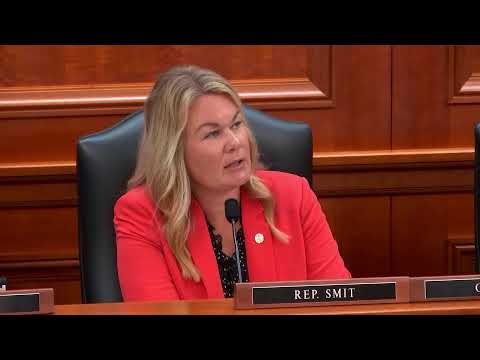
House Bill 4602, introduced by Chair Schmidt, would restrict the secretary of state from prohibiting local election authorities from using lawful sources to create predetermined result charts and test decks for pre‑election logic and accuracy testing.
"This decentralized approach has served our state well," Chair Schmidt said in support of HB 4602, arguing the bill would "preserve local choice" and prevent an exclusive arrangement with a single vendor.
Multiple county and municipal clerks testified in favor. Chris Swope, Lansing city clerk, described the logic and accuracy process and said he typically marks and runs the ballots locally so "it's a very locally run process." Swope and others said a centralized, state‑mandated single vendor could reduce transparency, increase cost, and make public explanation of testing harder.
"...it was much less understandable explainable or transparent, so that concerns me," Swope said after piloting an expanded test deck the Bureau of Elections offered.
Kent County Clerk Lisa Posthumus Lyons and Oakland County Clerk Lisa Brown said the public logic and accuracy test is a transparent, public step that helps build voter trust and that local control and election commission oversight are important safeguards. Brown said she and Lyons supporting the bill was "not a partisan issue" and expressed concern about sending official ballots to a vendor the county did not contract with.
Representatives from the Michigan Department of State, including Aaron Shore and Deputy Director of Elections Adam Fercasse, told the committee the department had executed a procurement and contract with BallotIQ (through DTMB procurement processes) and that their intention was to provide an optional, no‑cost test deck and an electronic system to streamline ballot proof transmission. Fercasse said the system is intended to be an option for clerks and to automate transmission of ballot proofs to the Bureau of Elections for review.
Fercasse also said the BallotIQ test deck includes additional cross‑contest checks and that the department is still developing the system. He said the department wanted to work with clerks on rollout and did not intend to force a single vendor on clerks.
Department of State witnesses asked that bill language not prevent the Bureau from adopting best practices or rules when appropriate and raised practical concerns about wording that would bar the secretary from permitting centralized processes even when that might be necessary to meet updated standards or procured capabilities.
Clerks described operational impacts of an expanded test deck: Chris Swope said one pilot added roughly six to seven additional ballots per precinct in a local test and that larger jurisdictions could see the public testing take multiple days; Oakland County's central early‑voting site covers the equivalent of about 450 precincts and already takes multiple days to test.
No committee vote on HB 4602 was recorded; the committee took testimony from the sponsor, local clerks, and Department of State representatives.
Why it matters: The bill would enshrine local control over pre‑election testing of tabulators and ballots, and would limit the secretary of state's ability to require a single vendor or centralized repository for predetermined results/test decks. Supporters say that preserves transparency and public access; the Department of State urged precise drafting to avoid unintended barriers to adopting technical best practices.