Get Full Government Meeting Transcripts, Videos, & Alerts Forever!
Get email alerts on the Land Use Development topic
No spam. Unsubscribe anytime.
Irvine council opens formal review of Irvine Company’s Oak Park plan after packed scoping session
Summary
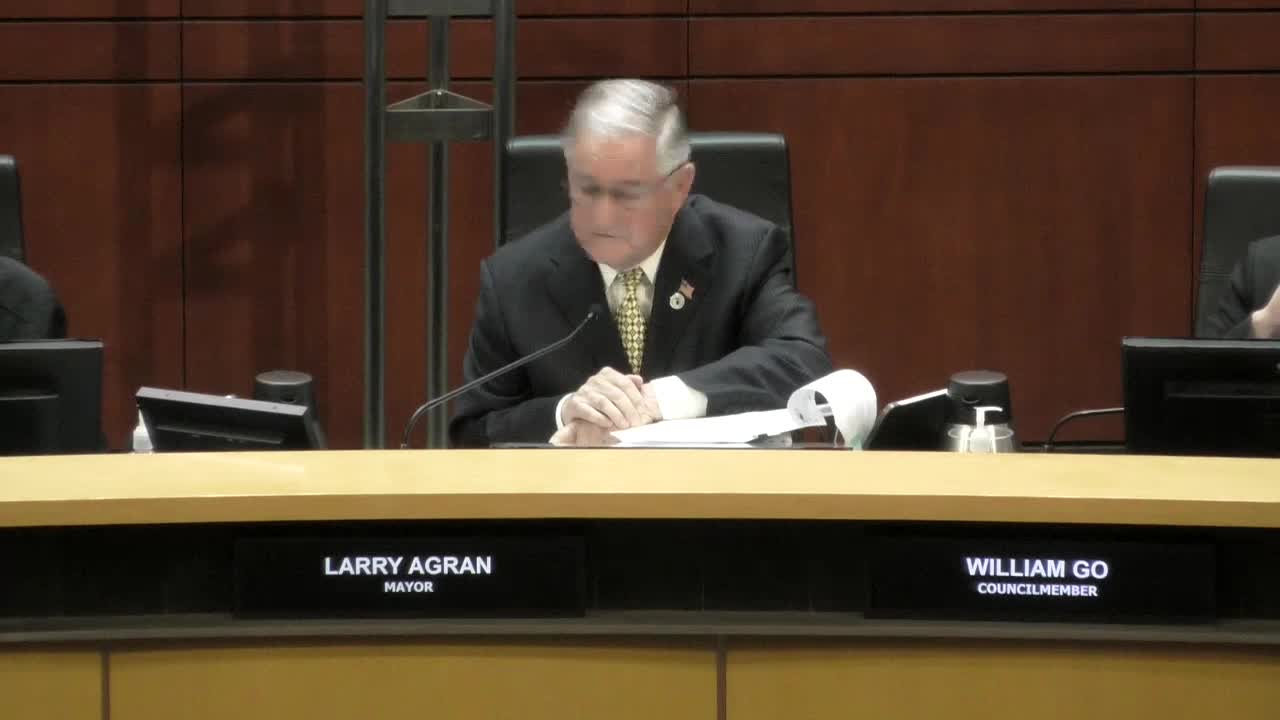
The Irvine City Council on Tuesday authorized staff to begin formal processing and environmental review of the Irvine Company’s general plan amendment to establish Planning Area 52, known as Oak Park, after an evening scoping session that drew roughly 80 speakers.
The Irvine City Council on Tuesday authorized city staff to begin formal processing and environmental review of the Irvine Company’s general plan amendment to establish Planning Area 52, known as Oak Park, and asked staff to return with options on taking any change to voter approval.
The vote (7–0) authorizes staff to accept and analyze the application that proposes a new village near the Irvine Spectrum, which the applicant and city staff said would include about 3,100 homes, parks and a new public school, and a mix of housing types. Staff said the technical review and environmental analyses would likely take roughly nine to 12 months, with hearings and potential decisions expected in 2026.
Why it matters: The property at issue includes the Oak Creek Golf Course and adjacent holdings long identified as preserved open space in Irvine’s 1988 initiative commonly referred to as Resolution 88‑1. Hundreds of residents filled the council chamber and many argued that any change to that preservation designation should go back to voters. City leaders said the council needed to hear those residents before further analysis and directed staff to prepare a path so the council could consider a ballot option while processing the application.
What staff and the applicant said Community Development staff summarized the application and outreach, and said the project will be evaluated for general‑plan consistency, traffic, and environmental impacts and for state and city density‑bonus provisions. Staff described the permit schedule and listed likely hearings before advisory bodies and the council, adding that the full environmental and discretionary review is expected to be complete in the first half of 2026.
Jeff Davis, attorney for the Irvine Company, summarized the applicant’s “village” proposal as an alternative to an earlier, higher‑density option and described it as a mixed program of single‑family homes, townhomes and apartments, a planned new elementary school, parks, a community center and funding the applicant said would support community priorities including transportation. Davis told the council the applicant believes “our plan is a preferred program” and that the firm looks forward to the city’s analysis.
Public testimony: volume and themes The council received more than 75 requests to speak and the clerk initially reported 78 total signups (more joined later). Speakers both for and against the project addressed the council; the most frequent points were: - Protection of open space: dozens of speakers cited Initiative 88‑1 and urged the council to require a public vote for any change. Several speakers called the proposal “double dipping,” saying the Irvine Company already received concessions in the 1980s in exchange for preserving the land. - Traffic and infrastructure: residents living near Irvine Center Drive, Jeffrey Road and surrounding arterials warned the added households would worsen congestion and called for clearer traffic mitigation plans. - Schools: parents and neighborhood associations said nearby schools are at or near capacity and pressed the city and Irvine Unified School District for firm commitments on school construction timelines and capacity. - Housing and workforce arguments: supporters said the village would put homes near jobs in the Spectrum/IBC job centers, help employees who cannot afford to live in Irvine, and include community amenities.
Council action and next steps After hearing public testimony and applicant and staff presentations, the council approved a motion to authorize staff to proceed with processing the general plan amendment application for Planning Area 52 (Oak Park). The motion passed on a recorded roll call with all seven members voting yes.
Councilmembers also asked staff to return with a memorandum and schedule for a parallel path that would let the council consider a ballot measure (a voter referendum or initiative) if the council chooses to put changes to the open‑space designation before voters. Staff said the processing timeline for the application itself would continue regardless; the city also committed to additional public outreach during the technical review.
What the approval does — and does not — mean The council’s action was procedural: it lets staff begin formal environmental and entitlement analysis. It is not a project approval. Any final decision on rezoning, general‑plan amendment or project entitlements will follow the full public review process, hearings before planning bodies, and, if required, additional council action. Several councilmembers stressed that any change to preserved open space remains a legally and politically sensitive issue and that they were receptive to returning key questions to voters, depending on legal advice and the technical review outcomes.
Ending note Council and staff said they would return to the council with interim updates and the timeline for environmental review, and clarified additional opportunities for public comment and hearings. Staff estimated completion of the city’s initial technical analysis in roughly the first or second quarter of 2026.