Get Full Government Meeting Transcripts, Videos, & Alerts Forever!
Get email alerts on the Land Use Open Space topic
No spam. Unsubscribe anytime.
Irvine council hears hundreds of speakers in scoping session over proposal to redevelop Oak Creek golf course
Summary
The Irvine City Council on June 24 authorized city staff to begin processing a general-plan amendment application filed by the Irvine Company to create "Planning Area 52 (Oak Park)," allowing study of a proposal to redevelop the Oak Creek Golf Course and adjacent land for roughly 3,100 homes and community facilities.
The Irvine City Council on Tuesday reopened a contentious scoping session on a general-plan amendment filed by the Irvine Company to establish Planning Area 52 (Oak Park), which would allow residential development on the Oak Creek Golf Course and related property. Council members authorized staff to begin processing the application for the general-plan amendment by a 7-0 vote.
The scoping session drew about 81 registered speakers (77 in person, 4 remotely) and roughly two hours of public testimony at the council dais. Residents and community groups urged both sides of the question to be heard: hundreds of speakers argued the proposal would violate Initiative 88-1, a 1988 voter measure they said permanently protected portions of Irvine open space, while other speakers and business groups said the proposal would add housing near jobs and provide community benefits.
Proponents and applicant presentation: The city manager and Community Development staff presented the Irvine Company application as an alternative to a previously discussed plan for higher-density development on land adjacent to Oak Creek. Staff described the proposal as a village plan with about 3,100 homes, a proposed public elementary school parcel, public parks, a community center, and roughly 300 acres proposed as publicly owned open space within the project area. Eric Davis, attorney for the Irvine Company, told council the applicant’s materials are “one of alternatives” and said the company’s plan would include a mix of housing types and community amenities rather than only high-density apartments.
Opponents: Dozens of speakers told the council the Oak Creek area is part of the 1988 Open Space Initiative and argued any change to that initiative should be decided by voters. “The people of the city of Irvine voted to protect Oak Creek and other spaces from development,” said resident Susan Sayer during public comment. Multiple residents called the developer’s proposal “double dipping,” saying the Irvine Company already received concessions decades ago in exchange for preserving open space.
Supporters: Business and workforce representatives urged the city to study the proposal. The Chamber of Commerce and the Filipino American Chamber of Commerce said the plan would add housing near jobs in the Irvine Spectrum employment area, shorten commutes and help employers attract workers. Several young residents and recent graduates also said they cannot afford to stay in Irvine and supported the village plan as one pathway to additional housing.
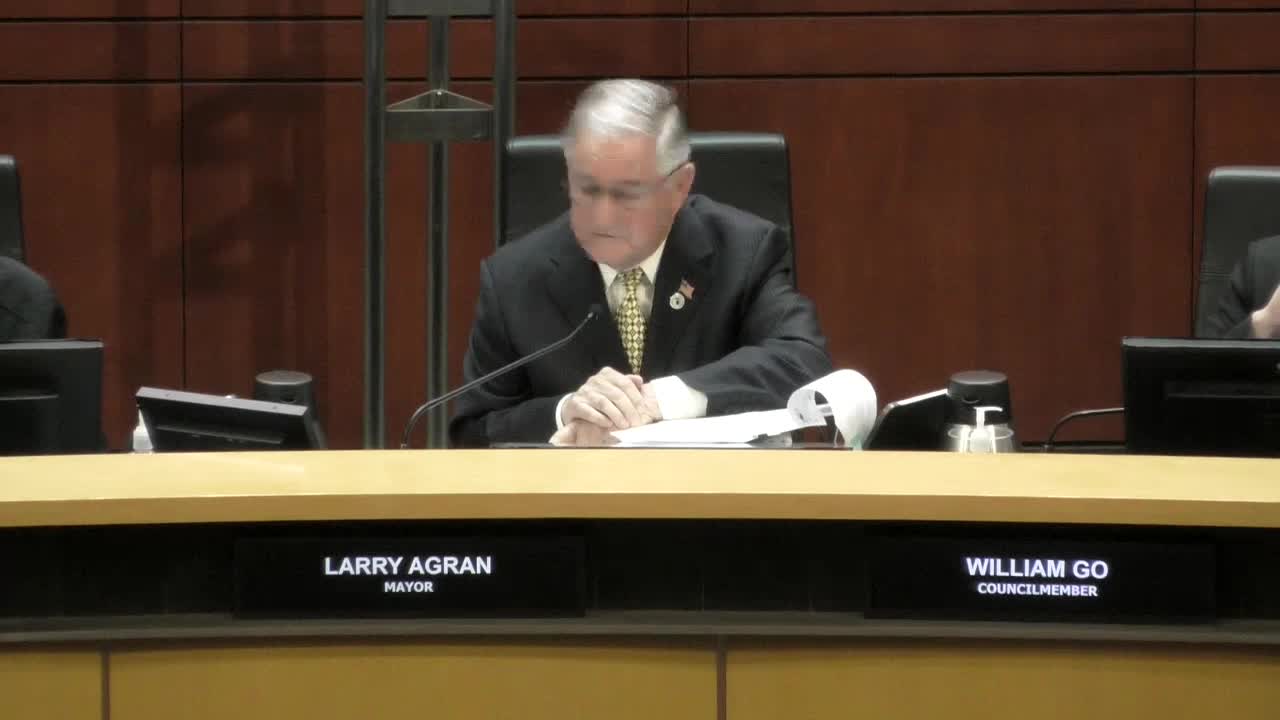
Legal and procedural dispute over Initiative 88-1: The council and city attorney debated whether Initiative 88-1, the 1988 voter-approved open-space plan, can be amended by council action or requires a new public vote. Mayor Larry Agren repeatedly characterized the initiative as intended to “preserve open space in perpetuity” and said his view was that any change should go to voters. City Attorney Jeff Melching outlined a different legal interpretation that the city could lawfully amend certain general-plan map designations, but he also said his legal opinion was separate from the city council’s policy choice. Council members voiced differing views: some said the legal question could be resolved later, while several asked staff to prepare materials for a possible ballot measure so voters could decide.
Council action and next steps: After extended public comment and council discussion, the council voted 7-0 to authorize staff to proceed with processing the general-plan amendment application (to create Planning Area 52, Oak Park) and to complete the required environmental and technical analyses. Staff told council that the environmental review and technical studies would likely take roughly 9–12 months, with hearings at the city’s advisory commissions and a council decision anticipated in the first half of 2026 if analysis proceeds. Councilmember Mike Carroll also said he would request a follow-up memorandum to the council outlining options for placing any change to the open-space designations on the ballot; that next step would be considered separately.
Why it matters: The Oak Creek debate pits the city’s long-standing voter-protected open-space commitments against state housing requirements and the pressure to add housing near employment centers. Hundreds of residents attended and testified, making this one of the highest-attendance scoping sessions in recent Irvine memory. The council’s vote to accept staff processing does not approve development; it put the proposal on a path for formal environmental and planning review and left open the separate political question — and potential legal question — of whether a future change to Initiative 88-1 must be put to a citywide vote.
Context and notes: City staff said the applicant’s plan proposes about 3,100 units and public amenities; staff also noted that the city’s August 2024 general-plan overlay for nearby focus areas still allows up to 5,000 units in adjacent locations and that the Irvine Company could pursue alternative development proposals for the same property. The council and staff repeatedly emphasized that authorizing processing is a procedural step to enable technical study and public hearings and is not project approval.
Ending: Council members signaled that they expect further public engagement and that the study and hearings will include traffic, school-capacity and environmental analyses. Mayor Agren said he intends to return the open-space question to the voters rather than have the council unilaterally alter the 1988 measure, and other council members asked staff to return with a clear outline of the legal, timing and ballot options to inform that choice.