Get Full Government Meeting Transcripts, Videos, & Alerts Forever!
Get email alerts on the City Budget topic
No spam. Unsubscribe anytime.
Council adopts balanced fiscal 2025–26 budget after amendments, but members warn long‑term pressure remains
Summary
The City Council approved the 2025–26 budget with changes including one funded administrative fire captain and conversion of a daytime ambulance to a 24‑hour model; council members said the budget balances this year but structural shortfalls remain.
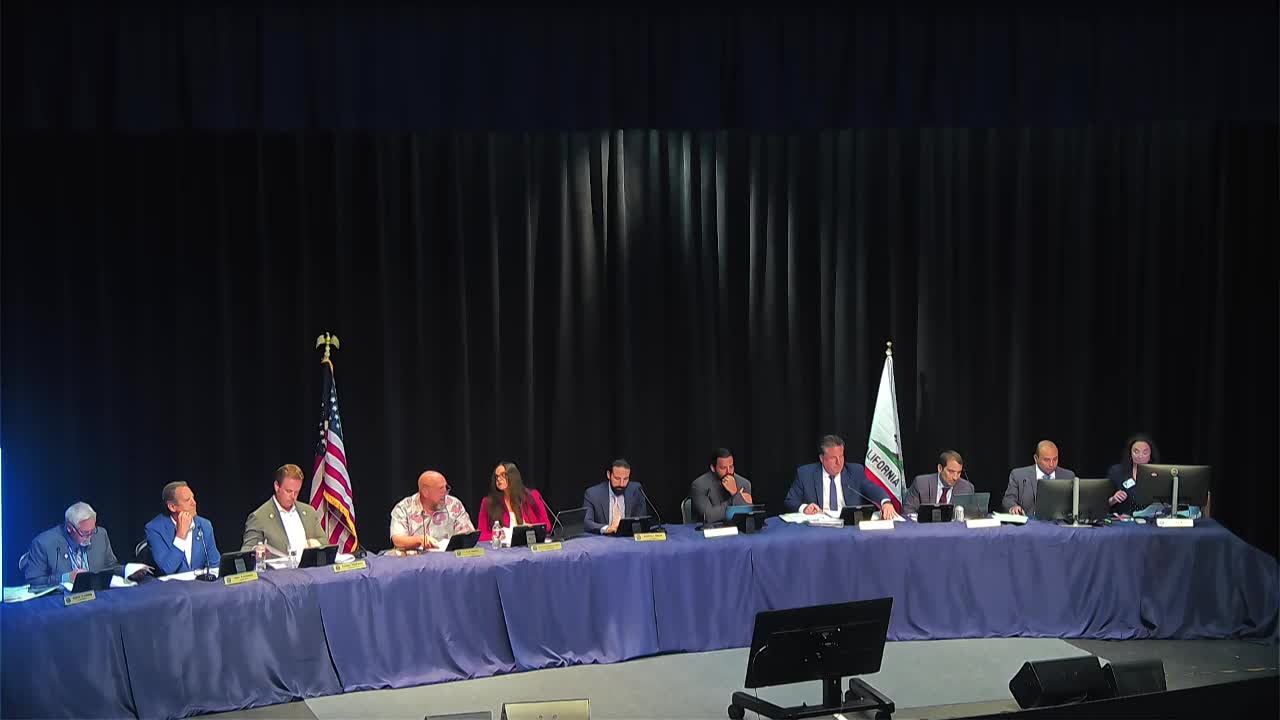
HUNTINGTON BEACH, Calif. — The Huntington Beach City Council adopted the city’s fiscal year 2025–26 budget on Tuesday after a series of revisions and detailed staff presentations that reduced operating expenditures and used reserves and one‑time funds to close a projected shortfall.
Interim Chief Financial Officer Robert Torres presented the budget framework and told the council the proposed all‑funds budget totals about $555 million and the general fund is approximately $299 million. Staff had projected an $8.8 million deficit earlier in the process and pursued a mix of expenditure reductions, vacancy savings and strategic reserve draws to balance the plan.
Council discussion and public testimony at the public‑hearing segment raised recurring concerns about the use of reserves, reductions to mental‑health related programs and long‑term structural deficits. Resident speakers urged the council not to rely on one‑time reserves; others praised staff transparency and urged policies to grow revenue.
On motions before the council, members approved a package of technical corrections and program adjustments, then separately considered personnel additions requested by the Fire Department. Council ultimately approved one funded administrative fire captain and an upgrade of one ambulance from the existing 14‑hour model to a 24‑hour operation; a proposal to restore two administrative captains failed on a subsequent substitute motion (final vote on the two‑captain substitute: 4–3). The primary budget motion, excluding the contested second captain, passed by a 7–0 vote; the later substitute to add the second captain passed 4–3 but the council then voted to adopt the budget as amended with one captain funded.
Major elements staff cited in balancing the budget included $2.9 million in operating reductions identified across departments, attrition and hiring‑delay savings (about $1 million), use of targeted reserve transfers (including a proposed $1.5 million use of a Section 115 trust), reductions to interfund transfers, and fee adjustments (including new or increased user fees and event permit fees projected to yield several hundred thousand dollars). The capital improvement program totals roughly $63.6 million in new appropriations, with projects in drainage, streets, sewer and water noted on the staff slides.
Council members stressed the budget is a multi‑year project. Mayor Pro Tem Casey McKeon said the adopted budget “is balanced for next year, but it is not the end of the work” and highlighted planned efforts to optimize city assets and increase recurring revenue streams. Several council members urged continued scrutiny of staffing, contracts and the city’s long‑term pension exposure to CalPERS returns.
The council also directed staff to report back on specific items raised during public testimony and budget deliberations, including further options for revenue generation, a proposed review of Visit HB contractual arrangements and continued labor/position reviews as recruitments and vacancies evolve.