Superintendent outlines state Blue Ribbon Commission changes to diploma model and timeline
Summary
At a board of education meeting, Mr. Rydell, superintendent of schools, reviewed the New York State Education DepartmentBlue Ribbon Commissioninitiative and what district officials should expect in coming years.
At a board of education meeting, Mr. Rydell, superintendent of schools, reviewed the New York State Education DepartmentBlue Ribbon Commissioninitiative and what district officials should expect in coming years.
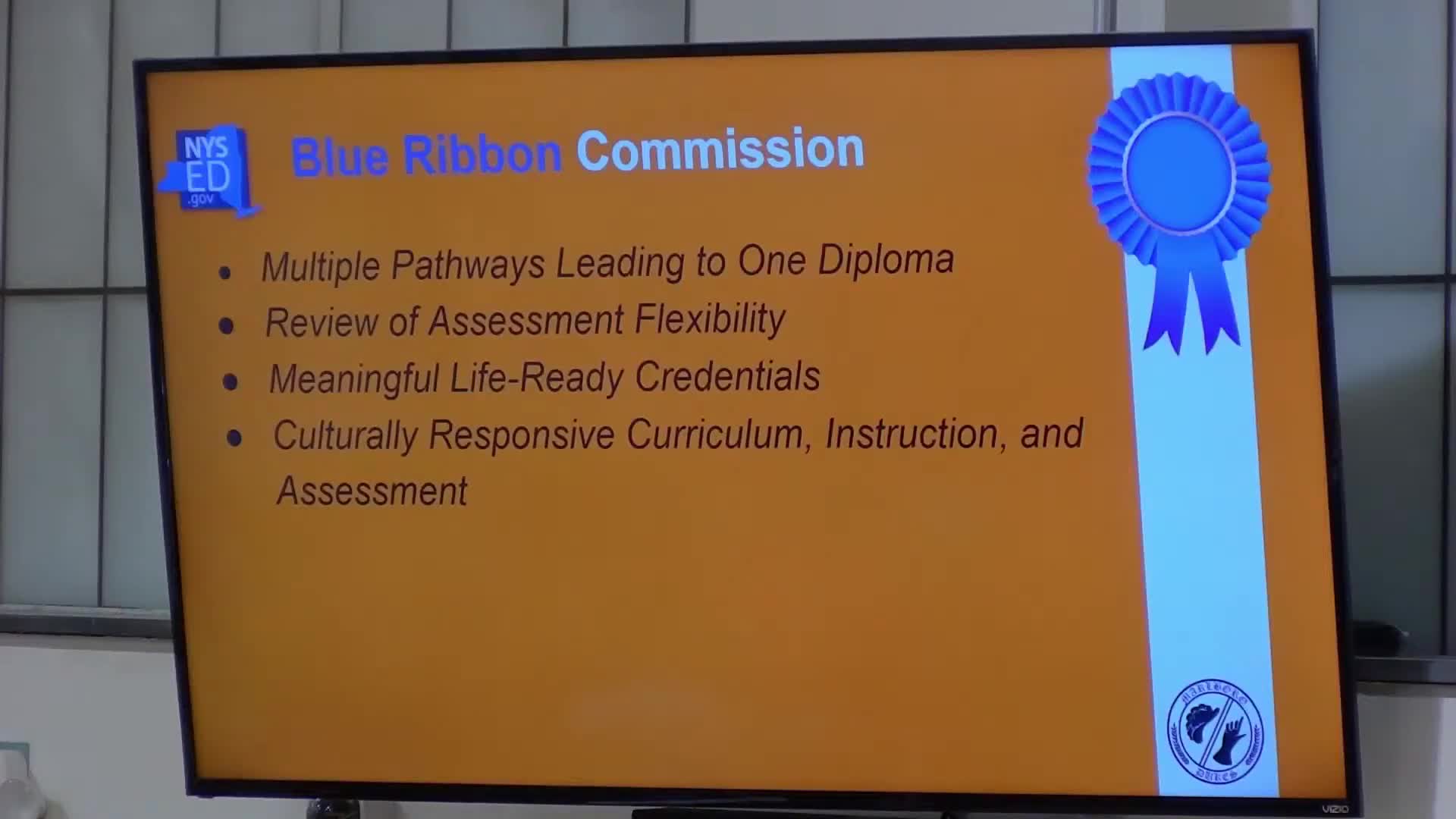
He told the board the commissionis examining the statediploma model and "how do we, as a state, have all students graduating with one diploma but with multiple pathways to get to that," and said the commission is also looking at assessments, cultural competency and career- and college-readiness.
The Blue Ribbon Commission proposes a single diploma with multiple seals and endorsements tied to studentscoursework and experiences, Mr. Rydell said. He noted two state-offered seals currently exist: the seal of civic readiness and the seal of biliteracy. "One diploma with the seals and endorsements that are specific to that student's experiences," he said.
Why it matters: The proposal could change how graduation requirements, assessments and transcripts look statewide, and districts will need to decide how to align local course offerings, seals and career/technical opportunities with a new model.
Key details: Mr. Rydell walked the board through the commissiontimeline and cohort effects, saying: cohorts are defined by the year students enter ninth grade. Under the timeline described in materials Mr. Rydell referenced, the cohort entering ninth grade in fall 2023 (current 10th graders at the time of the meeting) would keep current diploma requirements unless later rule changes occur; the cohort that begins ninth grade in fall 2024 would see some transition elements; and the state anticipates further transition steps that could decouple diploma assessment requirements by the cohort of 2027 and move toward a statewide transcript approach by the cohort of 2029.
Mr. Rydell emphasized uncertainty about final decisions and cautioned listeners against assuming regents exams are being eliminated immediately. "I would just say I would caution anyone about being excited about that because, a, that's not a done deal. That is not yet been decided or approved by the board of regents," he said.
Local context and district work: Mr. Rydell said the district already has been expanding elective offerings and has launched a district work-based learning program that gives students high school credit for workplace experience. He also noted locally developed "seals" the high school is considering to encourage students to exceed minimum requirements.
He described other areas the commission is reviewing that align with district priorities: credits for fine and performing arts, STEM, writing and literacy, financial literacy, authentic and student-centered learning experiences, internships and expanded electives to allow pathways over a studenthigh-school career.
What remains unresolved: Mr. Rydell said the state has not provided specifics on what qualifies as a "major life event" for diploma-assessment exemptions and that stakeholder input will continue to shape credit and transcript proposals.
Board reaction and next steps: Board members did not take formal action on the commissionrecommendations at the meeting. Mr. Rydell said building teams will present action plans at a future meeting that reflect board goals and local priorities; the board will continue to monitor SED stakeholder input and timeline updates.
Ending: Mr. Rydell closed the presentation noting the timeline gives time for dialogue and careful consideration before any cohort is affected by long-term changes.