Get Full Government Meeting Transcripts, Videos, & Alerts Forever!
Get email alerts on the School Finance topic
No spam. Unsubscribe anytime.
Board adopts FY24–25 fourth-quarter budget changes and a FY25–26 continuing resolution amid questions about long-term spending growth
Summary
The board approved an amended fiscal year 2024–25 fourth-quarter budget and a continuing resolution for FY25–26 while members pressed staff on long-term increases tied partly to federal ESSER funds and what accounted for a roughly 50% increase in district operational budgets since 2020.
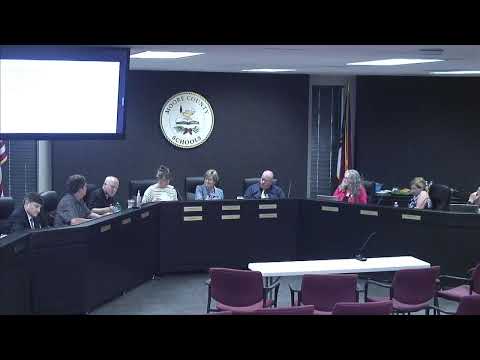
Moore County’s Board of Education on June 30 approved the amended fiscal year 2024–25 fourth-quarter budget resolution and adopted a continuing budget resolution for fiscal year 2025–26 while the state budget remains pending.
Assistant Superintendent Tina Edmonds presented the fourth-quarter amendment. Edmonds reported the district’s total amended budget at $189,583,688, an increase of $102,276 from the prior resolution driven by a federal allotment revision for supplemental funding. Edmonds summarized fund totals by category and noted projected fund balances that remain subject to auditor adjustments.
The board approved the fourth-quarter amendment on a 5–1 vote.
Edmonds then recommended a continuing budget resolution for FY25–26 that allows the district to operate at current spending levels while awaiting state allotments from the North Carolina Department of Public Instruction. The continuing resolution passed; one board member abstained from that vote.
Board member David Hensley asked several detailed questions after the votes about where multi-year funding increases had gone. Hensley noted that the district’s operational budget had risen from roughly $120 million in 2020–21 to about $190 million in 2024–25, a roughly 50% increase, while enrollment changed little. He asked whether that rise was driven by one-time federal ESSER funds, expanded staffing, benefits and retirement cost increases, equipment or capital spending.
Edmonds said $5.345 million in ESSER funds had expired this year and that the federal allotment revision reflected a $102,276 supplemental allotment. Superintendent Tim Locklear and other board members said benefit and retirement costs and inflation were significant contributors and that the budget committee would examine historical comparatives to explain year-to-year changes.
The continuing resolution enables the district to pay payroll and accounts payable at current levels until the state issues original allotments for FY25–26; staff said they expect to present the district’s original FY25–26 budget once state allotments are issued.
Votes and procedural outcome: the FY24–25 fourth-quarter amended budget passed 5–1; the FY25–26 continuing resolution passed with one abstention. The board directed staff to continue analysis and to report comparative historical breakdowns to the budget committee and full board.