Get Full Government Meeting Transcripts, Videos, & Alerts Forever!
Get email alerts on the School Facilities topic
No spam. Unsubscribe anytime.
Board member presses for public water testing after reports of brown water at Carthage Elementary
Summary
Board member David Hensley said he pushed state and county testing after what he described as years of inaction over cloudy/brown drinking water at Carthage Elementary; Superintendent Tim Locklear said custodians flush fountains weekly and shared that the town tested the water in May.
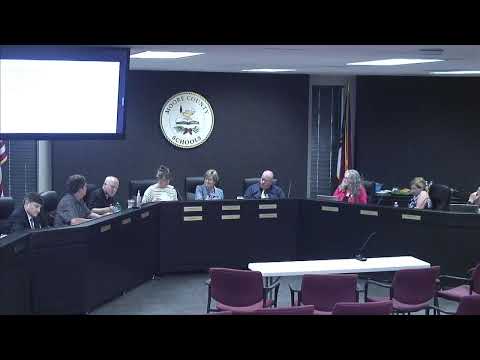
Board member David Hensley pushed the Moore County Board of Education on June 30 to force public testing and public reporting of drinking-water results after reports of brown or cloudy water at Carthage Elementary.
Hensley told the board he took what he described as “unilateral action” with other elected officials to ask regulatory authorities to test district water and to pursue legislation requiring routine school testing statewide. “No more should students and faculty and staff be drinking untested water,” he said.
The matter matters because parents and staff rely on district assurances that school water is safe. Hensley said the issue had been raised in the community and in local news for years and that the district’s response had been insufficient. He said the Moore County Department of Health agreed to test all district schools over the summer and that he would pursue a bill at the next General Assembly session to require annual, comprehensive testing at public schools.
Superintendent Tim Locklear said the district had taken steps while the issue was investigated. “They do do this every Monday,” Locklear told the board, describing custodial staff flushing fountains after hydrant work so sediment stirred up by hydrant flushing does not reach drinking water. Locklear also said he had shared information that the town of Carthage performs routine tests and that a May test report was available.
Hensley urged immediate action beyond routine flushing. He criticized what he called prolonged delays and said he would continue to press state and county authorities to test and publish results. Locklear said district staff had sought additional testing and that facilities staff had taken precautions by adding filters at fountains.
The board did not take an immediate binding vote on remediation. Hensley said his next steps included working with the county health department’s testing plan and, if necessary, escalating to state regulators. Locklear said district staff would coordinate with county public-health officials and share available test results with the board.
How this moves forward: district officials said they will continue to coordinate with Moore County Public Health on testing and will provide results to the board; Hensley said he will pursue legislative changes next year if routine, published testing is not adopted more broadly.
The board did not adopt a formal policy change at the meeting; Hensley said he expected more action over the summer and called for transparency about past testing and future results.