
Brunswick leaders warn state budget and tax reforms could cut millions from schools’ coffers
Get AI-powered insights, summaries, and transcripts
Subscribe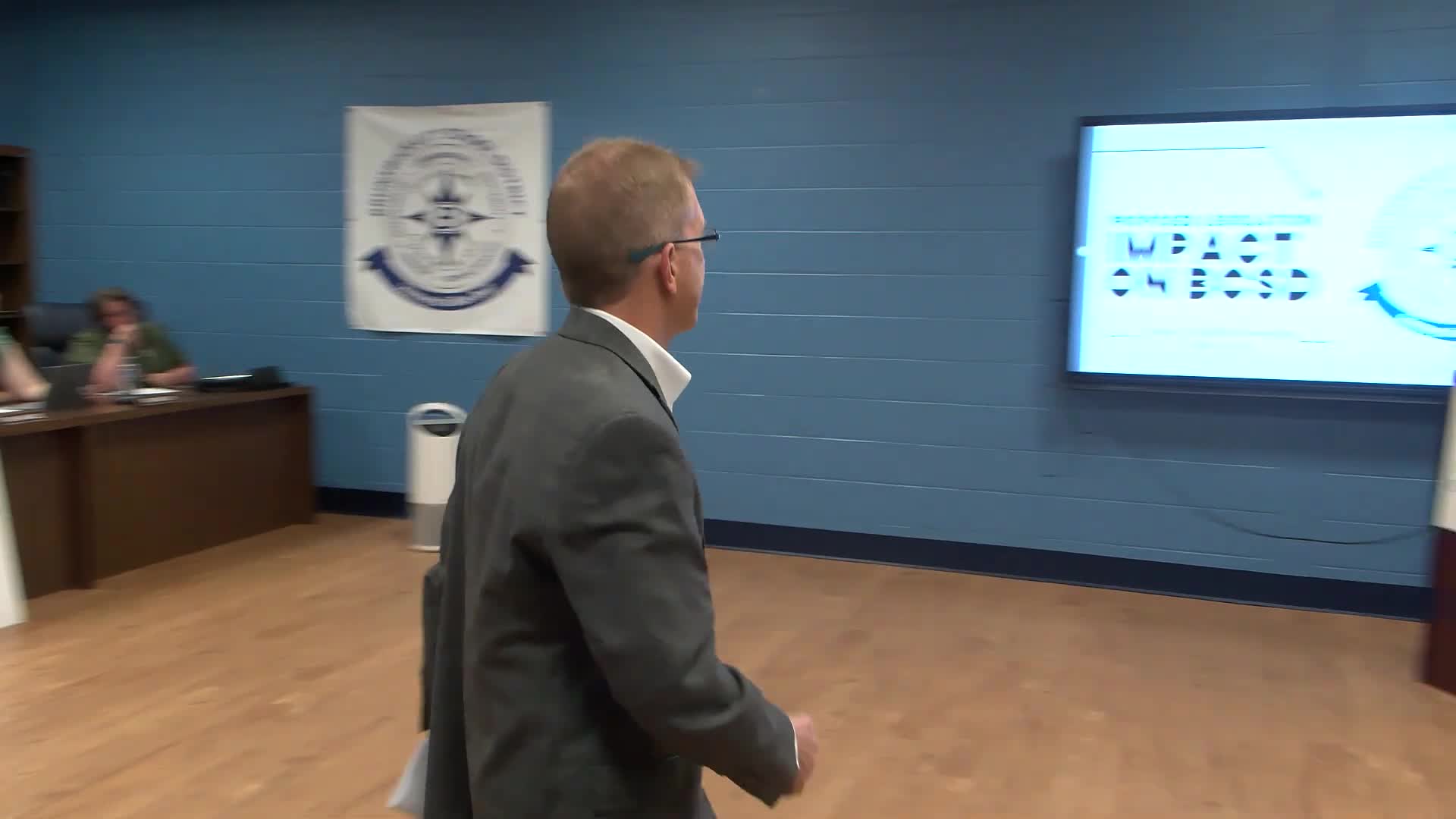
Summary
Superintendent Jason Niedermeier and district finance staff described proposed elements of Ohio’s 2025 biennial budget and related tax bills that they say could sharply reduce Brunswick City Schools’ reserves, complicate long-term planning and force earlier levies.
Brunswick City School District leaders told the Board of Education on June 17 that elements of Ohio’s 2025 biennial budget and several accompanying property-tax bills could reduce district revenue by millions and undermine long-term financial planning.
“It's not often that I send emails to our parents that I say I'm reaching out with a sense of urgency,” Superintendent Jason Niedermeier said, summarizing why district officials have been meeting with state lawmakers and testifying in Columbus.
Niedermeier and Mark Morgan, a district finance lead who presented the budget details, described three separate but related threats: changes to how the state implements the Fair School Funding plan, a proposed cap on school cash balances that would limit carryover funds, and several bills that would alter local property tax calculations and the treatment of emergency levies.
Niedermeier explained the budget timeline to the board and said the conference committee was expected to finalize a reconciled budget around June 25, with the governor having days afterward to sign or line-item veto the measure. Morgan said the governor’s original executive budget would reduce Brunswick’s transitional guarantee and, as presented by the executive budget, would have cut the district’s funding by $2,234,202 over the next two fiscal years.
Morgan described the House version as adopting a “bridge” funding approach that would flatline current funding but also propose a statewide cap on allowable year-end cash balances. Under early House proposals that Morgan summarized, a 30% cash-balance cap would have required the state to reduce local tax collections for districts above the cap; he said that initial proposal would have cost Brunswick “about $20,000,000 in 1 year's time.” The Senate draft, Morgan said, moved the cap to a 50% threshold and would reduce but not eliminate the district’s projected loss to an estimated $6,200,000.
Board members and district staff also highlighted several related bills discussed in the presentation: House Bill 129 (changes to the 20-mill floor calculation), House Bill 186 (modifying which levies count toward that calculation), Senate Bill 66, House Bill 335 (described in district materials as removing inside-millage collection and affecting municipalities, police, fire and EMS), and other property-tax reform proposals heard in committee. The district asked that those bills be considered in any analysis because several proposals would change how emergency levies are treated and could prevent districts from renewing expiring emergency levies without losing rollback protections for taxpayers.
District officials stressed how the changes would affect planning and creditworthiness. Morgan said shortening the mandatory financial forecast from five years to three years — a House proposal — would make districts “look healthier than really they are” by hiding longer-term declines. He and Niedermeier warned that lower reserve limits would likely affect bond ratings and borrowing costs, which in turn could increase interest costs for taxpayers when the district refinances or issues new debt.
The board heard that Brunswick officials have been advocating directly with state lawmakers. Niedermeier and Morgan said they met with Representative Melanie Miller and Senator Mark Romanchuk; they jointly testified before the Ohio House and Senate finance committees and coordinated with other Medina County superintendents and county officials. The district also sent a community call-to-action encouraging residents to contact members of the conference committee and cited a county commission resolution opposing some provisions.
“Barring any unforeseen weirdness from the state, you guys can pretty much say it in unison with me because I said that every single time. We didn't anticipate coming back on the ballot until the spring of 2028,” Niedermeier said, describing how the proposals would upend the district’s recent strategy to avoid short-term levies.
District leaders did not propose or take formal board action on policy at the meeting. They asked the board to support ongoing advocacy and for the community to contact lawmakers as the conference committee finalized the budget. Morgan urged residents to monitor the conference committee and the governor’s action, saying, “we'll continue to watch this. We'll continue to advocate for ourselves.”
The board’s presentation contained numerical estimates and legislative references provided by district staff; final effects on local revenue will depend on the conference committee's final language and the governor's line-item decisions.