Get Full Government Meeting Transcripts, Videos, & Alerts Forever!
Get email alerts on the Historic Preservation topic
No spam. Unsubscribe anytime.
Large-scale work at Mimosa Hall’s Founders Park sparks public outcry over tree removals and process
Summary
The City of Roswell began on-site work this spring at the Mimosa Hall / Founders Park project after completing final construction documents and securing required permits and ARPA funding, staff said, prompting sustained public criticism over the removal of mature specimen trees and the degree of public review.
The City of Roswell began on-site work this spring at the Mimosa Hall / Founders Park project after completing final construction documents and securing required permits and ARPA funding, staff said, prompting sustained public criticism over the removal of mature specimen trees and the degree of public review.
Recreation and parks director Steven Malone told the council the project’s design process began in spring 2024 with a multi‑day design charrette, that the city secured initial ARPA funding on Sept. 23, 2024 and additional ARPA funding on Nov. 12, 2024, and that final “conformed construction documents” were received April 18, 2025 and submitted for permitting. Malone said the land‑disturbance permit was approved May 1, 2025 and the contractor mobilized May 26; a June site walk preserved three trees that had initially been slated for removal.
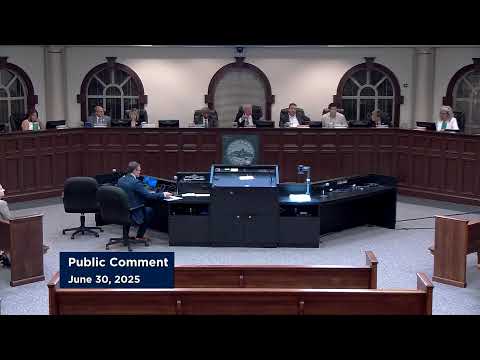
Residents and local preservationists said the scale of tree removals — including specimen trees they described as more than a century old — was not made clear before heavy equipment arrived. Longtime volunteers and board members for Friends of Mimosa Hall and Gardens, Friends of Bullock Hall and other speakers described the property’s historic gardens and specimen trees as essential to the site’s value and urged the city to stop further ground disturbance and explain why trees were removed.
Why it matters: advocates and many residents said the removed trees were part of the property’s historic character and that the city’s own tree protection and historic‑preservation provisions require clearer review and notification. City staff and the mayor said the project is intended to activate the historic district, make properties self‑sustaining and improve public access, but several residents and professionals said the public and Historic Preservation Commission (HPC) did not get an adequate look at the final construction plans before work began.
What staff say they did: Malone summarized the project timeline and public briefings and said the design team coordinated with the State Historic Preservation Office (SHPO) during the design process. He said the project’s top priorities included stormwater retention, an event lawn, restroom/catering support, parking options and vendor access, and that the ARPA funds had to be encumbered before the end of 2024. Malone also described a plant palette and said the city intends to replant and restore extensive tree cover over time; he said the city will plant roughly four times the minimum required by code in replaced landscaping.
What residents asked for: speakers asked for an immediate halt to any additional tree removal, release of the final construction documents, an independent review of whether ordinance and preservation procedures were followed, and a site visit and formal review by the Historic Preservation Commission of the final plans. Multiple speakers asked for an accounting of the number and species of trees removed and asked whether archaeological protections had been followed.
Legal and procedural points raised: citizens and several invited experts cited the City of Roswell Tree Protection Ordinance, the Unified Development Code (UDC) and the city ordinance (9.10.2) that requires the HPC be given an opportunity to review city projects affecting historic properties. An assistant city attorney and other staff said the project followed the city’s permitting workflow for a major land‑disturbance permit (which includes a tree plan) and that the arborist, engineering and permitting reviews were completed before the land‑disturbance permit issued. The city also said a 2021 archaeological assessment concluded prior landscaping and disturbance on large parts of the property reduced the potential for significant subsurface archaeological finds; staff said protocols are in place if artifacts are encountered during work.
Numbers and budget details cited at the meeting: Malone said the city has invested “over $17,000,000” in historic assets over the last three and a half years; he said the project team received final construction documents April 18, 2025, the land‑disturbance permit was issued May 1, 2025 and construction mobilization began May 26; Malone said staff forecast gross event revenue of about $468,000 in the first full year of operation (FY26, limited by construction timing) and about $861,000 in projected annual gross revenue in later years. Council members and staff said the project used ARPA funds that had to be encumbered before the end of 2024.
City response and next steps: city staff told speakers they will provide additional documentation to the public (per open‑records and website postings), can make construction documents available, and will add outstanding questions to a response list. Staff acknowledged communication and outreach could be improved and said they will pursue follow‑up meetings, provide more detailed information, and explore a site visit by HPC and other reviews. Malone said three trees slated for removal were preserved after a final site walk in June; staff also said they will follow up individually with residents who identified specific addresses and tree concerns.
Voices from the meeting (samples): Malone said, “All the information pertaining to this project can be found online at roswellconnections.com.” Assistant city staff described the tree plan as part of the land‑disturbance permit package and said the arborist and engineering reviews were completed before issuance of the permit. Multiple longtime preservation volunteers and neighbors said the loss of specimen trees and garden context was irreparable and asked for an independent review and an immediate halt to further grading.
Where matters stand: construction is already underway in the area staff identified for phase 1 and the city says permitting and ARPA funding were obtained before site work. Residents and preservation advocates remain committed to additional scrutiny and remedies; they asked the council to present final construction documents to HPC for review, to publish detailed tree surveys and mitigation plans, and to consider a temporary stop on further grading pending those reviews.
Ending note: the project’s supporters and staff framed Founders Park and the Mimosa work as an effort to connect and activate Roswell’s historic assets. Many residents said they support preservation but contend the city should have used a broader, clearer public review and stronger safeguards before heavy equipment altered mature landscapes.